by: Scott Stein | CNET
The once familiar landscape of VR headsets is starting to melt. As smart glasses flood the zone, VR devices are changing form. And devices that are almost VR, too. Meta’s glasses-like headset, called Meta VR Glasses, is coming next year for $1,299, but the Xreal Aura, a pair of display glasses with a computer puck that also turns into an AR/VR device, is coming even sooner for $1,279.
Xreal announced the Aura’s price on Wednesday, but not a release date. It should be coming in the next month or two, though, and I’ve had a chance to try it several times over the last year. It’s currently only available to preorder if you placed a $100 hold for the right to order one earlier this year, but more options to buy are coming in a few weeks, according to the company.

Xreal’s Project Aura supports hand tracking, and it works just like it does on VR headsets to pinch, scroll and control apps.
Scott Stein/CNET
What Xreal Aura can do
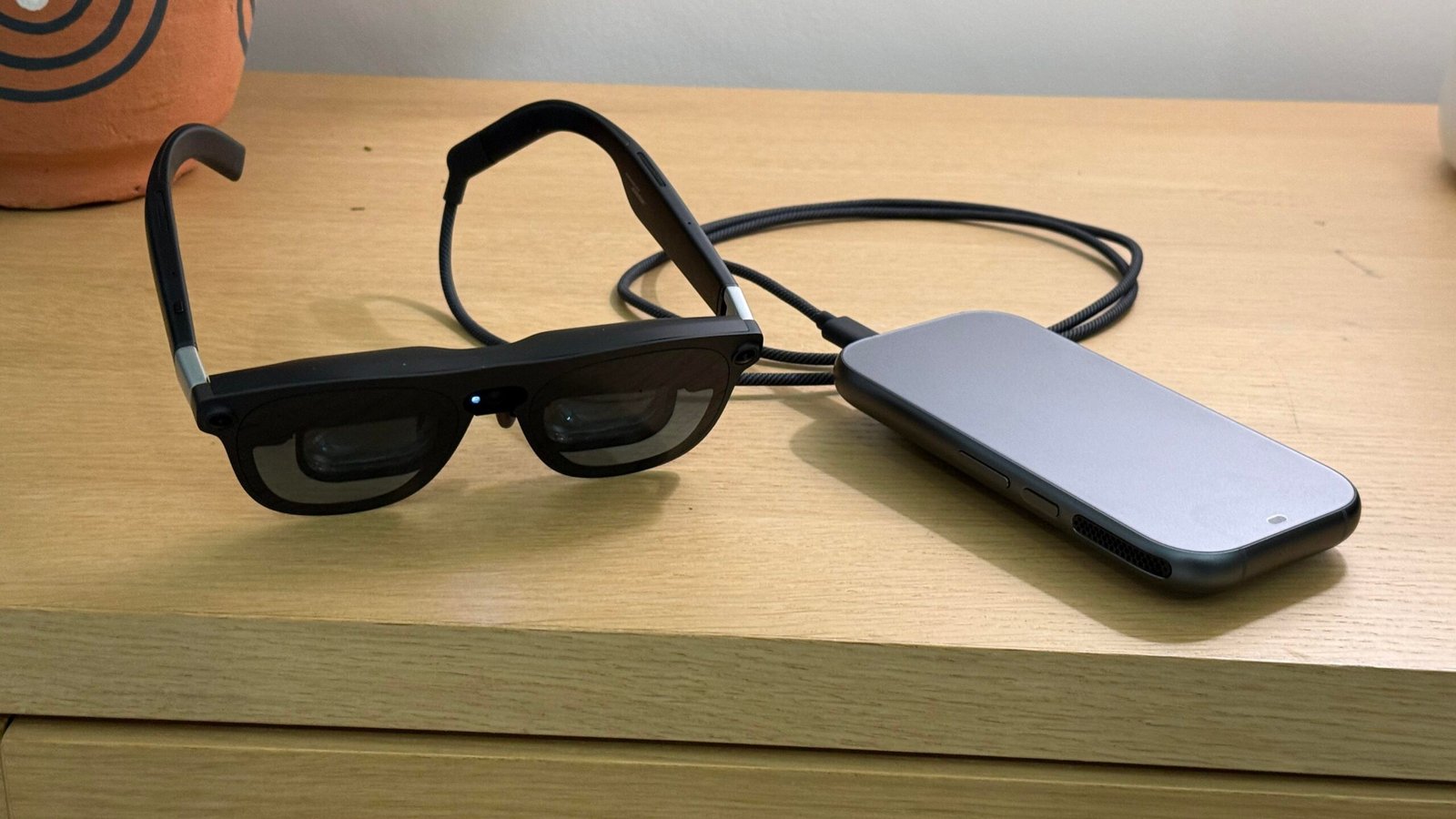
I found the Xreal Aura to be one of the most fascinating devices I’ve tried in a while, because it bridges some of the gaps between glasses, AR and VR. The Aura is a more advanced pair of Xreal display glasses (which I’ve reviewed in various forms over the last few years) connected to a processing puck that runs Android XR, floating apps and experiences into the world with micro-OLED displays. The displays are effectively mirrored down from the top of the glasses and projected over transparent lenses that have layers of dimming. Google’s visually aware Gemini AI can run at the same time, recognizing apps that are open and things in the real world around you.
The Aura has a larger 70-degree field of view than previous Xreal glasses (which top out at 57 degrees), which allows more viewing space and more apps to be laid out. It’s less than standard VR, but in my demos, it felt like it approached usefulness close to what VR headsets can offer. It also has hand tracking via external cameras, and can float 3D experiences and even VR apps in Android XR into the room surprisingly well.
The $1,279 starting price for Xreal Aura includes 256GB of storage and 12GB of RAM. There’s also a $1,500 version with 512GB of storage and 16GB of RAM.

The Aura comes with its own travel case. The processor puck it uses is about the size of a phone.
Scott Stein/CNET
Meta VR Glasses and Xreal Aura compared
Meta’s VR Glasses have a similar, yet different, proposition. They’re more like sliced-off Apple Vision Pros and use pass-through cameras to let you see the outside world rather than actually transparent lenses. But they also have eye tracking in addition to hand tracking, and can work with Meta Quest controllers and Quest apps. Their 84-degree field-of-view micro-OLED displays are more expansive and higher-res than the Aura’s. Meta’s VR Glasses have only one storage config we know of (128GB), but also have a MicroSD card slot that can store apps too.
Both the Xreal Aura and the Meta VR Glasses connect with external processing pucks that are roughly phone-sized, both using Qualcomm Snapdragon XR Elite chipsets. Both also have the unique ability to port in other USB-C video-out devices, floating a phone screen, laptop, iPad or Steam Deck right alongside other apps. Clearly, a phase change in form is underway.
Google’s got more glasses coming
Google’s got lots of Android XR devices planned, including a line of Gemini-powered smart glasses made with Samsung, Warby Parker and Gentle Monster coming sometime before the end of the year. But the Xreal Aura is Google’s next Android XR product on deck since its Samsung Galaxy XR partnership last year, and can do a lot of the same things in a smaller form for less.
Between the Meta VR Glasses and the Xreal Aura, it already feels like the distinctions between “VR” and “AR” are starting to melt away. But at their almost-identical near-$1,300 prices, they’re also setting the tone for what these gadgets will cost going forward. Valve’s Steam Frame VR headset is over $1,000, and Snap’s upcoming Specs AR glasses cost $2,195. At these prices, although far less than Apple’s $3,699 Vision Pro, they’re also far more expensive than Meta’s Quest VR headsets. If you’re considering spending up on the idea of immersive displays that can be used for work or taken on the go, though, you should stay put and see how these devices perform when I review them.

Scott Stein
Editor at Large
I started with CNET reviewing laptops in 2009. Now I explore wearable tech, VR/AR, tablets, gaming and future/emerging trends in our changing world. Other obsessions include magic, immersive theater, puzzles, board games, cooking, improv and the New York Jets. My background includes an MFA in theater which I apply to thinking about immersive experiences of the future. See full bio