by: Antuan Goodwin | CNET
A General Motors executive this week reaffirmed the automaker’s plans to bring hybrid cars to its lineup, sparking discussion across the web. It makes sense, as hybrids are having a moment, driven by Americans’ hesitancy toward adopting EVs and surging fuel prices. Many automakers are rushing to join the feeding frenzy with their own upcoming hybrid models. So why does hearing that GM, specifically, is shifting gears to hybrids seem different? It’s because I feel like GM’s been here many times before, and it didn’t end well.
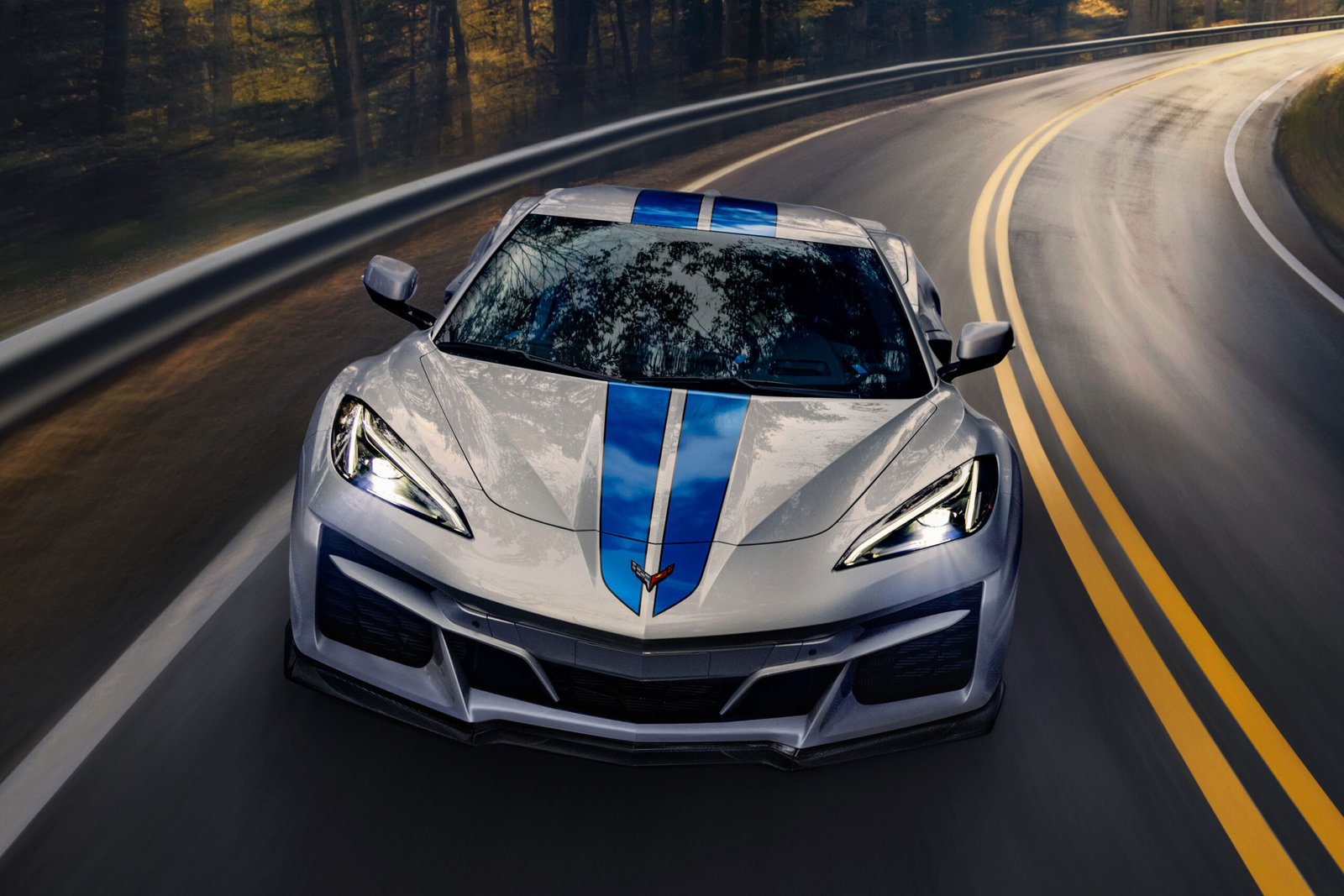
Mike Anderson, GM’s vice president of propulsion engineering, reconfirmed the automaker’s hybrid plans with CNBC. The Detroit-based automaker said in 2024 that it was working to add hybrid models to its lineup, but hasn’t made any concrete announcements or updated its timeline since. Today, GM has only one hybrid in its lineup — the Corvette Grand Sport X, which replaces the E-Ray that debuted in 2023 — as it has largely focused on full-electric cars.
General Motors: serial golden goose killer?
I’ve been following the automotive landscape for 30 years and covering the space professionally for nearly two decades, and I’ve watched GM make more than a few baffling decisions in that time. If there were an award for “most golden geese killed” or “coldest feet,” I’d give it to GM. Time and again, the automaker has brought truly innovative cars and powertrain technology to market just ahead of its time, only to back out before it reaches its stride and retreats to the familiar.
GM’s reputation as the company that killed the electric car, thanks to its handling of the EV1 in the 1990s, is a topic that’s been examined, perhaps to exhaustion. Later, in the early 2000s, the automaker dabbled in hybridization, but instead of starting with a small, efficient car like the Toyota Prius, GM focused on full-size SUVs and pickups that struggled to meet their fuel-saving targets. The so-called Two-Mode Hybrid lasted only about five years before being quietly discontinued.
GM’s engineers were cooking when the automaker later debuted its Voltec hybrid technology under the hood of the beloved Chevrolet Volt (and the subsequent Cadillac ELR). The Volt was the first commercially available plug-in hybrid electric vehicle in the US, beating Toyota’s Prius Prime to market by a year with more electric range, better fuel efficiency and more palatable styling. GM’s marketing initially confused customers, and even some journalists I knew at the time. (The automaker notoriously refused to call the Volt a hybrid.) By the time the second generation arrived with significant improvements, buyers had started to realize what a gem GM’s “not a hybrid” was — right before it was canceled in 2019. Its demise is still lamented by fans.

More recently, GM killed its Chevy Bolt EV, the brand’s first mass-market fully electric car, twice. First, at the height of its popularity in 2023, the Bolt was discontinued while GM refocused on its new Ultium EV platform, starting with larger, more expensive electric trucks and SUVs. Earlier this year, the Bolt returned only to be axed again: the second generation’s 18-month run is scheduled to end in 2027, just as interest in affordable electric cars is once again on the rise in the US. Talk about a double slap to the face for fans of the little EV.
Do you see the pattern? GM introduces a forward-thinking car, then kills its golden goose and retreats to the familiar, just as customers start to get on board. I don’t know if it’s a lack of patience or commitment, but it has made it hard to get excited whenever GM announces it’s changing direction.
Today, customer interest in EVs is beginning to rebound. GM is the only Detroit Big 3 automaker with a fully fleshed-out electric lineup, with BEVs in almost every popular class across its Chevy, GMC and Cadillac brands. The road to electrification in America has been a rocky one, but GM’s all-in-on-EVs strategy feels like it’s finding its footing, which makes me worry that GM is about to “pull a GM.”
All automakers are scrambling
General Motors isn’t the only automaker struggling to respond to wild swings in the US new-car and EV markets. Trade wars, actual wars, government policy and rising fuel costs have left American drivers stuck between the rock of paying hundreds of dollars more per year for gas and the hard place of fewer affordable EVs. Recently, Cox Automotive reported that 56% of surveyed shoppers said they would likely consider a hybrid or plug-in hybrid as their next car.
Today, only a few brands (Toyota, Hyundai and Honda) control around 86% of the US hybrid car market. Toyota alone is responsible for nearly half of all US hybrid sales. The rest of the industry — all too eager to leapfrog straight to full electric just a few years ago — has been caught flatfooted and scrambling to meet surging demand, GM included.

GM hasn’t given up on EVs yet
By and large, I’m a fan of GM’s current fleet of electric vehicles. The Bolt EV (while it’s still here) is a fantastic little city car. I recently took a road trip in the Equinox EV and was blown away by the range, technology and value it delivered for the price — even with the removal of Apple CarPlay and Android Auto. I’ve also had positive, recent experiences with the Cadillac’s Optiq EV, the Chevrolet Silverado EV and the GMC Sierra EV. It’s taken some time to build momentum, but you could argue right now that GM has the broadest spectrum of good EVs of any American automaker.
To me, GM’s history paints a shift to hybrids in an unconfident light. Imagine how it must look to layman buyers who are unsure of which green car tech to stick with. To be fair, this time GM hasn’t said it’s backing off on BEVs, merely adding hybrids to the mix.
“Our long-term vision is an all-electric future. That’s our goal,” Anderson told CNBC. “That’s the end state, but it’s going to be a journey that involves technology diversity.”
GM’s all-in-on-EVs commitment to electrify 50% of its fleet by 2030, with 100% of its passenger and light-duty vehicles going electric by 2035, appears to remain in place. The addition of hybrids or plug-in hybrids — that “diversity” Anderson spoke of — is sure to be a good thing for the brand and its customers. But it makes me worry.

Antuan Goodwin
Senior Writer, Electrified Cars
Antuan has nearly 20 years of expertise and experience testing hundreds of cars, including electric, hybrid, plug-in hybrid, hydrogen, and traditional combustion vehicles. See full bio