A surge in Russian jet-powered drone strikes on Ukrainian data centers has increasingly disrupted mobile phone and Internet services for thousands of people. Now Ukraine President Volodymyr Zelenskyy and other government officials are warning of the need for more air defense capabilities, as such telecommunication outages could threaten Ukraine’s digital economy and undermine the country’s ongoing resistance to Russia’s invasion.
The Russian attacks on Ukrainian telecommunication infrastructure have focused on Ukraine’s capital of Kyiv since September 23, according to the nonprofit Reporters Without Borders. Ukraine’s digital transformation ministry reported that 100,000 households in the Kyiv region were temporarily experiencing Internet outages from those initial strikes—and Russia has only intensified its strike campaign against major Ukrainian data centers and mobile phone networks in recent weeks.
“Russian attacks on Ukraine’s telecommunication infrastructure are not new, with strikes and shelling previously damaging fiber optic lines, cell towers, and facilities belonging to mobile network companies,” said Tetiana Gaviuk, analyst for Europe at ACLED, in a post on October 1. “However, the recent concentrated attacks on Kyiv’s data centers and telecom networks stand out because multiple providers and facilities were hit within days, indicating Russia’s increased pressure on Ukraine’s digital infrastructure.”
Such repeated attacks could undermine the telecommunication networks that support Ukraine’s banks, payment systems, and public services, according to warnings from officials and industry figures, as reported by The Guardian.
Russia’s strike campaign
Russia has launched mass missile and drone attacks on Ukraine’s power grid infrastructure, railroad stations, shipping ports, and even residential apartment buildings since the first year of its full-scale invasion in 2022. But such long-range strikes have become even more damaging this year, as they have exhausted Ukraine’s supply of missile interceptors—and Russia has also upgraded many of its one-way attack drones to become faster jet-powered drones that are more difficult to shoot down.
For example, Zelenskyy stated on October 4 that Ukrainian air defenses currently intercept more than 85 percent of conventional Shahed-type drones originally developed by Iran and supplied to Russia. But such interception rates fall to just 50 or 60 percent when dealing with newer and faster jet-powered Shahed drones.
The mechanical keyboard isn’t always so mechanical anymore.
Over the past six years, keyboards with optical, Hall-effect, and other “contactless” switches have become increasingly common, often going for higher prices than traditional mechanical keyboards, which already command a premium over basic membrane boards. In return, they promise some theoretical advantages, particularly for gamers. In daily use, though, the differences can be pretty subtle.
So what exactly are you paying for? In this guide, we break down how the newest switches work, why contactless designs are becoming more popular, and where their advantages—and disadvantages—really matter.
Table of Contents
How standard mechanical switches work
First, let’s recap what happens when you push a key with a traditional mechanical switch inside.
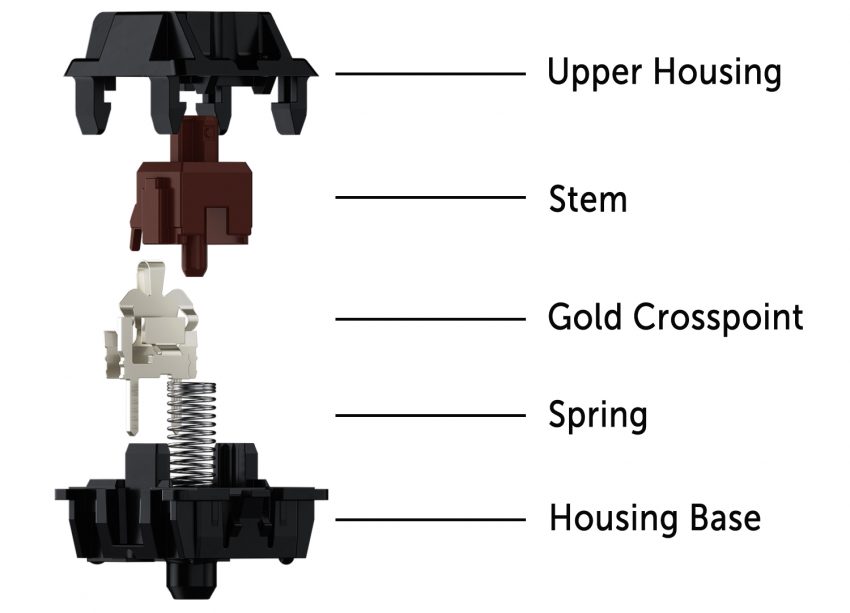
As you can see in the diagram of a Cherry MX Brown switch below, standard mechanical switches have two metal leaves—in this case, the “crosspoint”—that are shaped differently, with the top of the larger leaf bent away from the smaller leaf.
An exploded view of an MX Brown switch.
An exploded view of an MX Brown switch. Credit: Das Keyboard
When you press a mechanical switch, its plastic stem moves downward toward the keyboard’s PCB, and a spring wrapped around the stem compresses. As you release the button, the spring expands, forcing the stem back up to its original position.
When a switch is at rest, a protruding piece of the plastic stem keeps the switch’s two leaves from making contact. As the stem goes downward, that piece moves with it, allowing the leaves to touch and close a circuit on the keyboard’s PCB, which sends a signal to the keyboard’s microcontroller, telling the computer which input was made.
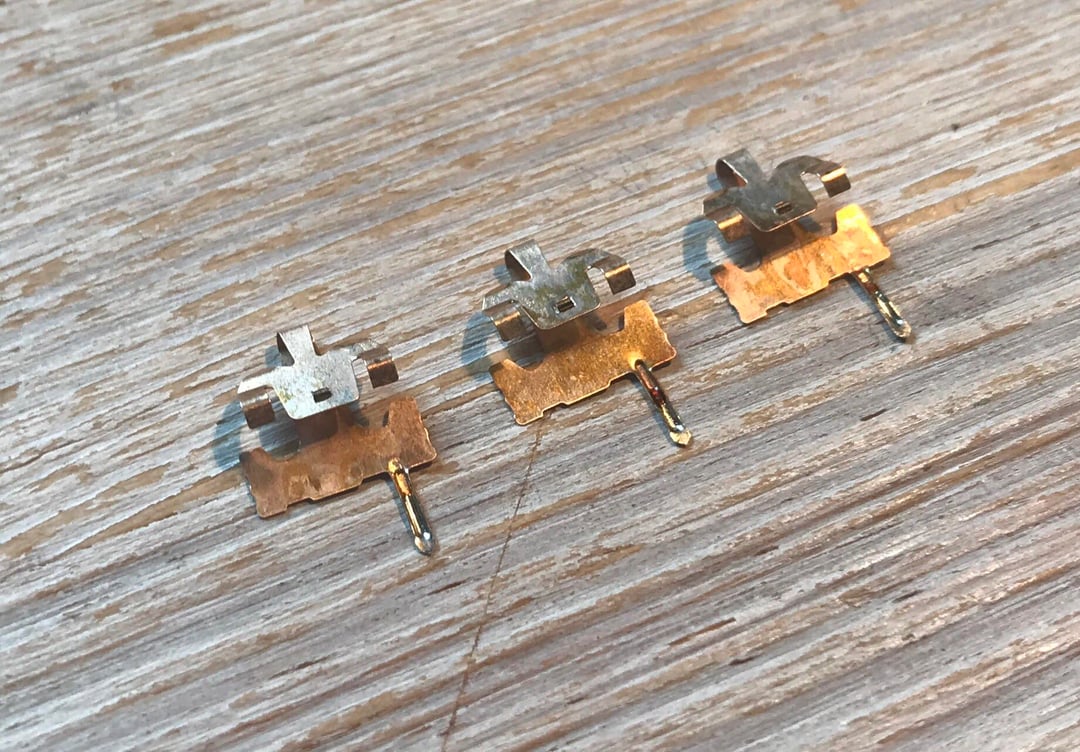
But because mechanical switches rely on the physical contact of internal components, they can degrade over time.
Why new switches?
The switches in this guide differ from traditional mechanical switches because they don’t register input through contact between two metal leaves—hence the term “contactless.” Manufacturers often claim contactless switches last longer than regular switches, and they’re not susceptible to oxidation or corrosion, which can affect mechanical switches after prolonged use.
An example of mechanical switch leaves showing oxidation, courtesy of Reddit user Hapimp.
An example of mechanical switch leaves showing oxidation, courtesy of Reddit user Hapimp. Credit: Hapimp/Reddit
But there are other things to keep in mind for longevity. Contactless switches require specific PCBs, which are less common than those used for standard mechanical switches. And while hot-swappability can extend a keyboard’s life by making it easier to replace a broken key or change switches, hot-swappable PCBs for contactless switches—and prebuilt keyboards that support contactless switches and hot-swapping—are harder to find.
Newer standard mechanical switches, including some Cherry MX2A-series switches rated for 100 million keystrokes, can have lifespans similar to those of contactless options. If longevity is a priority, contactless switches may still be worth considering, but be sure to compare their ratings with those of standard switches.
Some users and companies claim that contactless switches feel smoother when pressed and reset because no metallic leaves touch. But other parts of the switch, like the spring and stem, can also create friction. I’ve occasionally noticed smoother presses with certain contactless switches (more on that later), but some premium standard switches, especially properly lubricated ones, can also feel extremely smooth.
If you want the best-feeling switches, look beyond whether they operate mechanically or through light beams or magnets. Factors like the switch’s specs, force curve, and materials can have a greater impact on how a switch feels.
Customizable actuation
Many contactless switches have customizable actuation points, a feature that isn’t possible with traditional mechanical switches. That can be helpful if you want some keys to feel stiffer or lighter than others (I prefer a stiffer spacebar, for instance), more flexibility over how keys respond, or analog input.
But software may not accurately reflect a switch’s actual actuation point. Review website RTINGs tested 14 keyboards with adjustable actuation from 11 brands and found that, on each keyboard, the keys actuated at a different distance than the one set in the companion app. We’re talking about differences of fractions of a millimeter, but it’s worth keeping in mind if you’re considering contactless switches for customizable actuation.
Some keyboards with contactless switches go further by letting users program keys so that one full press results in two inputs. For example, you can set a key to input “A” if you press it down 0.5 mm and then “B” if you press it down another 0.5 mm.
Some keyboards with contactless switches also support analog input, which lets the keyboard detect how far a switch has been pressed and adjust the input accordingly, giving gamers a joystick-like experience. Traditional mechanical keyboards don’t support analog input.
Gaming advantages
Contactless switches are becoming more common largely because of their potential appeal to gamers. Vendors often claim keyboards with contactless switches register input faster than traditional mechanical keyboards, mostly because the switches don’t require debouncing.
Debounce delay is the time between when a key on a mechanical keyboard is pressed and when the keyboard accepts the keypress as an input. The delay is necessary for standard switches because their metal leaves can rapidly bounce off each other when they make contact during a keypress. Debouncing ensures that the keyboard’s microcontroller doesn’t interpret these bounces as additional inputs (which would cause pressing “a” to register as something like “aaaa”). Keyboard firmware often handles debouncing, but hardware, such as an FPGA, can also do it.
Most of us never notice debounce delays, and manufacturers rarely disclose how much debounce delay keyboards use, though keyboard enthusiasts often point to 5 ms to 20 ms as common. Cherry says some of its MX2A switches require “less than 1 ms” for debouncing. And keyboard manufacturers occasionally implement longer-than-necessary debounce times to compensate for switch degradation over time.
But keyboard latency, or the amount of time it takes from when you start pressing a key to when you see that key registered on-screen, depends on more than just sensing technology. Other factors include the keys’ travel and actuation times and the keyboard’s polling rate. A Bluetooth keyboard with full-height optical switches and a 133 Hz wireless polling rate, for instance, will still display more latency than a traditional mechanical keyboard with low-profile switches and an 8,000 Hz polling rate through a wired connection.
Again, for many of us, none of this matters. It’s primarily professional gamers who need a keyboard with ultra-low latency, and that’s assuming they’ve already reduced latency in more essential areas, like their GPU, CPU, and monitor.
And because contactless switches frequently target gamers, there are way more linear options than tactile or clicky ones.
Optical switches
Optical switches, which rely on an infrared (IR) light beam to actuate, first hit consumer keyboards in 2016.
Optical switches work differently depending on the manufacturer, but generally, each switch contains a light beam that is redirected when the switch is depressed. This causes the beam to either hit or stop hitting a dedicated photoelectric sensor, registering an input. When the spring resets the switch, the light beam returns to its original position.
Most optical switches rely on an IR light and a sensor that are integrated into the keyboard’s PCB.
“In both Razer Optical Switches and Analog Optical Switches, the IR emitter and sensor are mounted on the keyboard’s PCB, with the switch stem acting as the ‘shutter’ for the light path,” a Razer spokesperson told me. “This PCB‑based design has remained consistent across generations. What has evolved over time are the exact positioning, components, and firmware processing—advancements that enable features like adjustable actuation points, Rapid Trigger, and full travel‑distance tracking in our analog switches, rather than simple on/off detection.”
Are optical switches faster than traditional mechanical switches?
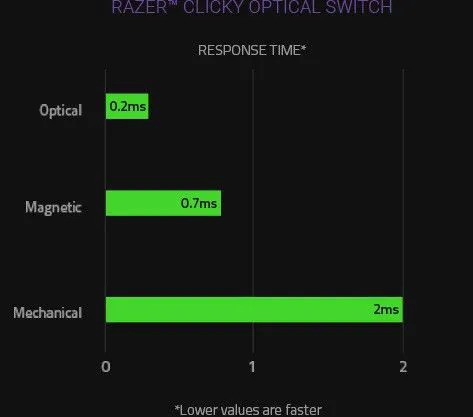
Companies selling optical switches often claim they are faster than traditional switches. Because they don’t require debouncing, that’s technically true. And PC gaming peripheral companies often pair optical switches with high polling rates for even wider claims of ultra-low latency.
A marketing image from Razer claims that optical switches have lower response times than magnetic and traditional mechanical switches. Take it with a grain of salt.
Credit: Razer
A marketing image from Razer claims that optical switches have lower response times than magnetic and traditional mechanical switches. Take it with a grain of salt. Credit: Razer
But would an average person notice quicker input when typing an email with an optical keyboard? Almost certainly not.
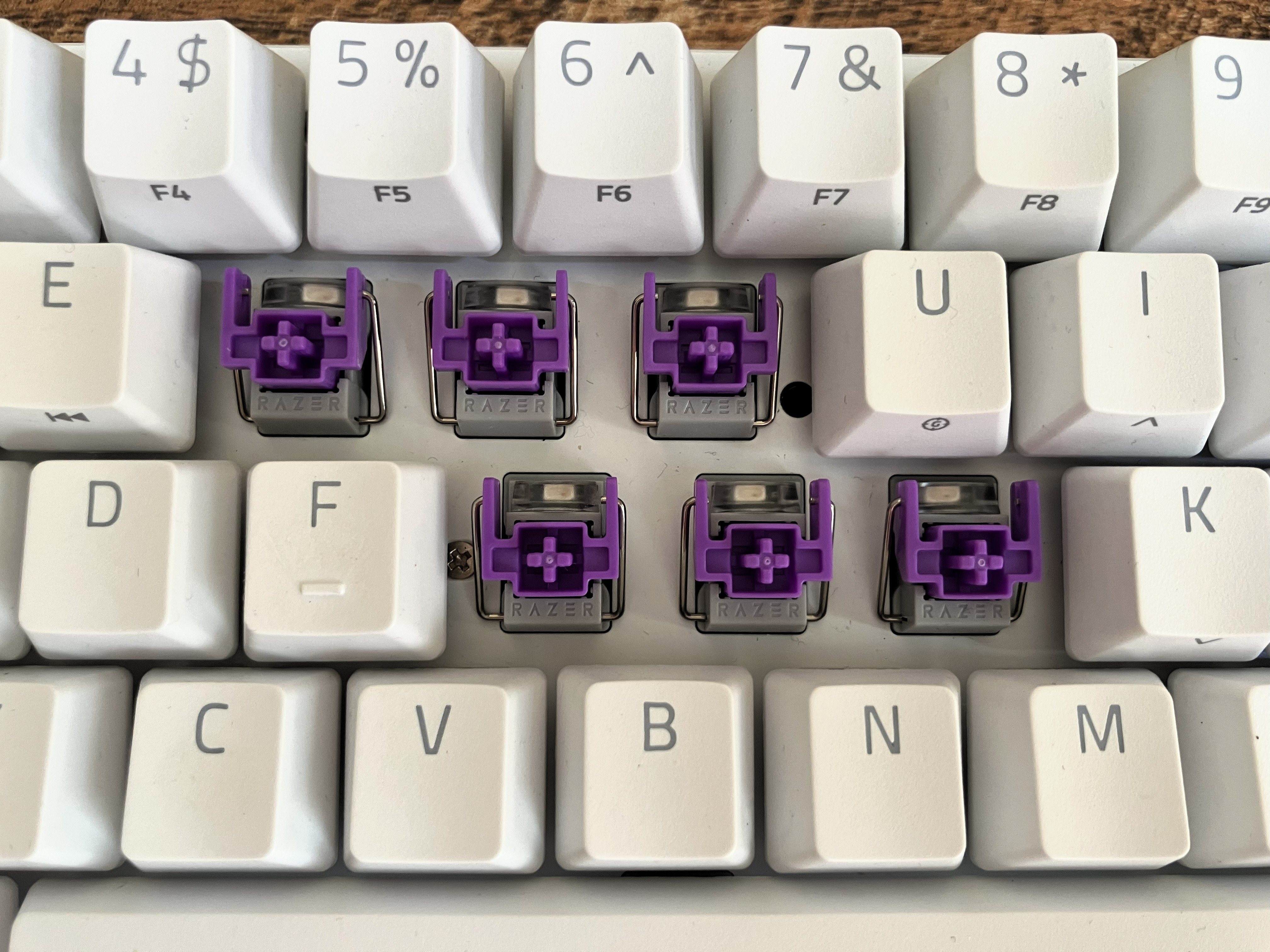
I asked Razer’s spokesperson if the design of optical switches precludes Razer’s optical keyboards from hot-swappability. Since optical switches aren’t subject to the same amount of degradation as traditional mechanical switches, the representative argued, users won’t need to swap them over time. But that argument is about longevity, not customizability.
“While the switches themselves are not soldered on, the keyboards are engineered as a fixed assembly to maintain the precise alignment required for consistent and accurate performance,” Razer’s rep told me.
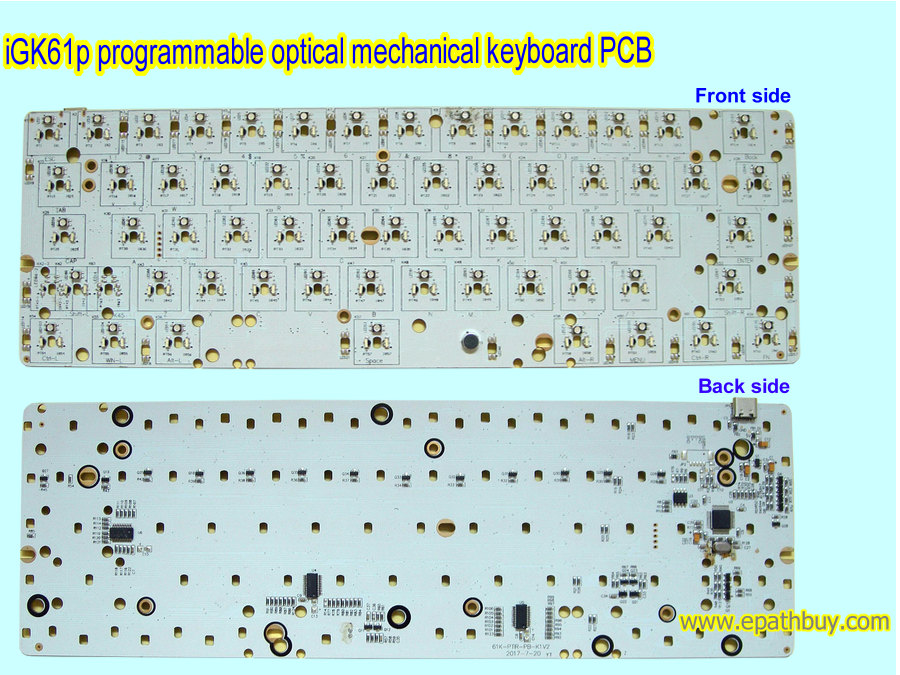
An ad for an optical keyboard PCB for keyboard builders.
An ad for an optical keyboard PCB for keyboard builders. Credit: ePathBuy
Electrostatic capacitive switches
Electrostatic capacitive (EC) mechanical keyboards differ from traditional mechanical keyboards, but they remain closely tied to the technology’s origins.
IBM’s Model F—one of the first and most influential mechanical keyboards—used a capacitive PCB with its famous buckling spring switches. When a buckling spring switch is depressed, a capacitive flipper attached to the bottom of the switch’s spring is forced forward. This changes the capacitance of the two capacitive pads beneath it, registering an input.
In today’s EC keyboards, each switch has a conductive element. When the switch is depressed, the capacitance between the conductive element and the capacitive sensor pad on the PCB beneath it increases as the conductive element moves closer to the sensor pad.
Today’s EC keyboards, including new, non-IBM “Model F” keyboards and Topre keyboards, all use a capacitance-sensing PCB but with varying switch designs.
Topre switches
Topre switches are among the best-known—and most expensive—EC switches. Topre keyboards are lauded for their “thocky” sound: a clean, soft, distinct thud that’s not rattly or clacky (assuming you’re using ping-free, quality stabilizers).
The Type-S Topre silent electrostatic capacitive switches I’ve used have had remarkably smooth travel as they depress and reset, making every part of the keypress feel predictable and intentional.
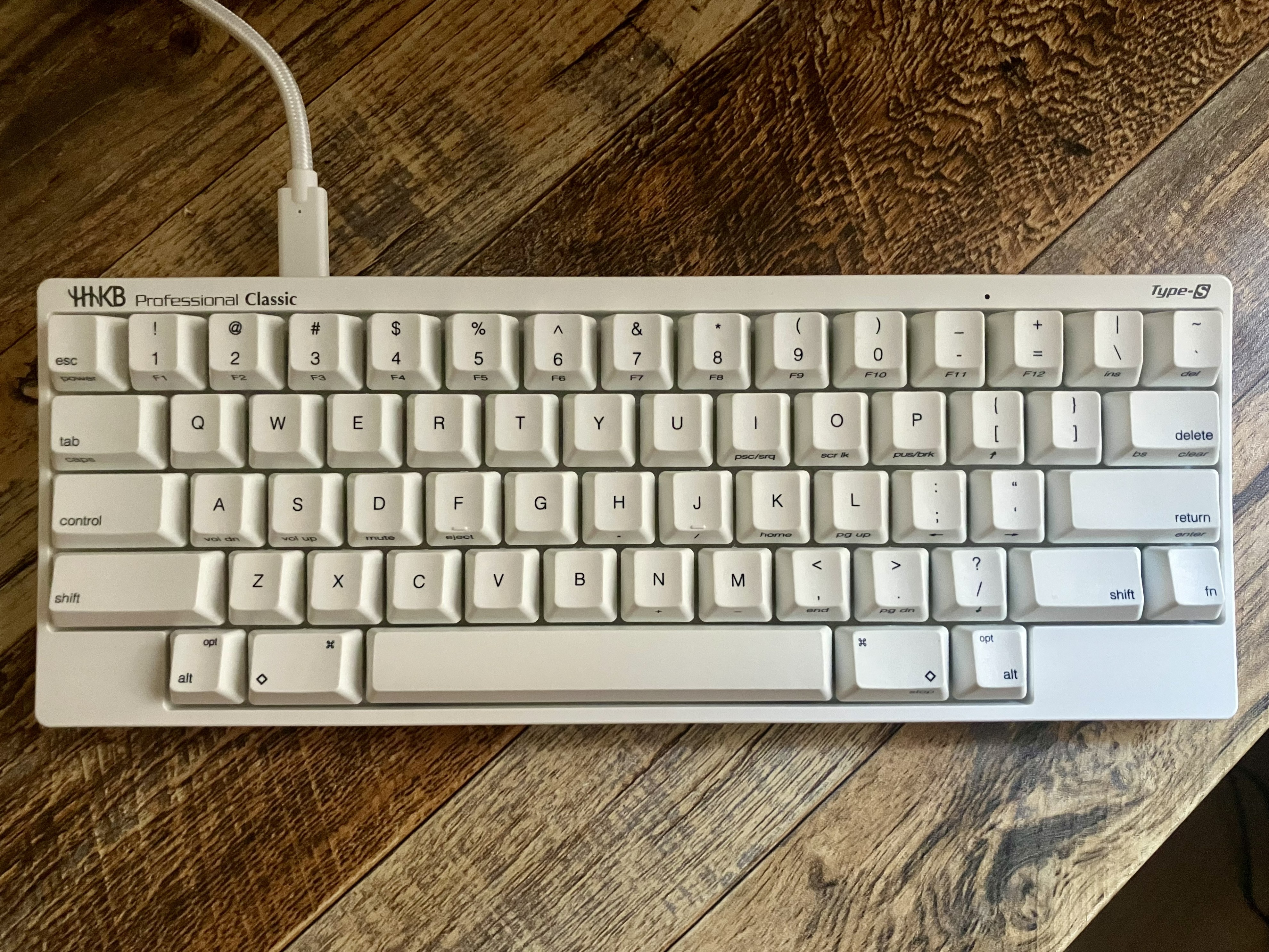
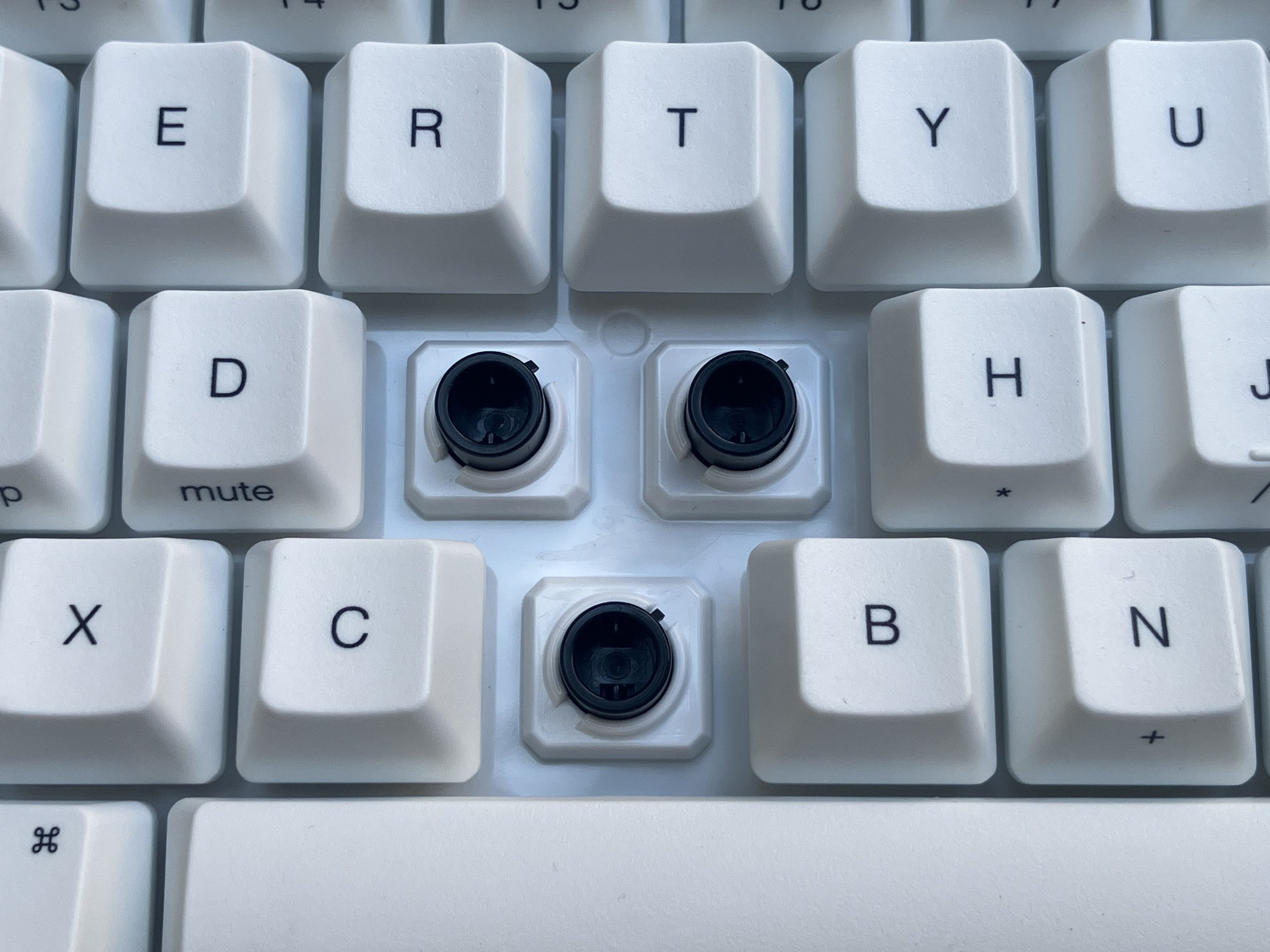
HHKB’s Professional Classic Type-S keyboard has Type-S Topre silent EC switches. Even without arrows or a numpad, it is $269 as of this writing.
Credit: Scharon Harding
HHKB’s Professional Classic Type-S keyboard has Type-S Topre silent EC switches. Even without arrows or a numpad, it is $269 as of this writing. Credit: Scharon Harding
Topre keyboards are unique among so-called “mechanical keyboards” in that they work similarly to rubber-dome membrane keyboards. With the other switches mentioned in this guide, the resistance you feel when pressing a key comes from the switch’s spring. In a Topre switch, that resistance comes from the rubber dome.
The Professional Classic Type-S keyboard’s Topre switches.
Credit: Scharon Harding
The Professional Classic Type-S keyboard’s Topre switches. Credit: Scharon Harding
More details on how Topre switches work come from Topre Corporation’s 1986 patent (PDF):
A keyboard switch is provided with an insulating substrate, a first electrode laid on the insulating substrate, a second electrode formed of a conical coil spring and facing the first electrode, a dielectric disposed on the first electrode, a button positioned on the top portion of the second electrode, and a rubber cap disposed between the button and second electrode, for giving snap feeling to an operator when the button is depressed and the capacitance of the switch exceeds a given value. The capacitance varies with the change in the facing area, which changes substantially in proportion to the depth of depression of the button. The switch is capacitive-coupled for a switching operation and the snap feeling is given to the operator when the capacitance exceeds the given value.
EC switches don’t always look different from regular mechanical switches. Varmilo and NiZ’s EC switches, for example, have Cherry MX-style, cross-shaped stems and plastic housing. NiZ EC switches use a conical spring and rubber dome and forego metal leaves, just like Topres do. But Varmilo’s EC switches look like standard mechanical switches and even have metal leaves (these leaves never touch each other; they’re for creating variable capacitance, which occurs as the distance between them changes).
A profile view of an EC switch from Chinese manufacturer NiZ. NiZ
Hall-effect switches
Hall-effect switches are based on the Hall-effect principle, which American physicist Edwin Hall developed in 1879. In simple terms, if a magnet is placed near an electrical current flowing through a conductor, the current’s electrons are pushed toward one side of the conductor. This creates a small voltage, which is perpendicular to the direction of the electrical current’s flow, across the conductor.
In 1968, Honeywell made the first keyboard with Hall-effect sensors. Of course, other keyboard types were cheaper to produce, relegating Hall-effect keyboards to an afterthought for decades. Hall-effect sensors started making a comeback in the ’90s—Sega used them in its Saturn and Dreamcast controllers, giving them a reputation for durability and resistance to stick drift, something Switch 2 owners wish Nintendo would emulate.
And with that reputation, Hall-effect sensors became increasingly common among keyboard builders in the 2010s and showed up in prebuilt gaming keyboards in 2021, starting with Wooting’s Two HE.
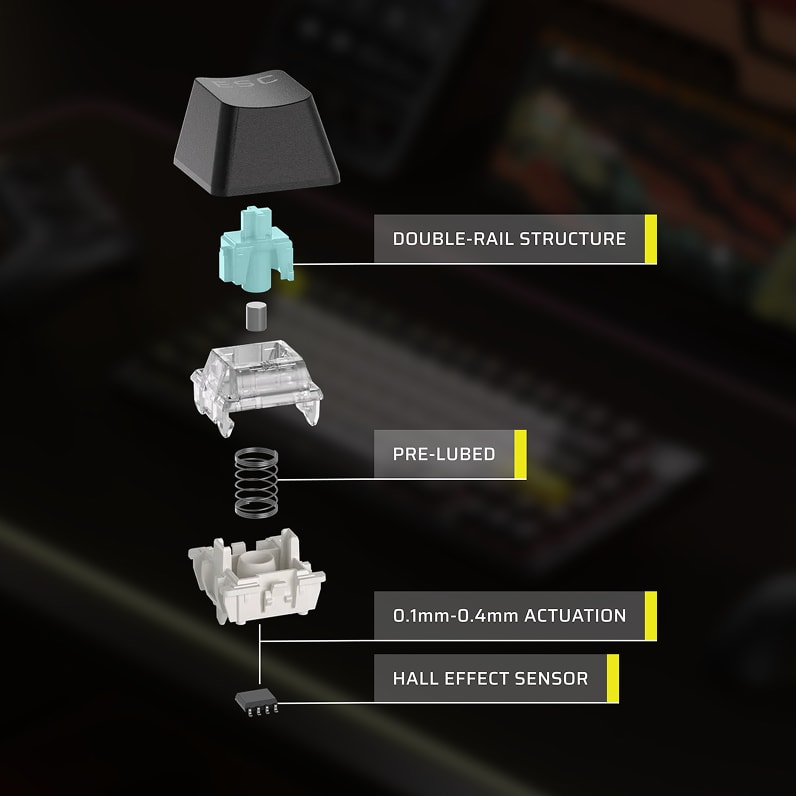
An exploded view of Corsair’s MGX Hall-effect keyboard switch. The magnet is south of the “double-rail structure” stem.
Credit: Corsair
An exploded view of Corsair’s MGX Hall-effect keyboard switch. The magnet is south of the “double-rail structure” stem. Credit: Corsair
Each Hall-effect switch has a magnet inside its stem. Pressing the switch moves the magnet closer to the keyboard’s PCB, which houses a Hall-effect sensor for each key. Each sensor contains a semiconductor element that conducts the electrical current. As the switch’s magnet moves closer to its dedicated sensor, its changing magnetic field alters the voltage produced across the sensor’s semiconductor element. When the keyboard’s microcontroller detects a change in a sensor’s voltage, it registers input.
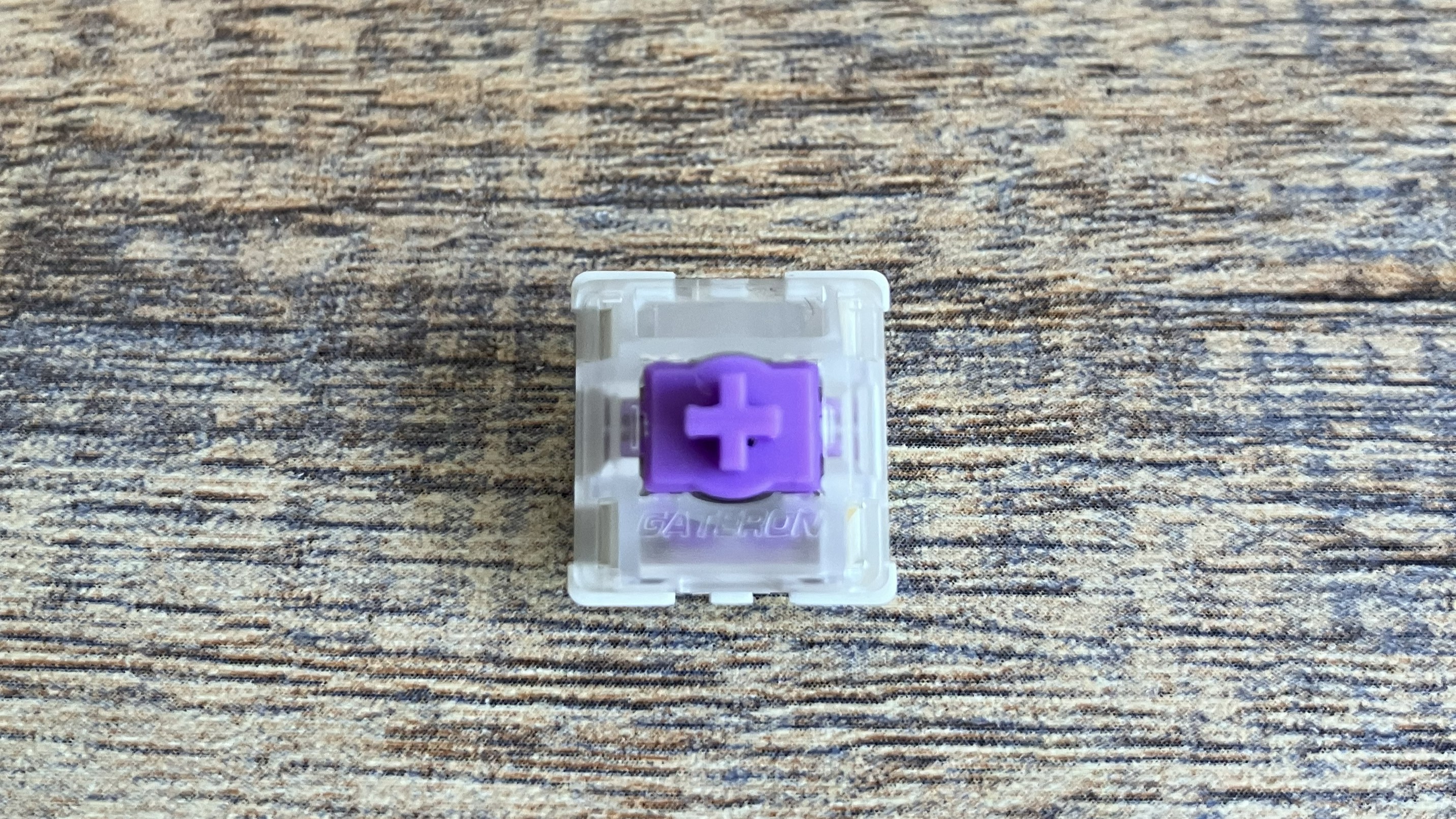
Gateron’s Nebula magnetic switch.
Credit: Scharon Harding
Gateron’s Nebula magnetic switch. Credit: Scharon Harding
Hall-effect keyboard building
Some nuances make building a keyboard with Hall-effect switches more complex than building a keyboard with standard or other types of contactless switches.
It’s even possible to find a hot-swappable Hall-effect keyboard, keyboard kit, or keyboard PCB that isn’t compatible with your Hall-effect switches. Hall-effect switches come in 3-pin or 5-pin varieties, and the polarity of the switch’s magnet must be compatible with the PCB’s sensors, or depressing the switch may not trigger the sensor beneath it.
Additionally, Hall-effect switches have various magnetic flux ranges, usually measured in Gauss, that indicate the minimum and maximum magnetic field strength the switch supports. This matters for some users, particularly those who want their keyboard to detect very light presses. And a switch with a broader magnetic flux can support a larger analog range.
So one company’s Hall-effect keyboard may have north-facing magnets with a magnetic flux range of 120 Gs to 750 Gs, while another has south-facing magnets with a magnetic flux range of 102-905 Gs. Swapping the two keyboards’ switches could cause compatibility issues, as one keyboard’s sensors or firmware may not support the new switches’ magnetic flux range.
Magnetic flux and polarity specs are hard to find because there’s no standard for measuring magnetic flux, and many users don’t seek or need this information. Monsgeek, one of the companies that provides magnetic flux specs for switches, told me that “most casual users don’t need to worry about magnetic flux numbers, but for enthusiasts who like to fine-tune actuation distance, rapid trigger, or overall switch feel, these specifications can be helpful and make the keyboard easier to customize.”
Keychron doesn’t provide magnetic flux specs for its magnetic switches because magnetic flux “is an internal engineering parameter of magnetic switches, not a user-facing performance metric,” Paul Tan, Keychron’s COO, told me.
Keychron’s keyboard firmware and launcher calibrate the magnetic sensor to each switch so “users experience consistent performance regardless of minor variations in magnetic field strength,” Tan said.
TMR switches
TMR keyboards became available in 2024 and are marketed as using more advanced sensing technology than mechanical, optical, and Hall-effect keyboards. Like Hall-effect switches, tunnel magnetoresistance (TMR) switches use magnets, but TMR keyboard PCBs use a different type of sensor.
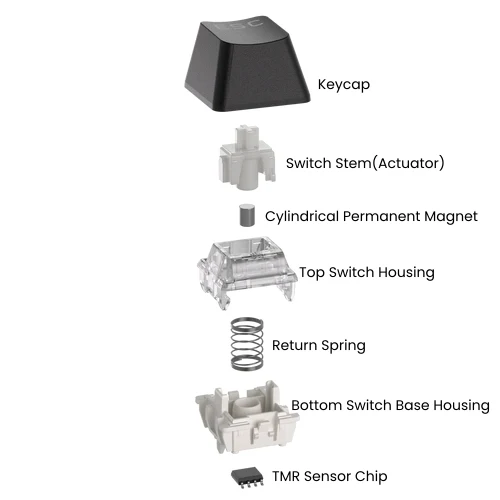
An exploded view of a TMR switch with a TMR sensor, courtesy of keyboard manufacturer Uniqmag.
An exploded view of a TMR switch with a TMR sensor, courtesy of keyboard manufacturer Uniqmag. Credit: Uniqmag
TMR sensors have two ferromagnetic layers made of thin-film magnetic materials. One has a fixed magnetization direction, while the other can change if a magnet is placed near it. An even thinner insulating barrier separates the two layers.
When you depress a TMR switch, the magnet inside its stem moves toward a dedicated TMR sensor on the keyboard’s PCB. This changes the alignment of the two ferromagnetic layers, which alters how easily electrons can tunnel through the insulating barrier (a quantum phenomenon known as tunnel magnetoresistance) and changes the sensor’s electrical resistance. When this change in resistance occurs, the sensor produces an electric signal, which the keyboard’s microcontroller registers as an input.
Hall-effect versus TMR keyboards
In general, TMR sensors consume less power than Hall-effect sensors. This can result in a TMR keyboard having a longer battery life than an equally specced Hall-effect keyboard. But additional factors, such as battery capacity and lighting, affect how long a wireless keyboard will last before you need to charge it, too.
A higher peak sensitivity means a keyboard’s sensors produce a larger electrical response to changes in the magnetic field caused by the position of the switch’s magnet. TMR keyboards can have higher peak sensitivity than Hall-effect keyboards because a TMR sensor can produce a larger electrical signal in response to changes in the magnetic field caused by depressing a switch.
Higher peak sensitivity lets a sensor detect small changes in movement, which could allow you to set a switch’s actuation points in 0.01 mm increments instead of the more common 0.1 mm, for example. This level of customization is more common among TMR keyboards but is also available in good Hall-effect boards. Keep in mind, though, that software often inaccurately depicts the actuation points of keyboards, albeit by amounts that are hard to notice, according to RTINGs’ testing).
In fact, some Hall-effect keyboards have a higher peak sensitivity than some TMR keyboards. Other factors, including the sensor and its placement and the keyboard’s polling rate and firmware, can affect a keyboard’s peak sensitivity. On rare occasions, electromagnetic noise or external magnetic fields can make magnetic-switch keyboards act erratically around other electronics, as seen in the video below.
Hall-effect sensors generally have a lower signal-to-noise ratio than TMR sensors, so they often rely on signal amplification. Because TMR sensors can provide a stronger signal and better signal-to-noise ratio, they can be less susceptible to electrical noise than Hall-effect keyboards.
Price and availability
TMR keyboards have been around for less time and generally have higher wafer and packaging costs, so they tend to be more expensive than similarly specced Hall-effect keyboards, although there’s also less variety. Additionally, TMR switches, PCBs, and barebones kits can be difficult to find, making TMR keyboard building even trickier than building a Hall-effect, EC, or optical keyboard.
Due to the operating principles of Hall-effect and TMR switches, the Hall sensor must be directly aligned with the magnet inside the switch to ensure proper performance. This requires the sensor to remain in a fixed position on the PCB, which makes implementing mechanical, hot-swap sockets challenging without causing interference.
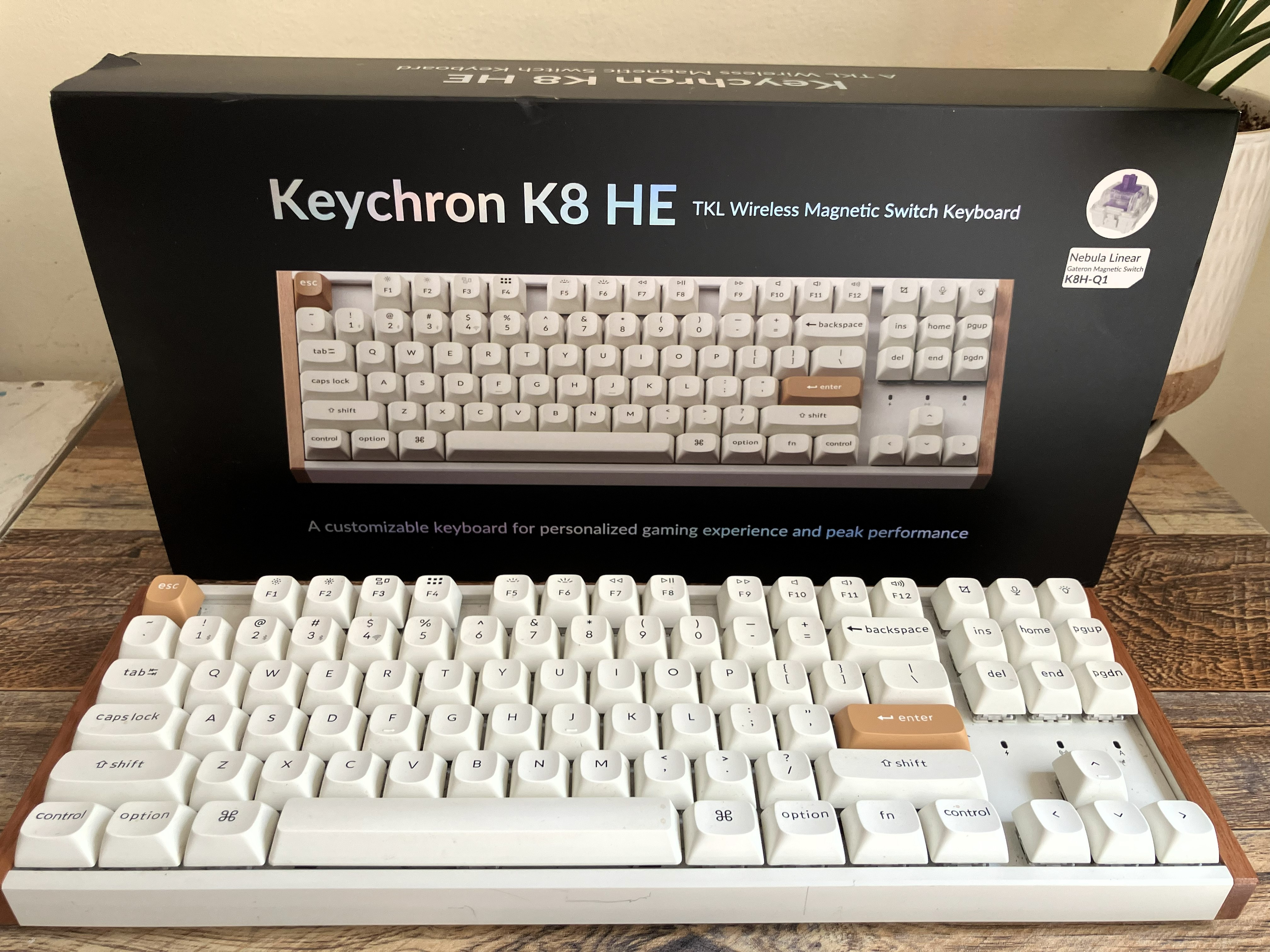
Some companies have marketed TMR keyboards as Hall-effect boards. This seems counterintuitive, given the benefits TMR can offer over Hall-effect. In a September blog post, Keychron said it added the “HE” tag to the name of its TMR keyboards because “early on, TMR wasn’t widely known. Using the widely known ‘HE’ magnetic in the keyboard industry helped the market quickly understand our keyboard using magnetic switches—though our fundamental tech has always been Keychron.”
Keychron calls its keyboard “HE,” but it’s actually TMR.
Credit: Scharon Harding
Keychron calls its keyboard “HE,” but it’s actually TMR. Credit: Scharon Harding
Inductive switches
The first inductive-switch consumer keyboards released last year. Ducky and Epomaker marketed their respective keyboards to gamers looking for analog input and lower power consumption than Hall-effect keyboards can provide. Inductive keyboards can consume less power than Hall-effect and TMR keyboards because they don’t require a dedicated sensor for each key, although other factors can affect battery life. They’re also generally less susceptible to interference from other devices’ magnetic fields because the switches don’t contain magnets.
Each switch has a conductive metal actuator, often cone-shaped, that descends toward the keyboard’s PCB when the switch is depressed. As the cone moves toward the PCB, it eventually enters and distributes an electromagnetic field created by coils on the PCB. This creates eddy currents, which increase the coils’ effective inductance, following Lenz’s law. Sensors on the PCB pick up the coils’ change in inductance, causing the keyboard to register an input.
An exploded view of an Unionwell inductive switch.Unionwell
Some manufacturers, like Cherry, also claim that inductive-switch keyboards offer higher precision, including with analog input. But because inductive switch keyboards are newer, it’s difficult to gauge that claim. For example, after testing the One X, RTINGs reported that “accuracy is impressive but not better than some of the highest-performing Hall-effect keyboards to date.”
Availability
The only companies currently making inductive switches appear to be Cherry, Kailh, and Unionwell. Aesco also says it makes inductive switches through a collaboration with Unionwell and Kailh. Only Kailh seems to be selling switches individually, meaning most inductive switches are available only through prebuilt keyboards.
A handful of companies, including Ducky, Aesco, Aula, Epomaker, Black Shark, DAREU, and Redragon, currently sell inductive keyboards. DIY options are even rarer.
Scharon is a Senior Technology Reporter at Ars Technica writing news, reviews, and analysis on consumer gadgets and services. She’s been reporting on technology for over 10 years, with bylines at Tom’s Hardware, Channelnomics, and CRN UK.
by: Ildar Farkhatdinov, The Conversation | Ars Technica
One of the earliest known concepts was patented in 1890 by Nicholas Yagn, a self-taught Russian inventor, who designed a wearable apparatus for exercising. And in 1919, the American Leslie C. Kelley received a patent for a steam-powered device to support walking, one of the first powered exoskeleton concepts.
By the end of the 1960s, multiple actuated robotic exoskeletons incorporating electronic control systems had been developed. Since then, exoskeleton research and development has advanced rapidly, leading to the emergence of numerous devices with commercial and clinical applications.
How they work
Exoskeletons generate forces to make the wearer stronger, move faster, or fatigue slower.
Some devices also improve movement accuracy and dexterity or support overall posture. Some are designed to elevate human capabilities beyond what is typically possible. Others help patients with reduced physical capacity.
Modern, active robotic exoskeletons typically consist of a lightweight mechanical frame with ergonomic attachments to the human body. These are usually affixed at the trunk, waist and to upper or lower limbs.
For example, the Hypershell device seen in Ukraine attaches to the user’s waist and thighs, to assist with hip flexion and extension and strengthen lower-body movement. The SuitX device used by IKEA attaches to the torso and upper limbs, to support the back and shoulders.
In most powered exoskeletons, mechanical components called actuators convert electric power from batteries into mechanical movement, generating forces that support or enhance the body’s movement.
The actuators are coordinated by control units embedded in the exoskeleton. These define the trajectories of the exoskeleton’s movements and how much force it applies to the wearer’s body. Exactly how the device moves, and how forcefully, will depend on the task and the state of the user—with the device using sensors to determine what’s needed.
For instance, if a wearer starts running, an exoskeleton will speed up its supportive movements. If it senses they’re beginning to fatigue, it might increase its power output to compensate.
With Paramount CEO David Ellison overcoming the final hurdle blocking his expansion of the Paramount media empire, the billionaire media executive announced on X (formerly Twitter) that the newly merged entity combining Paramount and Warner Bros. Discovery will be named Skydance.
The announcement comes after the company entered into a consent decree to settle antitrust claims brought by a group of 12 state attorneys general, who had sued in July over concerns that the merger would concentrate too much control over news networks, cable TV and the film industry. With the last legal opposition cleared, the path was open to finalize the massive the $111 billion merger on Sept. 21.
“Together, we are Skydance: a creative-first home for bold, quality storytelling,” Ellison posted on Friday. “We wanted a name that would give the combined company an identity of its own while allowing Paramount and Warner Bros. — and all our extraordinary brands — to remain in the spotlight.”
There was a year-long bidding battle for Warner Bros. Discovery, leaving Ellison as the top bidder after Netflix dropped out. The name Skydance comes from Ellison’s love of aviation and aerobatic “skydancing.” David’s father is Larry Ellison, who is co-founder and chief technology officer of Oracle and one of the richest people in the world.
What once was the peak, is now just the beginning.
Paramount and Warner Bros. shaped over a century of culture. By combining them, we aren’t rewriting history — we’re equipping these iconic studios with a more powerful engine. Together, we are Skydance: a creative-first home for… pic.twitter.com/uInLRY3IrE
A Hollywood empire of studios, news, networks and streamers
As viewers, it’s unclear how streaming content from Warner Bros., HBO and Paramount via apps like HBO Max and Paramount Plus will change. But the merger will undeniably affect employees at the mega media company, now one of the largest in history. Much of the legal opposition concerned their fate, and the consent decree attempted to safeguard employment, film production and distribution and consumer pricing.
In practice, employees usually lose out in corporate consolidation, regardless of protections. Harvard Business Review estimated that up to 30% of workers get laid off in mergers like these, where there’s a significant overlap in the business, though that oft-cited figure is from 2017.
The bigger worry, though, is media monopoly. Critics worry that adding CNN to the company’s portfolio could lead to widespread restructuring and corporate upheaval, similar to recent struggles at the CBS News division. Corporate convergence also risks homogenizing news content by potentially suppressing divergent viewpoints — all for minimal reward, given that CBS’s own ratings are reportedly way down.
“If this trend of consolidation continues, we will be left searching dominant media outlets in vain for news and information that challenges the powerful and stands up for people who are struggling to pay monthly bills, put food on the table and engage in local civic life,” nonprofit watchdog Free Press co-CEO Jessica J. González said in a prepared statement earlier this week.
The Block the Merger coalition also posted a follow-up statement: “Allowing the Paramount Skydance-Warner Bros. Discovery merger to move forward with no meaningful structural remedies will cost jobs, mute creativity, weaken independent journalism, and damage our First Amendment rights. The ripples of this merger will be far-reaching, long-lasting, and impossible to contain.”
The Writers Guild of America East and Writers Guild of America West had filed a separate lawsuit to halt the merger, alleging that it was illegal and would harm writers. Once the state attorneys general backed out of the battle, WGA cited an inability to sustain legal costs on its own and dropped its companion lawsuit.
As part of the consent decree, Paramount agreed to establish an oversight board of journalists to protect the editorial independence of CNN and CBS News. Critics have called the oversight board “toothless,” noting that its members are appointed and paid by the company, that its authority is unclear and unbinding, and that final control rests with Ellison.
We reached out to Skydance for comment and didn’t immediately hear back.
Disclosure: Lori Grunin has stock in Paramount from when CNET was owned by CBS.
Lori Grunin
Senior Editor / Computers and Gaming Hardware
I’ve been reviewing hardware and software, devising testing methodology and handing out buying advice for more than 25 years. See full bio
Bonus: Every Electric’s batteries are beloved by household cats.
My family has spent four summers participating in demand response programs whereby utility companies pay customers to reduce energy use on the hottest summer days. Most summers have involved carefully precooling our New York City apartment before switching off the air conditioners and sweating it out during the designated demand response periods.
But this year, we kept our window air conditioners running throughout a heat dome event that drove daytime temperatures into the triple digits and made the nights oppressively hot. The difference was that we powered the air conditioners through two household batteries tucked away unobtrusively in the corners of our living room and bedroom.
We were among about 1,000 New York City households that took part in a free and growing program offered by the local startup Every Electric. The company’s proposition is simple: Get one or more batteries delivered to your home, plug the batteries into a standard wall electrical outlet, and then plug your window air conditioners into the batteries. Households can keep running air conditioners as usual during peak demand periods while also earning money through the local demand response program with the utility company Con Edison.
“Being able to make air conditioners drop off the grid without actually impacting the comfort of residents was really awesome to see,” said Andrew Wang, co-founder and CEO of Every Electric, in an interview with Ars.
Wang and cofounder Richard May first met while working together as postdoctoral researchers at the Columbia Electrochemical Energy Center at Columbia University in New York City. In 2023, they launched the startup under the name Standard Potential Co., with a focus on developing sodium-ion battery chemistry for commercialization.
But they soon pivoted to a very different business plan—deploying residential batteries across New York City households to create a network of energy storage resources acting as a virtual power plant. The company officially rebranded as Every Electric in 2026.
Getting set up
Many companies have established virtual power plant programs to offer utility companies greater flexibility and resources for managing electricity demand on the grid. Every Electric stands out for piloting a free power bank program that loans batteries to apartment renters and other households in exchange for a temporary deposit, which the company has reduced from $50 to $30 per battery.
The deposit is returned when a household decides to send the batteries back. Customers can also purchase the batteries outright for $650 each.
The battery delivery and setup process is straightforward. When the drop-shipped batteries arrived in their boxes, I plugged them into the appropriate wall sockets and followed a simple process to register the battery serial numbers with Every Electric and connect the batteries to my home Wi-Fi network.
Once connected to a local household’s Wi-Fi, the batteries act as power banks that automatically charge during low-demand periods at night and discharge their energy storage when air conditioners are running during peak demand periods. Every Electric automatically manages the battery cycles remotely.
Customers eventually get paid through Every Electric online accounts linked with Con Edison’s Smart Usage Rewards program. Every Electric gets paid directly by Con Edison as a program partner and, in turn, generally promises residents can earn $150 each year per air conditioner.
“There’s a business model innovation here where you make [household batteries] as easy and as accessible as possible, you get them as far and wide as possible, and then you essentially share in the value that you provide in the grid,” Wang told Ars. “We split the earnings so that households can see tangible benefits, and then we pay off the assets and grow the program as it goes along.”
Using the battery
Every Electric’s battery of choice is the Bluetti Elite 200 V2, a lithium iron phosphate battery that can store 2 kilowatt-hours of energy while being compact enough for smaller New York apartments. It’s compatible with any 120V plug-in air conditioner, but it has four standard AC sockets that can also accommodate other appliances such as plug-in fans or air purifiers.
Additional battery sockets can charge laptops, smartphones, and other electronic devices that have power cables using USB-A or USB-C connectors. A 12V DC outlet in the style of a car’s cigarette lighter is also available.
The batteries can even provide backup power during power outages. For example, households can plug their Wi-Fi routers or refrigerators into the batteries to keep those devices running.
One bonus has been the discovery that feline family members of various New York households especially enjoy hanging around the batteries. “We found out cats are big fans of the powerbanks,” Wang told Ars. “I think it’s because they’re a little warmer.”
Despite such upsides, there have been a few kinks to work out during peak demand periods. When the utility company Con Edison had to reduce voltage for hundreds of thousands of customers across New York City to protect grid equipment during extreme heat periods, the power draw from the batteries tripped my apartment unit’s circuit breaker on two separate occasions.
Every Electric’s team responded by continually updating the battery firmware to reduce the risk of tripping local circuit breakers. That challenge can vary depending on each customer’s building.
“Every household is unique, and sometimes you have pre-war buildings with old wiring,” Wang told Ars. “You have to manage both some of the losses that are on the ConEd side and then some of the losses that might be in the wiring in people’s walls to finetune how we operate the power banks to fit within the parameters of each household.”
From dozens to thousands of batteries
The company initially deployed 100 batteries across 65 households in the first test run in the summer of 2025. This year, it scaled up deployment to 2,000 batteries across about 1,000 households, providing the total equivalent of four megawatt-hours of energy storage during the summer of 2026.
“If you picture one of the big utility-scale, containerized batteries, one of those blocks is usually four megawatt-hours,” Wang explained. “So we’ve sort of taken that up and broken it up into 1,000 pieces spread across the city.”
This approach opens the door for distributing residential batteries to many more households by making inroads into the largest US city with more than 2 million rental homes. And more than 80 percent of New York City housing was built more than 50 years ago, meaning that they typically rely on window air conditioners without central air conditioning.
But not every initial customer has been an apartment dweller—early adopters also include residents of single-family homes in the New York City boroughs of Queens and Brooklyn. Some residents have even paired the batteries with plug-in solar panels to make the most of combining household energy storage with renewable power.
Whatever the home configuration, Every Electric’s program has proven popular in its first two years. The wait list grew to requests for more than 15,000 batteries this past summer—and Every Electric is aiming to scale up to more than 10,000 deployed batteries in 2027.
Every Electric remains focused on New York City as its home court. But as the battery network grows, the startup is also exploring new ways for Con Edison and other utility companies to get value from the distributed energy storage system beyond just participating in the demand response program.
“We have new utility territories that are coming to us—they’re seeing that you can drop-ship literal megawatt hours to customers as a solution,” Wang said. “So we’re certainly looking at how to map this model onto new markets.”
Jeremy Hsu is a reporter exploring a wide range of topics across deep tech and AI. He has previously written for New Scientist, Scientific American, IEEE Spectrum, Wired, Undark Magazine and MIT Tech Review, among many other publications, about topics such as deepfakes, data centers, drones, battery tech, robotics, and GPS jamming. He also has a Master of Arts in Journalism from NYU, and a bachelor’s degree from University of Pennsylvania in History and Sociology of Science, with a minor in English.
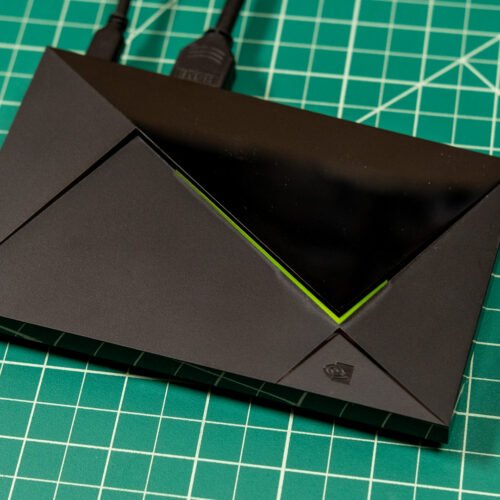
The era of generative AI has upended technology supply chains, and there is one ironclad rule in 2026: If it has memory or storage, it’s getting more expensive. Even devices with years-old tech inside are still apparently subject to that unwritten rule. Nvidia has just announced that the Shield TV Pro is getting $100 more expensive, effective immediately.
The most recent version of the Shield streaming box debuted in 2019, running Android TV with AI upscaling and hardware decoding for almost any type of media. While it ran an aging Tegra X1+ processor, that was (and still is) fast for a TV media streamer. The device launched at $199.99, with a non-Pro variant at $149.99. The non-Pro Shield has since been discontinued, but the Shield TV Pro lives on at the new $299.99 price.
Nvidia has confirmed that you can blame AI for the higher Shield TV pricing. “Starting October 2, SHIELD Pro will be priced at $299. The cost of components, including memory, has increased substantially across the industry,” a spokesperson told Ars.
When we talked to Nvidia’s Andrew Bell earlier this year, he framed the Shield as a passion project, but it looks like passion projects still have to pay the bills at Nvidia. In that interview, Bell explained that Nvidia still actively manufactures the Shield and sells every unit it makes. Without a stockpile of pre-AI hardware to sell, new Shield TV units are subject to the same supply chain constraints as today’s smartphones and computers.
A marketing image for Samsung’s M-series TVs. Credit: Samsung
A marketing image for Samsung’s M-series TVs. Credit: Samsung
What makes a display a Mini LED display?
It’s a question that sounds like it should have a simple answer. But it’s now at the center of a lawsuit between two of the biggest names in TVs, with TCL accusing its longtime competitor Samsung of falsely advertising budget LCD-LED TVs as Mini LED sets.
TCL may have a point. Samsung’s M-series TVs, which range from $300 for a 43-inch model to $2,300 for a 100-inch model, do raise some legitimate questions about what should qualify as Mini LED. More broadly, though, the dispute highlights a problem for shoppers: Without agreed-upon standards for what “Mini LED” actually means, manufacturers have plenty of room to define the technology for themselves.
TCL accuses Samsung of Mini LED “fraud”
In a lawsuit (PDF) filed in the US District Court for the Central District of California in late August, TCL accused Samsung of resorting to “fraud” to compete with TCL’s QM-series of Mini LED TVs. Samsung’s M70H, M80H, and M90H are “merely recycled… pre-existing, low-end, standard LED televisions, [which are Samsung’s entry-level] Crystal UHD line… re-labelled… as ‘Mini LED,’” TCL’s suit says.
“Samsung’s M Models contain none of the technological advancements associated with Mini LED technology, including [full array local dimming],” the complaint reads.
Samsung didn’t respond to questions I sent about specific claims in TCL’s lawsuit. Instead, a spokesperson shared a statement noting that it intends to vigorously defend against the lawsuit.
The FALD debate
TCL argues that M-series TVs don’t have backlights capable of true full array local dimming, or FALD, the most advanced type of backlighting technology available in LCD-LED displays.
A FALD backlight uses dozens to thousands of small LEDs, or Mini LEDs, grouped into different zones, each with individually controllable brightness levels. This helps boost contrast, which is critical for image quality and essential for delivering quality HDR on an LCD-LED display.
According to a specification line titled “Micro Dimming” on the M-series TVs’ product pages, the devices use “Supreme Mini LED Dimming.” The spec sheets (PDF) available for download from those pages include a tiny footnote that clarifies: “Supreme Mini LED Dimming is Software-based (not full-array hardware-based) technology.”
Samsung also uses the term “Supreme Mini LED Dimming” on product pages for its Neo QLED TVs, which TCL accepts as true Mini LED TVs. The Neo QLED spec sheets don’t include the footnote, though.
Software-based dimming without individually addressable LED zones differs from the FALD technology described above. With software-based dimming, a TV typically analyzes each frame of a video, breaking it into different zones and determining each zone’s ideal brightness level. Using that information, the display modifies the frame’s brightness to boost perceived contrast. Critically, though, the display’s brightness level remains uniform across the panel, unlike in a display using a FALD backlight.
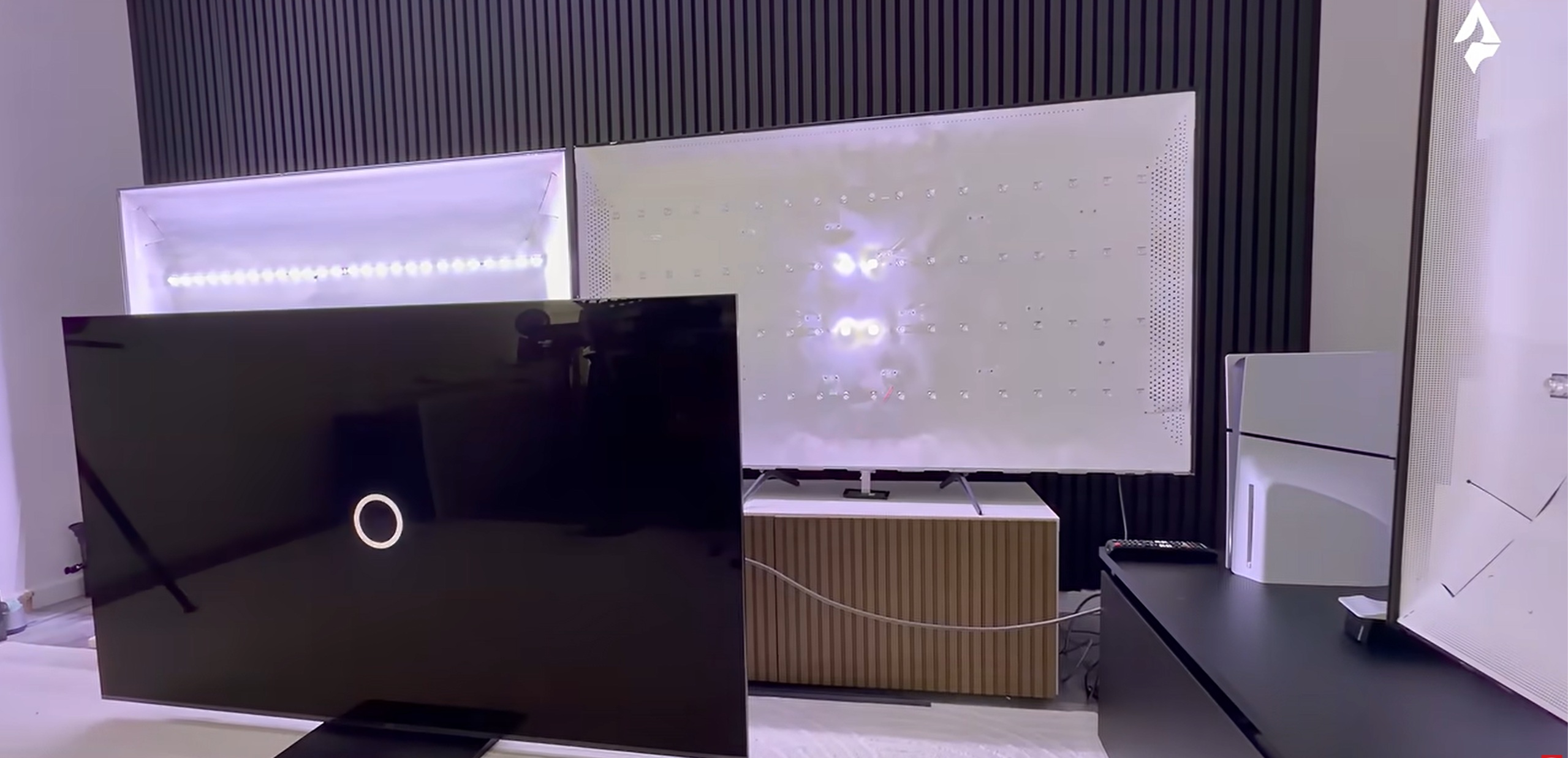
In this shot from AP Tech’s video, you can see the differences between how the backlights of the M80H (left) and TCL (right) manage the image shown on the TV in front.
Credit: AP Tech/YouTube
In this shot from AP Tech’s video, you can see the differences between how the backlights of the M80H (left) and TCL (right) manage the image shown on the TV in front. Credit: AP Tech/YouTube
Software-based dimming was more common on TVs from the 2010s, such as TCL’s P6-series and LG’s UH8500-series. But even then, software-based dimming paled in comparison to FALD, as Reviewed noted in 2016.
Software-based dimming “will never be as effective as a well-designed, hardware-based local dimming solution, especially in scenes that are more susceptible to blooming artifacts,” Guillaume Chansin, associate director of displays and XR at Counterpoint Research, told me.
“However, the software plays an important role to get the most out of the hardware, with some brands able to achieve comparable image quality with fewer LEDs or dimming zones,” he said.
Because displays that support software-based dimming work differently from those that use a backlight with individually addressable LED zones, they’re not what people typically think of when describing “FALD.”
Eric Virey, principal displays analyst at Yole Intelligence, considers FALD a hardware feature first and foremost. It requires a “2D array of LEDs uniformly distributed across the entire area of the display,” along with a good algorithm to help reduce blooming, he said, adding, “To me, a ‘software-based’ Mini LED dimming just doesn’t make any sense if you don’t have that full, 2D-array of LEDs or Mini LEDs in the backlight.”
An LED display with FALD should have better contrast than an equally specced display without it. But experts I spoke with took things further, suggesting that a display shouldn’t be considered Mini LED if it doesn’t support FALD.
“I think that is broadly agreed across the industry that FALD is a key and mandatory feature in Mini LED backlights,” Virey told me via email.
Bob O’Brien, Counterpoint’s research director, also equates Mini LED with FALD.
“Mini LED was originally introduced as an improved FALD technology, with more dimming zones. So among those in the industry, it has always been assumed that a Mini LED TV has FALD capability,” he told me.
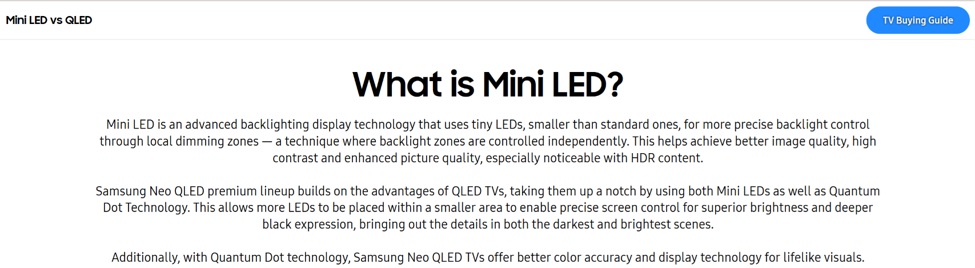
Even Samsung’s own website describing Mini LED suggests that local dimming is essential. “Mini LED is an advanced backlighting display technology that uses tiny LEDs, smaller than standard ones, for more precise backlight control through local dimming zones—a technique where backlight zones are controlled independently,” it says.
A screenshot from Samsung’s website explaining Mini LED.
A screenshot from Samsung’s website explaining Mini LED. Credit: Samsung
In its complaint against Samsung, TCL says it disassembled an M70H and M80H, both Samsung sets, and confirmed they can’t perform local dimming because they lack the necessary LED control chip and circuitry and use the same processor as Samsung’s entry-level Crystal TVs.
How mini should Mini LEDs be?
Although FALD support is key to TCL’s argument, a more obvious question might be whether M-series TVs use actual Mini LEDs. Again, though, there’s no industry-wide rule for what makes an LED “mini.”
TCL’s lawsuit claims that Mini LEDs “are generally .1 mm to .3 mm” and that the LEDs in Samsung’s M-series TVs are 0.5 mm. I’ve been unable to find a reputable source that refers to an LED as large as 0.5 mm as a Mini LED. I have even seen LEDs measuring more than 0.2 mm or 3 mm be considered a traditional LED in some cases.
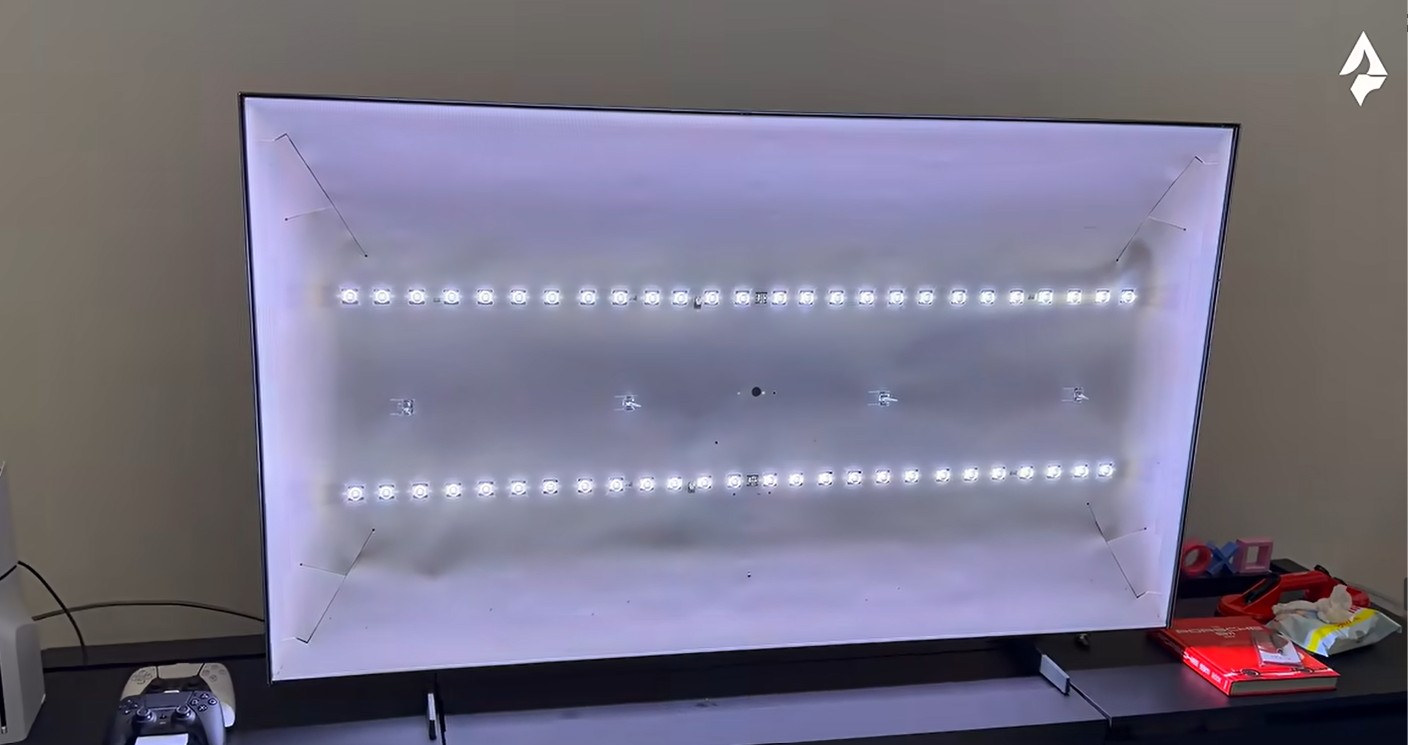
TCL further alleges that M-series TVs have a few dozen LEDs, while some Mini LED displays have thousands. Those LEDs aren’t arranged in an array on a panel; instead, they’re “arranged on two aluminum strips,” the filing says.
A teardown video from YouTube channel AP Tech also shows an M-series TV’s backlight consisting of two rows of LEDs.
The industry hasn’t established standards for how many LED zones or Mini LEDs a display needs to qualify as Mini LED. That can leave shoppers confused about what they’re actually buying. It also creates a gray area where manufacturers can set their own standards.
“There are no organizations with authority to make and enforce such standards. TV brands have historically exploited the lack of clear standards to be more creative in their marketing,” O’Brien said.
“I think that [TCL’s] claims are legitimate and raise some important question[s] for the entire industry, which lacks a clear definition of what a Mini LED display is,” Virey told me.
The problem can be seen elsewhere in the display panel industry with technologies like QLED.
The industry could try to create standards, but Virey thinks it would lead to “an endless race.”
“Each time there are new technologies, new marketing terms are invented and can easily be abused,” he said.
M-series performance
While enthusiasts may delight in digging into the complex underpinnings of backlight technology, most people just care about performance. So how are Samsung’s M-series TVs?
There aren’t many reviews. RTINGS found that the M80H had “low” contrast (6,440:1, according to the review site’s testing) that makes “dark scenes look washed out in a dark room.” Regarding HDR performance, RTINGs said, “Content mastered at 600 or 1,000 nits, which is most HDR content, cuts off rapidly at the TV’s peak brightness. This lets the TV get as bright as it can, but there’s less gradation in bright parts of the scene, so highlights can seem to blend together.”
By comparison, Samsung’s $1,200 Mini LED Neo QLED QN80H, which uses individually addressable dimming zones, reached a contrast of 80,000:1 after calibration, according to RTINGs. That translated into visible improvements during actual use. RTINGs reported that the QN80H “looks good in a dark room thanks to its high contrast ratio and great black uniformity, making it a good choice for a home theater room.”
The AP Tech video below shows how an M-series TV and one with FALD handle dimming differently.
TCL’s budget QM6K ($550 MSRP as of this writing), meanwhile, reached a contrast ratio of 118:059:1 after RTINGs’ calibration. But even this set falters in areas where you might expect Mini LED to shine. Its HDR performance, for example, is reportedly lacking.
“Visually, the TV doesn’t impress, although its black levels are quite good due to its impressive contrast and good black uniformity. Unfortunately, there’s more haloing around bright highlights than you’d like, but it’s alright. Its HDR brightness is mediocre at best, so the TV doesn’t provide an impactful HDR experience overall,” RTING’s review says.
Mini LED muddied
TCL has an obvious stake in challenging Samsung’s marketing. The companies are longtime rivals, and casting doubt on Samsung’s claims could help TCL sell more TVs. But the underlying question is still worth asking: What should consumers expect when a TV is marketed as Mini LED?
I’d argue that a TV with slightly smaller LEDs than average but without local dimming shouldn’t be considered Mini LED with local dimming. The important distinction isn’t simply the size of the LEDs; it’s how they’re used to deliver improved contrast and HDR performance.
But even that definition has limits, as small LEDs and local dimming zones aren’t enough to guarantee good performance. TCL’s own budget line of Mini LED TVs can disappoint in areas where the technology should have an advantage, such as HDR support. And compared with Samsung’s more expensive Mini LED TVs, the M-series has worse HDR performance and black levels and is harder to use in a dark room, according to RTINGs’ testing.
That leaves shoppers in an awkward position. Terms like “Mini LED” or “QLED” are now used liberally, but they don’t always tell you how a TV will perform. Manufacturers often fail to disclose basic details, like the size of the LEDs, the number of dimming zones, or accurate contrast and brightness measurements.
For shoppers, then, it’s important to remember that comparative pricing and independent testing are ultimately much more useful than a label on a box.
Scharon is a Senior Technology Reporter at Ars Technica writing news, reviews, and analysis on consumer gadgets and services. She’s been reporting on technology for over 10 years, with bylines at Tom’s Hardware, Channelnomics, and CRN UK.
Micron and Samsung executives this week said the memory shortage will continue for at least the next couple of years.
Micron CEO Sanjay Mehrotra expects demand for the firm’s memory to exceed its available supply over that period, he told investors last night.
Micron no longer sells consumer RAM, and Mehrotra’s statements refer to Micron’s business-to-business sales of high-bandwidth memory (HBM) for AI and DRAM for servers. However, his comments also have implications for consumer devices. Manufacturing capacity is prioritizing memory for AI and servers, limiting the supply of memory manufactured for consumer devices.
“Overall, supply-demand environment is only getting tighter,” Mehrotra said, per a transcript from Seeking Alpha.
Micron plans to open new clean rooms for memory manufacturing in 2028, but Mehrotra expects supply to remain limited.
“Even after they are built, even after first wafer output, production ramps up only gradually in the clean rooms,” he said. “That’s just the nature of what it takes to bring up production, and with HBM going from 3E to a greater mix of 4 and 4E, and with the trade ratio that exists, that … creates headwinds with respect to supply growth. Node transitions of the future give less productivity gain per wafer as well.”
Seventy-five percent of Micron’s memory output for 2027 is already accounted for, and most of the company’s current memory sales discussions are about 2028, the CEO said. Additionally, demand for HBM is surpassing demand for Micron’s DRAM.
Soon, Reddit won’t let people use Old.Reddit.com unless they have used the site while logged in within the previous six months.
In July, Reddit started requiring that users be logged in to access Old Reddit. This new requirement is an effort to reduce Reddit’s biggest source of scraping and automated traffic, the company says.
Today, the social media platform announced additional upcoming restrictions on Old Reddit. A Reddit post from an employee, known as “judy-funnie” on the platform, says that “in the next few months, we’ll further limit access for logged-in users to only those who have used Old Reddit in the last six months (which covers the vast majority of all Old Reddit users).”
There is an exception for moderators, who will still be able to view Old Reddit regardless of when they last used it, as long as they are logged in.
“This helps keep Old Reddit available for the people who rely on it while reducing automated abuse,” the post says.
Today’s post claimed that forcing users to log in to use Old Reddit “helped reduce scraping and automated abuse.” But further restrictions on the site, which many longtime Reddit users prefer over regular Reddit for its look, layout, homepage feed, and familiarity, have people concerned that Reddit will shutter Old Reddit one day.
I asked Reddit if it has plans to shut down Old Reddit, and spokesperson Rosa Kim told me via email:
As [Reddit CEO Steve Huffman previously] confirmed, Reddit is continuing to work on the future of Old Reddit. This change is about limiting unauthenticated access and reducing automated abuse—not removing Old Reddit for people and moderators who rely on it. We want to preserve Old Reddit for the real people that use it, not let it be a vector for automated abuse.
Reddit’s announcement noted that the current rules permit “any logged-in account to access Old Reddit, including accounts with no prior Old Reddit use.” I asked Kim why that’s a bad thing but didn’t receive a response.
There was a call to boycott Disney last fall. The owner of the ABC network had taken Jimmy Kimmel Live! off the air over comments Kimmel made about responses to Charlie Kirk’s murder, sending free speech proponents into a frenzy.
Those free speech proponents include me, who, as a reporter, has clear stakes in protecting that right. Although I was on board with halting support for a company I felt had acted wrongfully, truly boycotting Disney proved harder than I expected.
Disney’s ubiquity
Canceling Disney+ was simple but threw a hefty wrench into my evening routine. I tend to end many weekdays laughing at comforting sitcom reruns and adult animation. I usually associate Disney with princesses, kids’ movies, and, more recently, comic heroes. But Disney also owns Hulu, which exclusively streamed many of my favorite shows for unwinding at the time, like American Dad, Futurama, Living Single, Fresh Off the Boat, and It’s Always Sunny in Philadelphia.
Completely boycotting Disney also meant I couldn’t watch the broadcast channels where some of these shows originated, like ABC and FX. It also limited my guilty-pleasure options, since A&E, History, and Lifetime were all partially owned by Disney (Disney has since sold its stake in those networks to Hearst), as were some video games. I had to miss some sporting events, too, since Disney owns all ESPN channels and streaming services.
Weekends often involve streaming a science-fiction or action movie my partner picked out. Due to the protests, though, I had to veto streaming content from some of his favorite franchises, including Avatar, Alien, Predator, and Die Hard.
This was all probably a reminder that I should take a break from the TV and go outside. For argument’s sake, though, I must point out that if I had wanted to spend my time outdoors at a theme park, my options would also have been limited somewhat.
A year later, as Jimmy Kimmel Live! airs its 25th season, the difficulties I faced trying to avoid Disney still perturb me.
There was a time when protesting ABC’s decision would have simply meant not watching ABC. After years of media conglomeration, however, protesting ABC can now mean boycotting a massive entity controlling many of my most prominent forms of entertainment—streaming, broadcast TV, comedies, science fiction, and video games—and even children’s programming.
It has been reported that the boycott financially impacted Disney and put pressure on the company to get Kimmel back on.
But mergers and acquisitions (M&As) are intensifying in the streaming age and consolidating power under fewer owners. And, as we’ve seen before, when there are fewer streaming owners, it can be even harder to end your business with a streaming provider you no longer want to support and for smaller voices to speak up.
Disney settled an antitrust lawsuit through acquisition
Fubo’s previous row with Disney illustrates how a bigger company can summarily silence protests.
The sports-centric streaming service sued Disney, Fox Corporation, and Warner Bros. Discovery (WBD) in February 2024 over the companies’ plans to launch a sports streaming app together. Fubo accused the companies of “antitrust” behavior. Fubo alleged that Disney forced it to spend millions annually on unwanted, non-sports content to get the sports programming that Fubo wanted. Disney and Fox, the complaint said, had “monopoly power in the sports programming market.” Fubo’s CEO, David Gandler, said at the time that the companies “create higher pricing for subscribers and cheat consumers from deserved choice.” Disney declined to answer the questions I sent it at the time.
In January 2025, Disney effectively made the antitrust suit go away by buying Fubo. I asked Fubo about the surprising settlement at the time and received a statement arguing that the merger would bring customers “more choice” by enabling “Fubo to create a new Sports and Broadcast service and other genre-based content packages.” The statement noted that Fubo was now perfectly fine with Disney, Fox, and WBD launching a sports app (the app was still canceled in January 2025). A smaller company that was previously rearing up to fight consolidation in sports streaming merged with one of the companies it accused of stifling competition and driving up prices.
In July, Fubo increased monthly subscription prices by $15 after it restored some of the channels it lost during a contract dispute with NBCUniversal. During the dispute, Fubo lowered its prices. After Fubo reached a deal with NBCUniversal, it ended up charging more for subscriptions than it did before the dispute, while including fewer NBCU channels than before.
As a sports-focused streaming service, the most relevant channels that Fubo got back were NBC affiliates, regional sports channels, NBC News NOW, NBC Sports Network, Telemundo, and Universo. However, the higher prices are also representative of the non-sports channels that Fubo restored: Brazo, Cozi, and True CRMZ.
“The rising cost of bringing you the programming you enjoy means that, unfortunately, we need to pass some of these increases on to you,” Fubo said in an email to subscribers about the price hikes.
Streaming’s merger-heavy future
Experts that I’ve spoken with over the past couple of years have consistently predicted more streaming mergers. Streaming services launched at unsustainably low prices aimed at growing subscriptions. Years later, streaming companies face increasing pressure to reach profitability and, subsequently, grow streaming profits. This isn’t easy for many services, and some will opt for mergers to stay in business or become more financially successful.
Mergers also help streaming companies manage content costs and build larger libraries that can attract more customers and advertisers.
But as I learned during the Disney protests, it’s difficult to limit a company’s presence in your home when the company owns so much. The streaming industry is increasingly moving toward that sort of suffocating consolidation.
WBD and Skydance Paramount are planning a controversial union that will put HBO Max, Discovery+, CNN, and Paramount+ under one owner. A true boycott against that merged company would mean avoiding the next Batman movie, The Challenge’s latest seasons, CNN’s political analysis, and CBS local news. It would also hinder free streaming options by taking Pluto TV off the table.
Merging some of the services could address complaints about today’s content fragmentation that forces streaming customers to sign up for numerous services to watch what they want. But that could easily lead to higher subscription fees, due to higher content costs, larger libraries, and/or less competition.
I have similar concerns about Fox’s plans to buy Roku. With both companies currently owning separate free ad-supported streaming television (FAST) services (Tubi and The Roku Channel, respectively), a merger could lead to fewer FAST options.
Further, potentially unfavorable strategies, such as around ad loads, content availability, or conservative programming, could theoretically spread to The Roku Channel under Fox ownership.
Other options
M&As are one response to the various economic challenges facing streaming companies. But there are other things they can do to increase revenue that would also benefit customers.
One is to license content to other platforms more often. This could help services generate additional revenue while addressing content fragmentation. Small, niche services, however, have to walk a fine line when it comes to sharing the titles that make their services stand out to current and potential subscribers.
Offering discounts if users link their streaming subscription to another subscription, like for home Internet or mobile service, is said to help streaming companies reduce cancellations. Streaming services can extract more value from this strategy if they target younger audiences by offering more bundles with services like music, gaming, or food delivery services.
“[T]he current bundles offered by media companies may miss the mark, as younger subscribers look toward broader cross-category ecosystems. Put simply: Bundles have become mainstream, but they still should keep pace with consumer expectations that have become increasingly personal,” Deloitte said in an August blog post.
Streaming services can also get better at helping subscribers with content discovery, which could help services drive subscriptions. In Gracenote’s 2025 State of Play survey of 3,000 “consumers” in the US, Brazil, France, Germany, Mexico, and the United Kingdom, 49 percent of respondents said they “are willing to cancel a service based on difficulty finding what to watch.”
Some services are already leveraging generative AI chatbots and other technologies to help users find new content. However, the challenge of creating reliable content discovery that people enjoy using extends beyond streaming services, including to smart TV operating system owners, marketers, and AI companies.
As streaming mergers steam ahead, customers are at risk of higher prices and less diversity in the ownership of countless beloved shows, movies, games, books, and franchises.
Today, fully boycotting Disney means boycotting numerous streaming services, networks, franchises, and theme parks. With more streaming services uniting, it will become harder to protest and avoid services that make disagreeable decisions, like raising prices or pulling a show because of the host’s expressed views.
Scharon is a Senior Technology Reporter at Ars Technica writing news, reviews, and analysis on consumer gadgets and services. She’s been reporting on technology for over 10 years, with bylines at Tom’s Hardware, Channelnomics, and CRN UK.