Tag: U.S.

  • Trump Expands Access to Tax-Exempt Dyed Diesel to Try to Lower Fuel Costs

    Trump Expands Access to Tax-Exempt Dyed Diesel to Try to Lower Fuel Costs

    by: Miranda Jeyaretnam | Time.com

    President Donald Trump will allow road vehicles to use untaxed diesel typically used in farm operations as part of an effort to ease rising fuel costs.

    Trump signed an executive order on Monday to temporarily allow anyone to pump so-called red-dyed diesel, which is normally not allowed in road vehicles.

    “For many years, farm vehicles, construction equipment and other off-road vehicles have used what’s known as red-dyed diesel. You know what that is? I don’t know what the hell it is, but whatever it is, it is supposed to be very good,” Trump said at a campaign rally in Grand Island, Neb., in support of Republican Sen. Pete Ricketts. The order would “officially waive the off-road requirement and allow anyone to purchase tax-free, red-dyed diesel for any reason,” he said.

    “This order will also drive down the costs of all goods, including groceries,” he added.

    The spike in diesel has been magnified by Ukrainian attacks on refineries in Russia, one of the world’s top diesel exporters, and export restrictions in China. Diesel has risen 77% this year, putting it on track for the largest year-on-year percentage increase since AAA started tracking the data in 2000.

    In recent days, several Midwestern and Southern states have already sought to tamp down the rising diesel costs by increasing access to dyed diesel for use in highway vehicles.

    Here’s what to know about the order.

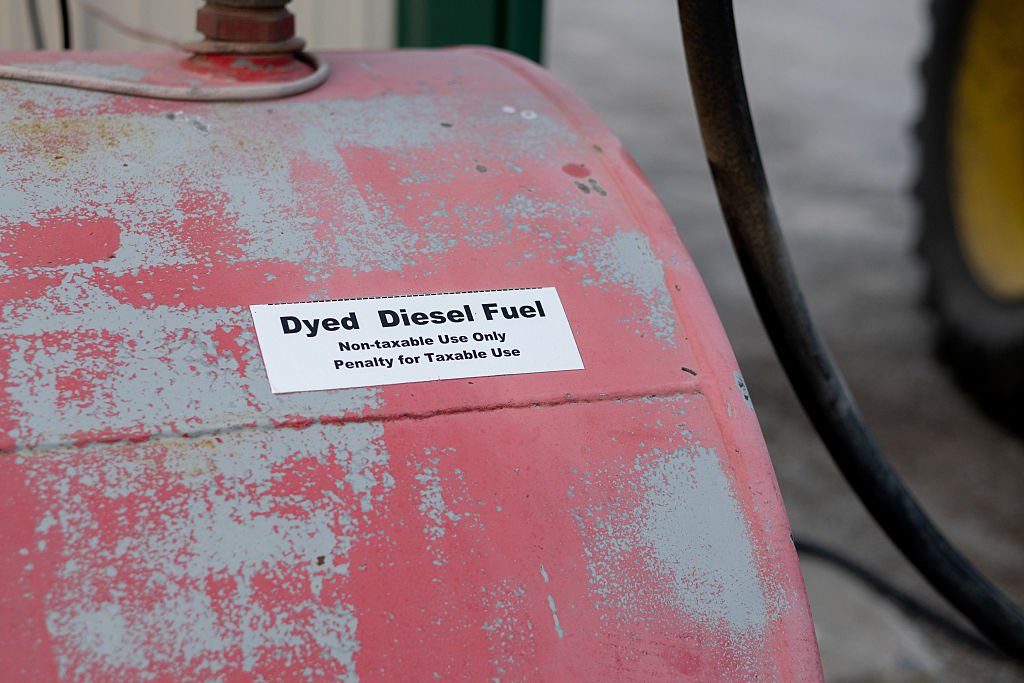
    What is dyed diesel?

    Dyed diesel is essentially the same as regular diesel, but it is exempt from the federal highway tax of 24.3 cents per gallon, as well as certain state highway taxes. State taxes and fees on diesel, which are typically used to fund road construction and maintenance, averaged 35.5 cents per gallon as of January 2026, according to the U.S. Energy Information Administration.

    Dyed diesel is not available at most ordinary gas stations or truck stops, and it is normally prohibited for highway use. Instead, it is used off-road by farm vehicles like tractors. The fuel is marked with a small amount of red dye, so that inspectors can distinguish it from regular diesel.

    What does the order say?

    The order directs the secretaries of Transportation, Agriculture, Defense, and the Treasury to “temporarily allow off-road ‘dyed’ diesel for highway use and defer the applicable Federal excise tax, lowering costs for Americans.”

    That means that vehicles can use dyed diesel fuel on highways without immediately paying federal taxes, while the Administration seeks to eliminate those deferred tax obligations entirely. The order also encourages states to halt inspections and suspend state taxes for on-road use of dyed diesel.

    The waiver will last through the end of the year.

    “We’re not going to need it long, I hope, we’re not going to need it long because your prices are plummeting and they’re going to really be plummeting,” Trump said.

    What does this mean for consumers?

    The direct benefit for prices at the pump may be limited because most gas stations don’t sell dyed diesel to standard consumers.

    But consumers may see some indirect savings on groceries and consumer goods through lower supply-chain costs, as the exemption seeks to lower costs for farmers and truckers.

    Currently, to fill an 18-wheeler with 250 gallons of diesel would cost around $1,580, which is around $700—or 80%—higher than the beginning of the year when diesel averaged about $3.52 a gallon. Waiving federal taxes would save truckers about $60 per fill-up. If states follow suit by waiving state taxes, the White House suggests truckers could save more than $100 per fill-up.

    Farm Bureau economists argued, before the federal order, that removing highway taxes for dyed diesel could produce meaningful savings across large fuel volumes.

    The Michigan Farm Bureau, which called on Gov. Gretchen Whitmer to provide statewide relief on dyed diesel, also said waiving the penalties on highway use of dyed diesel would produce “an immediate, meaningful, and targeted relief from record fuel prices.” The bureau said farmers already have significant stores of dyed diesel for off-road use, making it an easily accessible option for use on highways.

    These state measures largely target agricultural and timber haulers by temporarily waiving fines and penalties when dyed diesel is found in the tanks of vehicles on public highways. 

    “Record-high diesel prices are squeezing our ag producers, and this is a meaningful and timely step we can take to provide temporary relief and help our farmers and ranchers through the harvest season,” Gov. Kelly Armstrong of North Dakota said last week. The state executive order allows farmers to use dyed diesel in highway vehicles engaged in agricultural operations. North Dakota charges 23 cents a gallon in state taxes on regular diesel, as compared to 4 cents a gallon on dyed diesel.

    Arkansas, Indiana, Missouri, Nebraska, and North Dakota also offered state tax relief for certain highway use of dyed diesel.

    In an Oct. 1 letter to Trump, American Farm Bureau President Zippy Duvall said a waiver of the federal tax on regular diesel would “provide immediate cost relief for farmers, ranchers, and agricultural haulers that continue to rely on taxable clear diesel.” Earlier this year, the Farm Bureau called for suspending fertilizer tariffs and facilitating safe passage through Hormuz.

    Some analysts, however, questioned how much relief the waiver can deliver without addressing underlying diesel supply constraints.

    Others have said that a large influx of on-road commercial vehicles purchasing dyed diesel could strain dyed diesel inventories, potentially driving up costs for farmers during harvest.

    What other measures are on the table?

    The Trump Administration has pursued other measures to lower fuel prices. Last week, the Group of 7 countries, which includes the U.S., agreed to release 100 million barrels of diesel and crude oil reserves over four months.

    In August, the Administration also extended the Jones Act Waiver, allowing foreign-flagged vessels to transport gasoline, diesel, and other energy products between U.S. ports in an effort to ease shipping bottlenecks and lower fuel costs.

    Last month, Trump weighed a ban on U.S. diesel exports, backed by some farm-state Republicans. But the President has not yet followed through on such an action, which would cut off global supplies from the world’s largest diesel exporter and likely worsen shortages around the world.

    Analysts warned that any initial relief for Americans from a diesel export ban could eventually come at the expense of higher gasoline and jet fuel prices because U.S. refineries would process less crude in order to store unsold diesel. The global price of diesel would also likely rise, which could “boomerang” back onto American consumers. Some farm economists warned that such a ban could also expose U.S. agricultural exports to retaliation.

    Some states have also pursued broader fuel tax relief. Georgia and Ohio temporarily suspended state taxes on gasoline and regular diesel, while Indiana extended its suspension on gasoline sales taxes. Earlier this year, Illinois postponed a scheduled gasoline tax increase, and Kentucky temporarily cut gasoline and diesel taxes by 10 cents a gallon. Massachusetts Governor Maura Healey also proposed a two-month gasoline and diesel tax holiday, which remains pending before the state legislature.
  • Suspected Chinese Foreign Agent Arrested at Los Angeles Airport

    Suspected Chinese Foreign Agent Arrested at Los Angeles Airport

    by: Chad de Guzman | Time.com

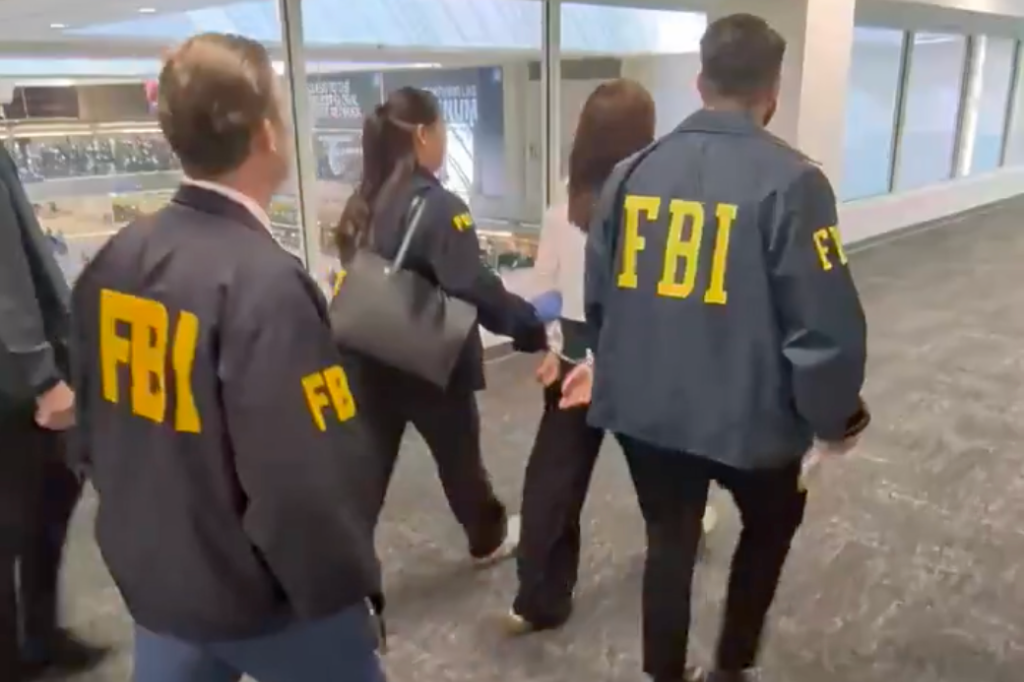
    The FBI arrested a suspected Chinese foreign agent at the Los Angeles International Airport on Sunday after she allegedly surveilled the Taiwanese President’s family.

    Bill Essayli, the First Assistant U.S. Attorney for the Central District of California, posted on social media platform X that FBI agents in Los Angeles nabbed 34-year-old Wanying “Heather” Zhang of Irvine, Calif., as she was attempting to depart for China.

    Zhang was arrested on a federal complaint charging her with acting as an unregistered Chinese agent, Essayli said. She is slated to appear in federal court in Los Angeles Monday.

    FBI Director Kash Patel appeared to laud the arrest on social media. “Foreign adversaries take note: America is no longer a safe place to run your espionage operations,” Patel wrote. “Allegedly surveil a foreign leader’s family on U.S. soil for [China]—and try to catch a flight back to Shanghai? Not happening.”

    A spokesperson for Taiwan’s presidential office described on Monday Zhang’s purported actions as a “classic case of transnational repression” and thanked the U.S. government.

    “Our country expresses ​the strongest condemnation of such barbaric conduct that disregards human rights and the sovereignty of ​nations,” the spokesperson said.

    Taiwan, the self-governing island that China claims to have sovereignty over, has been a point of contention between Washington and Beijing for decades. Washington, while acknowledging Beijing’s position on Taiwan, has maintained close unofficial relations with Taipei, though those ties have been mired in uncertainty under U.S. President Donald Trump. China, meanwhile, has long branded Taiwan’s leader William Lai Ching-te as a separatist and a “destroyer of peace.”

    During Chinese President Xi Jinping’s recent state visit to the U.S., President Trump said of the topic: “We didn’t spend a lot of time talking about Taiwan.”

    Zhang’s arrest comes months after Eileen Wang, a former mayor of Arcadia, Calif., pleaded guilty to acting as an illegal agent for the Chinese government. The former mayor admitted to promoting pro-Beijing content in the U.S. Both cases are part of a reported pattern of people acting on behalf of the Chinese government to target Chinese dissidents outside of China.

    While the American public’s view of China has improved, and even as Beijing makes diplomatic overtures to the Trump Administration, many in Washington remain hawkish against the U.S.’s geopolitical rival. The latest report from the U.S. Congressional-Executive Commission on China continues to warn about Beijing’s transnational repression activities, including intimidation and the targeting of Hong Kongers, Uyghurs, Tibetans, Taiwanese figures, and other Chinese dissidents.

    Sen. Rick Scott (R, Fla.) posted on X: “This is only further PROOF of what we already know—they’re actively infiltrating our country and threatening our national security.”

    What U.S. authorities are alleging

    Authorities filed a criminal complaint against Zhang in federal court, CBS News and Fox News reported, with an affidavit from an FBI special agent. 

    According to a copy of the 27-page complaint Fox News obtained, Zhang, who previously attended a university in Beijing and was a registered real estate agent in Southern California, was allegedly in contact with at least two individuals apparently working for the Chinese government. Essayli, speaking to Fox News Sunday, said that Zhang was a naturalized U.S. citizen.

    “She was conducting surveillance on behalf of the Chinese government,” Essayli told Fox News. “And she was spying on a relative of the President of Taiwan here in the U.S.”

    Essayli, in his X post, added that Zhang “used tradecraft to avoid detection” and that “she never notified the Attorney General she was acting for a foreign government.” 

    Under federal law, those who act as agents for other nations without prior notification to the U.S. Attorney General may face up to 10 years in prison, fines, or both.

    Zhang and another unnamed individual allegedly traveled from Las Vegas to Seattle around Sept. 1, 2025. The two then rented a black SUV and headed to the home of the victim they later surveilled. The complaint alleged that a home security camera near the victim’s house recorded Zhang and the individual “appearing to film” the victim and his family.

    The complaint does not name the victim, but CBS News reported, citing unidentified law enforcement sources, that the target was Ting-yu Lai, the son of Taiwanese President Lai. 

    Zhang then allegedly messaged one of her Chinese government contacts, according to the complaint, where she sent: “Saw him. Young male. It’s that young one.” She then sent two license plate numbers, which the FBI agent found were both registered to the victim. The FBI agent wrote in the complaint that they were able to access details of Zhang’s messages following a search warrant on her iCloud account.

    “If [China] were to wish to obtain leverage over the President of Taiwan during any potential conflict, the location and pictures of the close relatives of a high-ranking Taiwanese government official, including pictures of their homes and cars, could be useful to [China],” the FBI special agent wrote.

  • Cornell President Vows ‘Serious Look’ at Campus Fraternities Amid Sexual Assault Allegations

    Cornell President Vows ‘Serious Look’ at Campus Fraternities Amid Sexual Assault Allegations

    by: Miranda Jeyaretnam | Time.com

    The university’s President Michael Kotlikoff said on Saturday in a video message to the university community that the school would take “a serious look at the role of fraternities and sororities in campus life” among other steps aimed at creating a safer campus environment.

    “At their best, these organizations can provide ​students with friendship, belonging, mentorship and a powerful sense of community,” Kotlikoff said. “But being part of ​a group can never diminish individual responsibility.”

    Kotlikoff said the university would seek input from students, alumni, and other community members about how to “preserve what is valuable about Greek life while strengthening individual accountability, transparency and a culture in ​which every member understands their responsibility to protect the safety and well-being of others.”

    The message comes on the heels of a civil lawsuit filed last month against Cornell and seven members of the Chi Phi fraternity. The plaintiff, anonymized as “Jane Doe,” alleged she was sexually assaulted and pressured to take drugs and alcohol on the night of Oct. 19, 2024, and that the university failed to protect her and mishandled its response. The lawsuit names seven current and former students as defendants, all of whom have denied any wrongdoing.

    The lawsuit has triggered renewed criticism of the handling of the allegations by the university and local authorities, who declined to pursue criminal charges at the time. On Thursday, New York Gov. Kathy Hochul, a Democrat, appointed the state’s Attorney General Letitia James as special prosecutor of the case, citing a loss of confidence in the local prosecutor’s ability to oversee it. New York lawmakers also said they were reviewing the state’s legal definition of consent while voluntarily intoxicated.

    Kotlikoff was not among the administrators present at a university town hall on Thursday, where students, faculty, and alumni called for stronger action against campus sexual assault. The public meeting was led by the university’s student government. Some students shared their own stories of sexual harassment and assault.

    “I am also speaking as Jane Doe,” one student said at the forum.

    In a statement last week, Cornell defended its initial handling of the allegations and said it complied with university policies and Title IX. The university banned the Chi Phi fraternity from campus and launched a Title IX investigation in 2025, which resulted in a range of disciplinary measures for the seven members implicated.

    “We ​don’t have all the ⁠answers,” Kotlikoff said Saturday. “But we are committed to investigating and finding the answers our community deserves.”

    Jane Doe faces threats of doxxing, harm to drop lawsuit

    Thomas Giuffra, the attorney representing Doe, told CNN on Sunday that people have threatened to harm her if she does not withdraw her civil lawsuit. Giuffra said there have also been multiple attempts to doxx Doe, which has resulted in at least three other women being mistakenly identified as her.

    “She’s received multiple threats, and women who aren’t even Jane Doe have received threats,” Giuffra said. “The threats, the abuse to protect what’s going on, the status quo, these guys are disgusting.”

    Ann Olivarius, a civil rights attorney and a plaintiff in the landmark Title IX sexual harassment case Alexander v. Yale (1977), told TIME last week that the backlash against Doe could deter sexual assault survivors from coming forward to make a report.

    That backlash has also prompted an outpouring of solidarity, with thousands of people posting #IamJaneDoe on social media. The posts are an effort to counter attempts to doxx Doe, but they have also become a way for survivors to share their own experiences of sexual assault.

    Lawsuit raises accountability concerns

    The lawsuit has brought scrutiny to the university’s Title IX process, especially over its claim that some of the alleged perpetrators were “afforded the opportunity to mitigate” their disciplinary sentences by writing essays. Cornell said that nobody was allowed to write essays as a sole consequence of their involvement.

    After Doe reported the case in November 2024, Cornell conducted a closed proceeding by a three-member panel, which met on Zoom over 12 days in May 2025, the New York Times reported, citing records gathered by Cornell investigators. Individual sanctions and the reasoning behind them had not been publicly disclosed.

    According to discipline summaries obtained by the Times, the panel, which enforces federal civil rights at Cornell, did not conclude that Doe was sexually assaulted by all the men accused. Two of the fraternity members were found responsible for sexual assault and expelled. A third, who had graduated at the time of the ruling, was issued a persona non grata order barring him from campus for three years. Two others were suspended, given disciplinary probation, and required to study sexual harassment and write reflection papers. The remaining two, who were accused of being among the men that entered the room after reading a Snapchat message to the Chi Phi group chat encouraging others to join the alleged assault but were not accused of assaulting Doe themselves, were required to write reflection papers and attend trainings on sexual harassment, social media use, and bystander intervention. They were also barred from contacting Doe. None of the men has been criminally charged in connection with the allegations.

    Chi Phi’s Cornell chapter was suspended in 2024, and it remains barred from campus.

    Doe’s attorney as well as members of the Cornell community and the public have decried what they see as a lack of accountability for the alleged perpetrators. Doe ultimately withdrew from the university amid what the lawsuit described was a lack of institutional support. “With the exception of two of these men, all of them will be able to graduate with a Cornell diploma and live their lives reaping the benefits of this coveted degree,” Giuffra told the Times. “In contrast, as of today, it is doubtful whether Ms. Doe will even graduate college or ever live a normal life due to what these men did to her.”

    Some have also described the case as an indictment of Greek life culture. A 2021 study that followed 772 men through their first two years of college found that fraternity membership was associated with subsequent self-reported sexual aggression. Survivor advocates have also argued that fraternity environments can enable sexual assault.

    Giuffra told CNN that he has heard from people across the country about their own experiences of campus sexual assault since the lawsuit was filed. “This isn’t just a Cornell problem. This is a college-wide problem,” he said.

    Multiple universities, including Cornell, have suspended Greek life activities following sexual assault reports. In November 2022, Cornell temporarily suspended all fraternity parties and social events for the remainder of the fall semester after reports of four drugging incidents and a sexual assault.

    Some institutions have also permanently banned fraternal organizations. Swarthmore College banned fraternities and sororities in 2019 after student protests over leaked fraternity documents that contained racist and homophobic language and jokes about sexual assault. The college’s two fraternities had already voted to disband.

    Criminal investigation reopened

    The case has also drawn scrutiny to the Tompkins County District Attorney’s decision not to prosecute in 2024. The District Attorney, Matthew Van Houten, said last week he would review the case, but defended his initial decision, arguing that Doe’s sworn statement to police did not allege criminality. Under New York state law, if you choose to drink or take drugs to the point of becoming incapacitated, you can still be legally considered able to consent to sex.

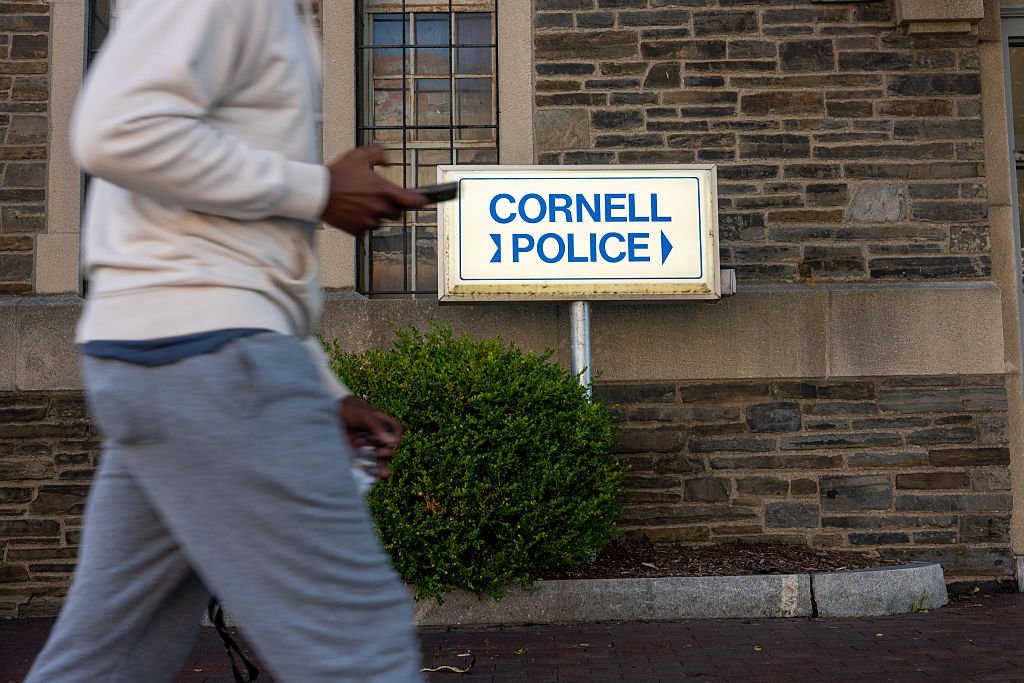
    Critics have questioned Cornell police’s handling of Doe’s account. Cornell police appeared to have omitted Doe’s explicit assertion that she was raped from her six-page sworn statement, which was shared with prosecutors. Van Houten said his office did not receive the police interview transcript, in which Doe said, “I can say with 100% confidence I was raped.” Campus police later informed the prosecutor’s office of new interviews with witnesses after investigating anonymous tips, but prosecutors declined to review the additional evidence.

    On Friday, Hochul criticized prosecutors for relying on an incomplete account, asking: “In what world does the district attorney not even interview her, or anyone else involved, or even request the full transcript?”

    “This woman, this young woman, had already endured something that is utterly unspeakable. And then at every turn, she was failed by people and institutions with an obligation to protect her,” Hochul said.

    The governor also said she supports proposals to amend the so-called “voluntary intoxication loophole” in New York’s rape law. “If someone is too intoxicated to consent, it should not matter whether they chose to use drugs or alcohol. Voluntary intoxication is not a license for sexual assault or gang rape, period,” she said.

    The day before, Hochul appointed James, a Democrat, as special prosecutor.

    James had earlier posted on social media that what Doe had endured was “horrific and unacceptable,” raising questions from critics about her impartiality. James, who had already opened a review into Cornell’s response to the allegations, has pledged to conduct an investigation based on fact and the law.

    “We will review the facts, gather evidence, interview witnesses and, if warranted, pursue prosecutions,” James said on Friday. “I know that you want answers. I do too. A comprehensive investigation of this nature takes time, but my office is committed to seeing it through.”

    President Donald Trump criticized the appointment, calling James a “corrupt person.”

    James was charged with mortgage fraud by the Justice Department last year, but a judge dismissed the case and two grand juries rejected subsequent attempts to indict her. James denies the allegations.

    Both James and Hochul have also criticized Trump over allegations of sexual misconduct and misogyny. In 2016, James, then New York City’s public advocate, condemned Trump’s “disgusting record of sexual misconduct.” In January 2024, months after a civil jury found Trump liable for sexually abusing and defaming  E. Jean Carroll, Hochul signed a bill expanding the legal definition of rape to include nonconsensual vaginal, oral, and anal sexual acts. Trump has dropped his challenge to the $5 million damages awarded to Carroll, but continues to contest a separate $83 million defamation award. The Justice Department opened a criminal investigation into Carroll in May over whether she committed perjury.

    Asked about the Cornell allegations on Thursday, Trump said he knew little about the case but expressed confidence that the university would respond appropriately. In later social media posts and comments to reporters, however, he cast doubt on whether James would conduct a fair investigation.

    “I feel ⁠badly for ​whoever she’s looking at,” Trump told reporters on Friday, “because they won’t get a fair shake.”