Tag: Phones

  • This Harry Potter Edition Phone From Realme Is the Coolest Collab of 2026

    This Harry Potter Edition Phone From Realme Is the Coolest Collab of 2026

    by: Prakhar Khanna | CNET

    Realme is back with another special edition phone in collaboration with Warner Bros. After a color-changing Game of Thrones edition collectible, the company has launched a Harry Potter-themed phone. The Realme 16 Pro 5G Harry Potter Edition pairs themed exterior styling with the standard model’s core hardware and bundles it with a bunch of goodies.

    I’m a Potterhead, and I couldn’t wait for my unit to arrive. As soon as it reached my doorstep, I unboxed it and went hands-on with the device. From the unboxing experience to its software, this is a Hogwarts makeover any Harry Potter fan would love.

    Alohomora! Unboxing the Harry Potter phone

    The new Realme special edition phone comes in a chest-shaped box that resembles Harry’s Hogwarts trunk. Unfortunately, casting the Alohomora spell doesn’t unlock it; you’ll need to use your thumbs, like any other Muggle. Once unlocked, the neat presentation screams of “You’re a wizard, Harry!” and pulls you into the world of Harry Potter.

    On the left side, you’ll find a brown box carrying the phone case and a SIM-ejector tool, both of which carry the Harry Potter branding with the Hogwarts crest. Put your wand on the box (you don’t get one with the phone), incant “Accio,” and… yeah, it does nothing.

    You need to pull out the case, which is in a matching brown color. And that’s when you start getting to a number of other fun goodies thrown in for Harry Potter fans.

    Moving to the right side, there’s another rectangular cardboard holder with the Sorting Hat logo on top of it. Inside, you get the Hogwarts letter, Platform Nine and Three-Quarters train ticket, bookmarks of each house and four postcards.

    The letter carries a wax-like stamp on the back, while the bookmarks come with a holder, where you can place your favorite house’s emblem. I added the Hufflepuff badge to it, and it’s now my favorite bookmark.

    Move the rectangular holder out of the way and you’re greeted with the phone itself. But before reaching the device, I must tell you, Realme has also color-coded the charger and wire to match the theme. This is worth a mention because several phone collaborations limit the theme to the device and collectibles, leaving the phone accessories plain white. But that’s not the case here and I appreciate it.

    A customized Harry Potter-styled phone

    Prakhar Khanna holding the Realme 16 Pro 5G Harry Potter Edition phone with its goodies in the background.Prakhar Khanna/CNET

    With a simple swish and flick, wizards and witches can use the Wingardium Leviosa spell and the phone levitates out of the box. However, Muggles will need to pick it up like any other device. The phone itself continues the theme with gold accents on the dark brown design. There are plenty of hidden Harry Potter references that are delightful to uncover.

    Starting with the camera module, it has two prominent camera rings with a little golden diamond between them. Look closely, and you’ll find they resemble Hedwig’s eyes and nose. The camera module’s gold-colored deco looks great against the brown rear panel, which has a leather-like texture. It feels nice in the hand.

    The rear panel also has a diamond pattern, which, according to Realme, is inspired by wizard’s chess from the books and movies. It imprints the four-house crest along with the “Draco Dormiens Nunquam Titillandus” motto and the Harry Potter and Realme logos, which are inscribed underneath.

    Put it under the sun and you’ll see the crest light up in the house-specific colors. Realme calls it the Quadra Light-Sensing Color-changing Tech, which lights up specific areas when you shine a UV light over it. Also (I almost missed this), the right side of the phone has “Welcome to Hogwarts” engraved into it.

    The references don’t end here. Realme’s Harry Potter-fication runs deeper. When you power on the phone, there’s a Harry Potter boot animation and a custom letter wax fingerprint animation.

    Then you’re greeted with a Hogwarts-specific UI, with the castle on the wallpaper and more than 30 custom icons. For example, the Phone app is a red telephone booth, whereas the Notes app is a quill. Even the Google apps’ icons are customized to match the theme.

    What about the specifications?

    Prakhar Khanna holding the Realme 16 Pro 5G Harry Potter Edition.
    It has a big battery, bright display and a lot to like.Prakhar Khanna/CNET

    I haven’t used the Realme 16 Pro 5G Harry Potter Edition as my full-time phone yet, but it packs impressive specifications. You get a 6.78-inch AMOLED screen with a 1.5K resolution and a 144Hz refresh rate. It boasts up to 6,000 nits in peak brightness. While I haven’t tested it, the screen was easily legible under direct sunlight.

    This special-edition Realme phone is powered by the MediaTek Dimensity 7300-Max chip, paired with 12GB of  RAM and 256GB of onboard storage.

    You get a 200-megapixel primary camera, accompanied by an 8-megapixel ultrawide-angle sensor with a 112-degree field of view. On the front is a 50-megapixel selfie shooter. To top it off, the phone packs a 7,000-mAh battery with support for 80-watt fast charging. It runs a customized version of Realme UI 7.0 based on Android 16. It is limited to 5,000 units and is priced at INR 62,999 (~$655) in India. Harry Potter fans in the US won’t be able to buy this one, but Google’s Pixel phones recently received Harry Potter theme packs that add their own magical customizations.

    Realme 16 Pro 5G Harry Potter Edition phone and its trunk case.
    I might use it full time because of how cool it looks.Prakhar Khanna/CNET

    It is 2026. It’s only fair for Hogwarts to finally adopt smartphones in addition to using Floo Powder to communicate. The Realme 16 Pro 5G Harry Potter Edition feels quite special as a fan of the books and movies. It is evident that the two companies have put a lot of thought into this collaboration.

    Realme effortlessly put me back into the realm of the Wizarding World. From the trunk case and its unboxing experience, down to the customized software, I loved every bit of it. Then came the hidden references and collectible items. I have a strong Harry Potter bias, but this is my favorite limited edition phone of all time. It is Riddikulus-ly cool.

    Prakhar Khanna

    Prakhar Khanna is a Writer at CNET with bylines in ZDNET, Forbes, and other major outlets. A digital nomad at heart, he thrives in chaos–mixing deadlines with travel, often writing stories on planes, trains, and cafe tables while hunting down the best pizza spots wherever he lands. His backpack usually carries one phone too many, and his playlists are stacked with 2000s Bollywood. Find him across social media @ParkyPrakhar. Contact: parkydoesstuff(at)gmail(dot)com

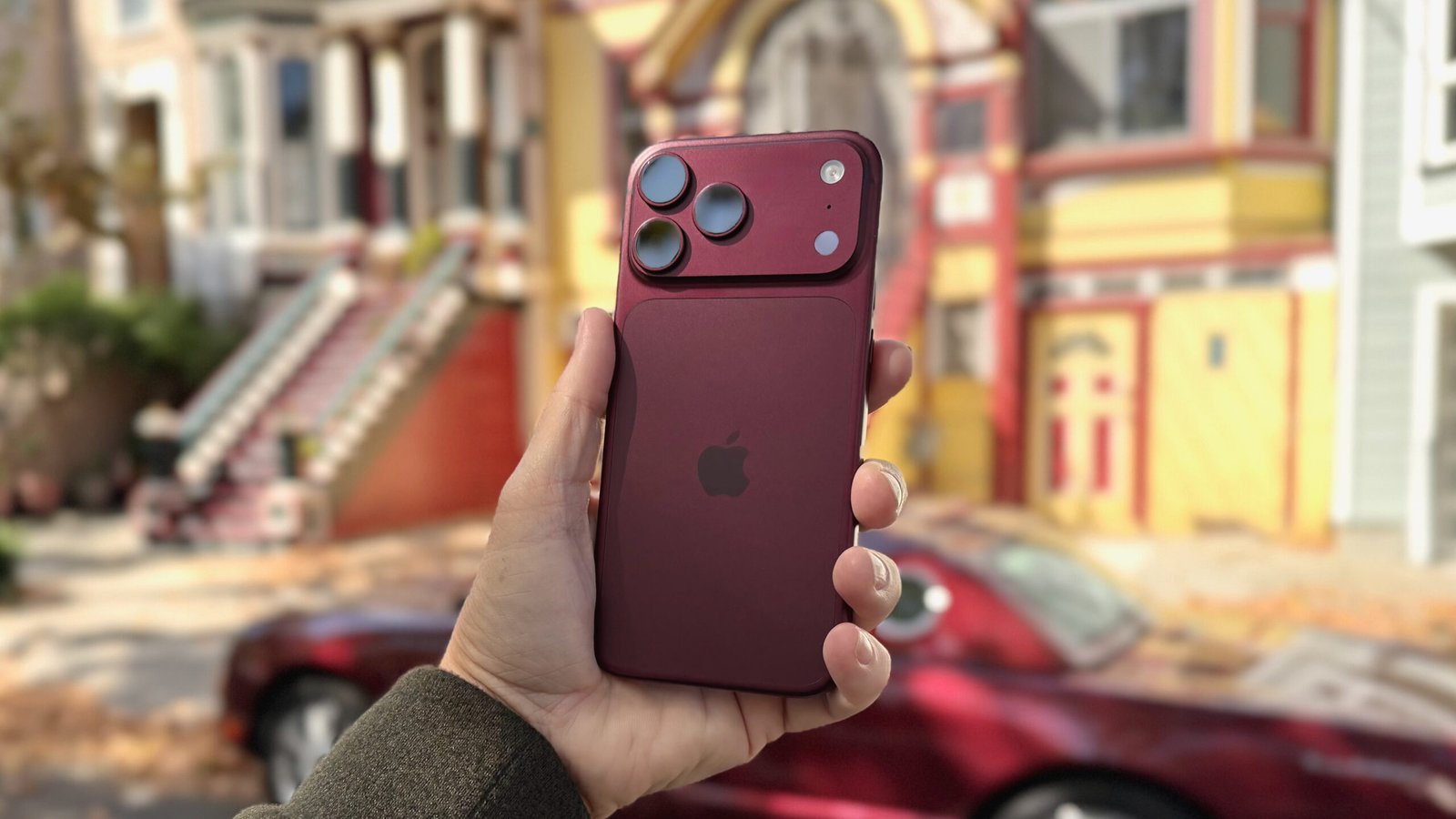
  • iPhone 18 Pro Max Can’t Make a Call on AT&T? Apple Says It Will Replace It for Free

    iPhone 18 Pro Max Can’t Make a Call on AT&T? Apple Says It Will Replace It for Free

    by: Jeff Carlson | CNET

    Some owners of Apple’s new iPhone 18 Pro Max may be enjoying the new camera system and improved battery life. But if they’re AT&T customers, they could find the phone unable to perform its most essential task: making calls. That also includes being able to dial 911 in emergencies. The fix appears to be a pair of Apple updates rolling out on Friday – but anyone who has already been affected by the problem will need a replacement phone, according to Apple. An Apple representative says the company will replace those phones for free.

    Last week, some iPhone 18 Pro Max owners on AT&T’s network reported no cellular access. MacRumors reported that AT&T sent a text message this week to iPhone 18 Pro Max owners, encouraging them to update to iOS 27.0.1 immediately. MacRumors estimates that thousands of customers have been affected.

    On Friday, Apple said it’s issuing a separate carrier-settings patch to pair with the iOS 27.0.1 update. But the patch comes too late for certain owners of the new phone.

    An Apple representative told CNET that the updates are intended to guard against this problem in the future and won’t fix the situation for iPhone 18 Pro Max owners who are already experiencing it. Apple will provide a new phone free of charge to those owners. Affected customers should contact Apple Support or AT&T.

    In Reddit threads about the issue, some owners report that the 27.0.1 update by itself did not fix the problem, nor did upgrading to the public beta of iOS 27.2.

    Only the iPhone 18 Pro Max is affected

    So far, the issue seems limited to iPhone 18 Pro Max models on AT&T’s network. I reached out to contacts at T-Mobile and Verizon, and both report they’re not seeing similar reports on their networks. I haven’t experienced the issue on an iPhone 18 Pro that runs on AT&T’s network, which isn’t surprising given that this particular problem affects iPhone 18 Pro Max units, not iPhone 18 Pro phones. A CNET colleague’s iPhone 18 Pro Max on Google Fi (which uses T-Mobile’s network) is not experiencing the issue.

    It’s unclear whether the lack of connectivity is related to the phone’s hardware. While the standard iPhone 18 Pro is equipped with Apple’s C2 modem, the iPhone 18 Pro Max in the US is the only model with Qualcomm’s Snapdragon X80 modem, as shown in this teardown of the phone by iFixIt. Qualcomm has been Apple’s modem provider for years, but Apple has worked to move away from relying on the third party for the essential phone component. That relationship is due to expire this year.

    According to a TechInsights iPhone 18 Pro Max teardown, the X80 modem is also used in the iPhone 17 Pro and iPhone 17 Pro Max, but a new millimeter-wave antenna has been added to the 18 Pro Max. Millimeter-wave offers much faster data speeds in areas where the technology is installed, but it can have a shorter range and be reduced by obstacles. Apple’s C2 modem also includes a millimeter-wave antenna.

    A representative from Qualcomm didn’t immediately respond to a request for comment.

    Jeff Carlson

    Jeff Carlson

    Senior Writer

    Jeff Carlson writes about mobile technology at CNET, from cellular phone plans to devices and emerging technology.

  • Your Next Mobile Games Will Get AI Graphics Boosts That PCs and Consoles Have Had for Years

    Your Next Mobile Games Will Get AI Graphics Boosts That PCs and Consoles Have Had for Years

    by: David Lumb | CNET

    Gaming on phones has gotten good enough that graphics and gameplay are beginning to approach what players expect on PC and console. Those more established platforms maintain the edge, with massive GPUs and energy budgets that power AI enhancements that render smoother experiences. While there will never be enough room on a smartphone to fit a full-size graphics card, next year’s top handsets will finally get those AI boosts — and mobile gaming will never be the same.

    It’s all because of technology making its debut on the latest phone chips. At its Snapdragon Summit 2026 recently, Qualcomm debuted the new Snapdragon 8 Elite Extreme Gen 6, which comes with GPU upgrades, including new Adreno Neural Fusion tech that uses AI to upscale resolution, generate frames to increase frame rate and extend battery life while gaming. 

    A man stands on stage in front of a screen showing performance gains from last year's chips.
    On stage at the Snapdragon Summit, Chris Patrick, Qualcomm’s SVP and general manager of handsets, shows off the Snapdragon 8 Elite Extreme Gen 6’s graphics gains with Adreno Neural Fusion.David Lumb/CNET

    How AI gameplay improvements can come to mobile

    Not every Android phone uses Snapdragon chips, but AI graphics boosts could come to them as well — the first time this tech will reach mainstream phones. In early September, chip designer Arm debuted its Mali G2-Ultra NX GPU, which has similar technology that upscales resolution and inserts frames, as well as a denoiser to improve image quality when rendering complex effects like ray-tracing reflections and lighting. Arm GPUs are used in top-end chips from companies like MediaTek.

    This tech has been used in high-end PC and console hardware for years in the form of Nvidia’s DLSS and AMD’s FSR, which uses AI to bolster graphics in more affordable GPUs and boost frame rates for smoother gameplay. In beefy PC rigs and consoles that plug into wall outlets, or even laptops or handhelds like the Asus ROG Ally, this tech mostly eases complex workloads and makes good graphics better. 

    But the challenge in adapting this modern graphics tech to phones lies in one word: thermals. PCs have a constant flow of power, laptops have giant batteries, and gaming-specific computers are cooled with massive fans. But phones are so small that their batteries are measured in milliamp-hours, often running on a handful of watts of power per day, and increasingly rely on thermal paste and cooling chambers to vent heat. 

    The big challenge was getting even better graphics out of the latest generation of Snapdragon chips and even boosting battery life, said Qualcomm Director of Product Management Amandeep Dhaliwal, who leads Snapdragon’s GPU strategy.

    “That was the main thing when we were building this Adreno Neural Fusion model,” Dhaliwal said. “How do I factor in thermals as I’m building this upscaling model so that eventually, if in my game, let’s say the power I was consuming was 1 watt, how do I then save 20% on that and come out ahead?”

    On phones, AI boosts can eke out more battery life while gaming. With the Snapdragon 8 Elite Extreme Gen 6’s tech, rather than render graphics in full resolution, they’re dialed down to 540p and then AI upscales it to 1080p — it’s much more efficient for AI to make up that difference. Likewise, they can run at 30 frames per second and AI can insert more frames to boost the count up to 60 or even 90fps. This could result in noticeably better energy efficiency while gaming on phones using Snapdragon’s top chip, Dhaliwal said. 

    “Improving your battery life in a gaming session — people will [cheer] if you do it for 1 to 2%, and here we are talking about 20 to 30%, right?” Dhaliwal said. “Which is huge.”

    Both of the new Snapdragon chips have improvements to their Hexagon GPUs, with the 8 Elite Extreme Gen 6 getting 44% improved GPU performance over the Hexagon in last year’s chip, while the 8 Elite Gen 6 has 37%. General battery efficiency for GPU tasks has improved 40% across both chips, too. But the Elite Extreme’s graphics processor has extra hardware that puts it above its Gen 6 sibling, like matrix GPU cores that enable Neural Fusion, AI enhancements that plug directly into the graphics pipeline rather than needing to tap traditional memory and other top-of-the-top-end boosts.

    Lekha Motiwala, director of product management at Qualcomm, debuted the benchmark gains in the Snapdragon 8 Elite Extreme Gen 6’s Adreno GPU.David Lumb/CNET

    Tech coming to today’s phones, but only the best of the best

    In Snapdragon’s case, this new technology is only coming to the Snapdragon 8 Elite Extreme Gen 6, the most top-of-the-line chip in the company’s newly revised lineup. 

    Neural Fusion isn’t available on the Snapdragon 8 Elite Gen 6, which is still a premium chip at the same level as last year’s Snapdragon 8 Elite Gen 5 — that is, it’s silicon that is already slated to power the Xiaomi 18 Pro and will almost certainly come in many of next year’s upper-tier phones. The Extreme version is a cut above even that, and will only be used in the highest-end Android devices, like the Motorola Signature 27 and Xiaomi 18 Pro Max revealed at this year’s Snapdragon Summit alongside the new chips.

    Neural Fusion could, in theory, be used in the Snapdragon 8 Elite Gen 6, but it wouldn’t be efficient and the gains wouldn’t be as substantial, Dhaliwal said. “Technically, it’s possible to have [Adreno Neural Fusion] on a nonmatrix core GPU, but it’s not advised because you are not going to see a good experience,” he said.

    It comes down to the cores: Since the 8 Elite Gen 6 lacks its more premium sibling’s matrix cores, it’s heavily using all its existing cores to render scenes already, and Neural Fusion would tax them even further, requiring a compromise somewhere that would worsen the player experience. Decreasing frame rate to compensate could lead to players noticing dropped frames and choppy visuals, degrading quality for limited benefit. 

    Dhaliwal compared the two chips’ graphics capabilities to those on the higher and lower ends of the same PC GPU line.

    “When it comes to gaming, we are approaching the Dual 8 Elite launch similar to other hardware competitors in the PC market,” Dhaliwal said in an email after the event. “While there are differences between Snapdragon 8 Elite Extreme Gen 6 and Snapdragon 8 Elite Gen 6, they are built on the same architectural principle while offering more performance options for our customers, similar to how you would see performance vary within a specific series for consumer graphics cards.”

    A man stands in front of a stage showing
    Qualcomm’s Chris Patrick introduced a list of game titles that will support improvements from the Snapdragon 8 Elite Extreme Gen 6’s Adreno Neural Fusion tech.David Lumb/CNET

    What’s coming in tomorrow’s mobile gaming

    Rendering graphics at lower resolutions and frame rates to upscale them to rates that gamers expect (1080p at 60fps) is an impressive way to extend battery life and offset some of the computational load from the CPU to neural processing. But there are even greater heights for the technology to reach.

    For this generation of phone chip tech, Neural Fusion generates a frame for every one traditionally rendered — so going from 30 frames per second to 60, or 60 to 120. But the big trend in China is for even higher frame rate gaming, Dhaliwal said, with games natively rendered to 120, 144 or even 165fps. Since rendering those rates is power-taxing, which leads to swift battery drain on mobile gaming, Qualcomm’s next frontier is looking to generate more frames for each one rendered — boosting a native 30 frames up to 120, for instance. 

    But with Snapdragon and Arm introducing these PC gaming AI boosts and Apple adding neural accelerators to GPUs on its A-series chips, the mobile industry is heading toward harnessing this tech in phone gaming on a greater scale. That affects game developers, too, who have been working miracles to get their games running on pocket-sized devices with very limited power budgets — but now have more power savings to boost the graphics in their games.

    “Now the developers are basically thinking, look, I was doing something in a given 1-watt budget,” Dhaliwal said. “Now with upscaling, I suddenly have these 200 milliwatts or 300 milliwatts available, which means I can enhance my game to do more things, right?”

    These GPU improvements aren’t limited to gaming, either. They can run AI models. Even if they’re not going to be as power- or performance-optimized as on a laptop or desktop, they can run on a GPU, Dhaliwal pointed out. It’s another tool alongside the neural processing unit that developers programming mobile AI models can tap. 

    “It’s all those things which are going to be really, really exciting,” Dhaliwal said.

    Correction, Oct. 4: Replaces a quote that repeated an error.

    David Lumb

    David Lumb

    Managing Editor, Mobile

    David Lumb is a managing editor for the mobile team, covering mobile and gaming spaces. Before CNET, he covered tech, gaming, and culture for TechRadar, Engadget, Popular Mechanics, NBC Asian America, Increment, Fast Company and others. As a true Californian, he lives for coffee, beaches and burritos.