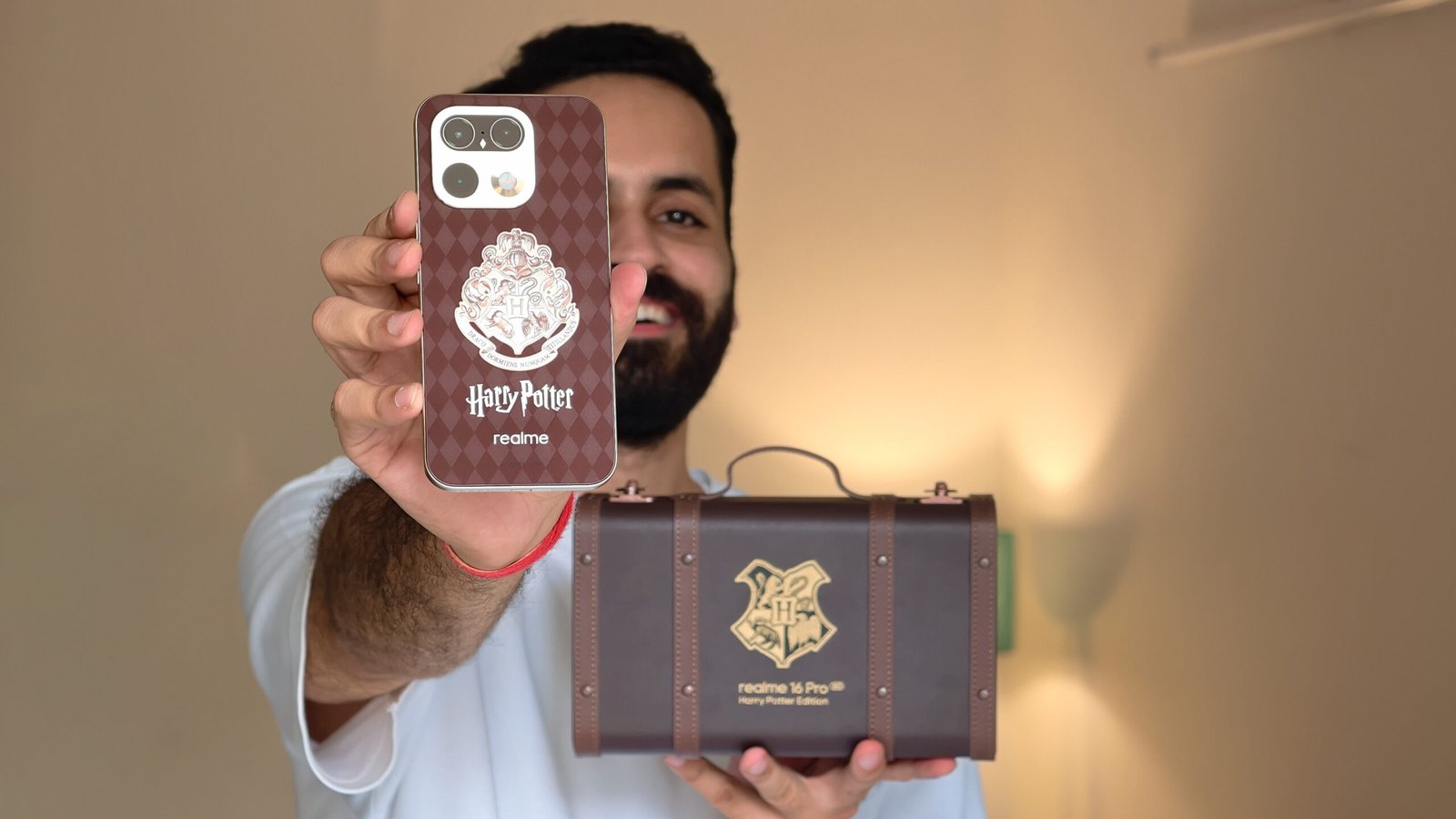
Realme is back with another special edition phone in collaboration with Warner Bros. After a color-changing Game of Thrones edition collectible, the company has launched a Harry Potter-themed phone. The Realme 16 Pro 5G Harry Potter Edition pairs themed exterior styling with the standard model’s core hardware and bundles it with a bunch of goodies.
I’m a Potterhead, and I couldn’t wait for my unit to arrive. As soon as it reached my doorstep, I unboxed it and went hands-on with the device. From the unboxing experience to its software, this is a Hogwarts makeover any Harry Potter fan would love.
Alohomora! Unboxing the Harry Potter phone
The new Realme special edition phone comes in a chest-shaped box that resembles Harry’s Hogwarts trunk. Unfortunately, casting the Alohomoraspell doesn’t unlock it; you’ll need to use your thumbs, like any other Muggle. Once unlocked, the neat presentation screams of “You’re a wizard, Harry!” and pulls you into the world of Harry Potter.
On the left side, you’ll find a brown box carrying the phone case and a SIM-ejector tool, both of which carry the Harry Potter branding with the Hogwarts crest. Put your wand on the box (you don’t get one with the phone), incant “Accio,” and… yeah, it does nothing.
You need to pull out the case, which is in a matching brown color. And that’s when you start getting to a number of other fun goodies thrown in for Harry Potter fans.
Moving to the right side, there’s another rectangular cardboard holder with the Sorting Hat logo on top of it. Inside, you get the Hogwarts letter, Platform Nine and Three-Quarters train ticket, bookmarks of each house and four postcards.
The letter carries a wax-like stamp on the back, while the bookmarks come with a holder, where you can place your favorite house’s emblem. I added the Hufflepuff badge to it, and it’s now my favorite bookmark.
Move the rectangular holder out of the way and you’re greeted with the phone itself. But before reaching the device, I must tell you, Realme has also color-coded the charger and wire to match the theme. This is worth a mention because several phone collaborations limit the theme to the device and collectibles, leaving the phone accessories plain white. But that’s not the case here and I appreciate it.
A customized Harry Potter-styled phone
Prakhar Khanna/CNET
With a simple swish and flick, wizards and witches can use the Wingardium Leviosa spell and the phone levitates out of the box. However, Muggles will need to pick it up like any other device. The phone itself continues the theme with gold accents on the dark brown design. There are plenty of hidden Harry Potter references that are delightful to uncover.
Starting with the camera module, it has two prominent camera rings with a little golden diamond between them. Look closely, and you’ll find they resemble Hedwig’s eyes and nose. The camera module’s gold-colored deco looks great against the brown rear panel, which has a leather-like texture. It feels nice in the hand.
The rear panel also has a diamond pattern, which, according to Realme, is inspired by wizard’s chess from the books and movies. It imprints the four-house crest along with the “Draco Dormiens Nunquam Titillandus” motto and the Harry Potter and Realme logos, which are inscribed underneath.
Put it under the sun and you’ll see the crest light up in the house-specific colors. Realme calls it the Quadra Light-Sensing Color-changing Tech, which lights up specific areas when you shine a UV light over it. Also (I almost missed this), the right side of the phone has “Welcome to Hogwarts” engraved into it.
The references don’t end here. Realme’s Harry Potter-fication runs deeper. When you power on the phone, there’s a Harry Potter boot animation and a custom letter wax fingerprint animation.
Then you’re greeted with a Hogwarts-specific UI, with the castle on the wallpaper and more than 30 custom icons. For example, the Phone app is a red telephone booth, whereas the Notes app is a quill. Even the Google apps’ icons are customized to match the theme.
What about the specifications?
It has a big battery, bright display and a lot to like.Prakhar Khanna/CNET
I haven’t used the Realme 16 Pro 5G Harry Potter Edition as my full-time phone yet, but it packs impressive specifications. You get a 6.78-inch AMOLED screen with a 1.5K resolution and a 144Hz refresh rate. It boasts up to 6,000 nits in peak brightness. While I haven’t tested it, the screen was easily legible under direct sunlight.
This special-edition Realme phone is powered by the MediaTek Dimensity 7300-Max chip, paired with 12GB of RAM and 256GB of onboard storage.
You get a 200-megapixel primary camera, accompanied by an 8-megapixel ultrawide-angle sensor with a 112-degree field of view. On the front is a 50-megapixel selfie shooter. To top it off, the phone packs a 7,000-mAh battery with support for 80-watt fast charging. It runs a customized version of Realme UI 7.0 based on Android 16. It is limited to 5,000 units and is priced at INR 62,999 (~$655) in India. Harry Potter fans in the US won’t be able to buy this one, but Google’s Pixel phones recently received Harry Potter theme packs that add their own magical customizations.
I might use it full time because of how cool it looks.Prakhar Khanna/CNET
It is 2026. It’s only fair for Hogwarts to finally adopt smartphones in addition to using Floo Powder to communicate. The Realme 16 Pro 5G Harry Potter Edition feels quite special as a fan of the books and movies. It is evident that the two companies have put a lot of thought into this collaboration.
Realme effortlessly put me back into the realm of the Wizarding World. From the trunk case and its unboxing experience, down to the customized software, I loved every bit of it. Then came the hidden references and collectible items. I have a strong Harry Potter bias, but this is my favorite limited edition phone of all time. It is Riddikulus-ly cool.
Prakhar Khanna is a Writer at CNET with bylines in ZDNET, Forbes, and other major outlets. A digital nomad at heart, he thrives in chaos–mixing deadlines with travel, often writing stories on planes, trains, and cafe tables while hunting down the best pizza spots wherever he lands. His backpack usually carries one phone too many, and his playlists are stacked with 2000s Bollywood. Find him across social media @ParkyPrakhar. Contact: parkydoesstuff(at)gmail(dot)com See full bio
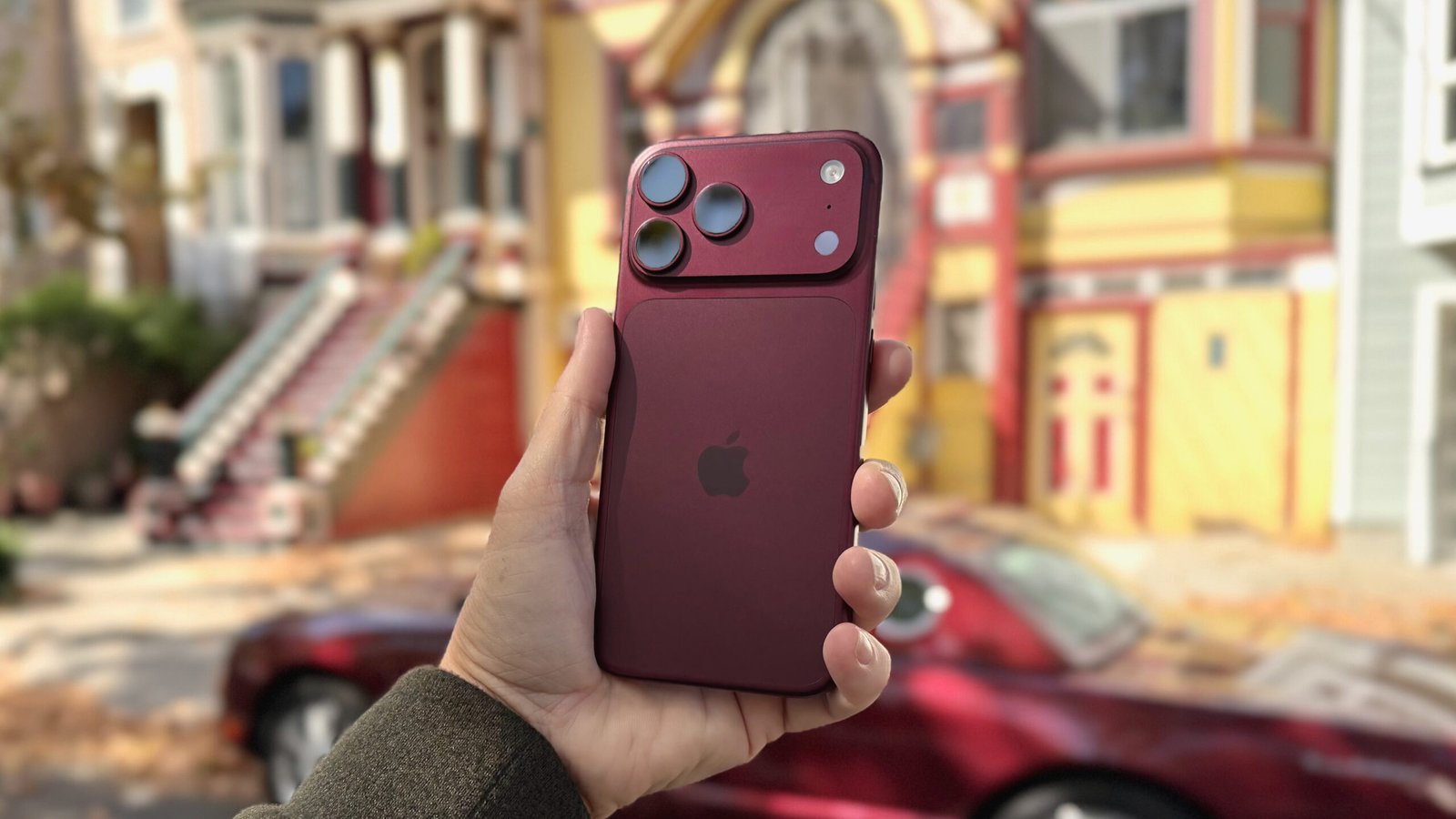
Some owners of Apple’s new iPhone 18 Pro Max may be enjoying the new camera system and improved battery life. But if they’re AT&T customers, they could find the phone unable to perform its most essential task: making calls. That also includes being able to dial 911 in emergencies. The fix appears to be a pair of Apple updates rolling out on Friday – but anyone who has already been affected by the problem will need a replacement phone, according to Apple. An Apple representative says the company will replace those phones for free.
Last week, some iPhone 18 Pro Max owners on AT&T’s network reported no cellular access. MacRumors reported that AT&T sent a text message this week to iPhone 18 Pro Max owners, encouraging them to update to iOS 27.0.1 immediately. MacRumors estimates that thousands of customers have been affected.
On Friday, Apple said it’s issuing a separate carrier-settings patch to pair with the iOS 27.0.1 update. But the patch comes too late for certain owners of the new phone.
An Apple representative told CNET that the updates are intended to guard against this problem in the future and won’t fix the situation for iPhone 18 Pro Max owners who are already experiencing it. Apple will provide a new phone free of charge to those owners. Affected customers should contact Apple Support or AT&T.
In Reddit threads about the issue, some owners report that the 27.0.1 update by itself did not fix the problem, nor did upgrading to the public beta of iOS 27.2.
Only the iPhone 18 Pro Max is affected
So far, the issue seems limited to iPhone 18 Pro Max models on AT&T’s network. I reached out to contacts at T-Mobile and Verizon, and both report they’re not seeing similar reports on their networks. I haven’t experienced the issue on an iPhone 18 Pro that runs on AT&T’s network, which isn’t surprising given that this particular problem affects iPhone 18 Pro Max units, not iPhone 18 Pro phones. A CNET colleague’s iPhone 18 Pro Max on Google Fi (which uses T-Mobile’s network) is not experiencing the issue.
It’s unclear whether the lack of connectivity is related to the phone’s hardware. While the standard iPhone 18 Pro is equipped with Apple’s C2 modem, the iPhone 18 Pro Max in the US is the only model with Qualcomm’s Snapdragon X80 modem, as shown in this teardown of the phone by iFixIt. Qualcomm has been Apple’s modem provider for years, but Apple has worked to move away from relying on the third party for the essential phone component. That relationship is due to expire this year.
According to a TechInsights iPhone 18 Pro Max teardown, the X80 modem is also used in the iPhone 17 Pro and iPhone 17 Pro Max, but a new millimeter-wave antenna has been added to the 18 Pro Max. Millimeter-wave offers much faster data speeds in areas where the technology is installed, but it can have a shorter range and be reduced by obstacles. Apple’s C2 modem also includes a millimeter-wave antenna.
A representative from Qualcomm didn’t immediately respond to a request for comment.
Jeff Carlson
Senior Writer
Jeff Carlson writes about mobile technology at CNET, from cellular phone plans to devices and emerging technology. See full bio
Gaming on phones has gotten good enough that graphics and gameplay are beginning to approach what players expect on PC and console. Those more established platforms maintain the edge, with massive GPUs and energy budgets that power AI enhancements that render smoother experiences. While there will never be enough room on a smartphone to fit a full-size graphics card, next year’s top handsets will finally get those AI boosts — and mobile gaming will never be the same.
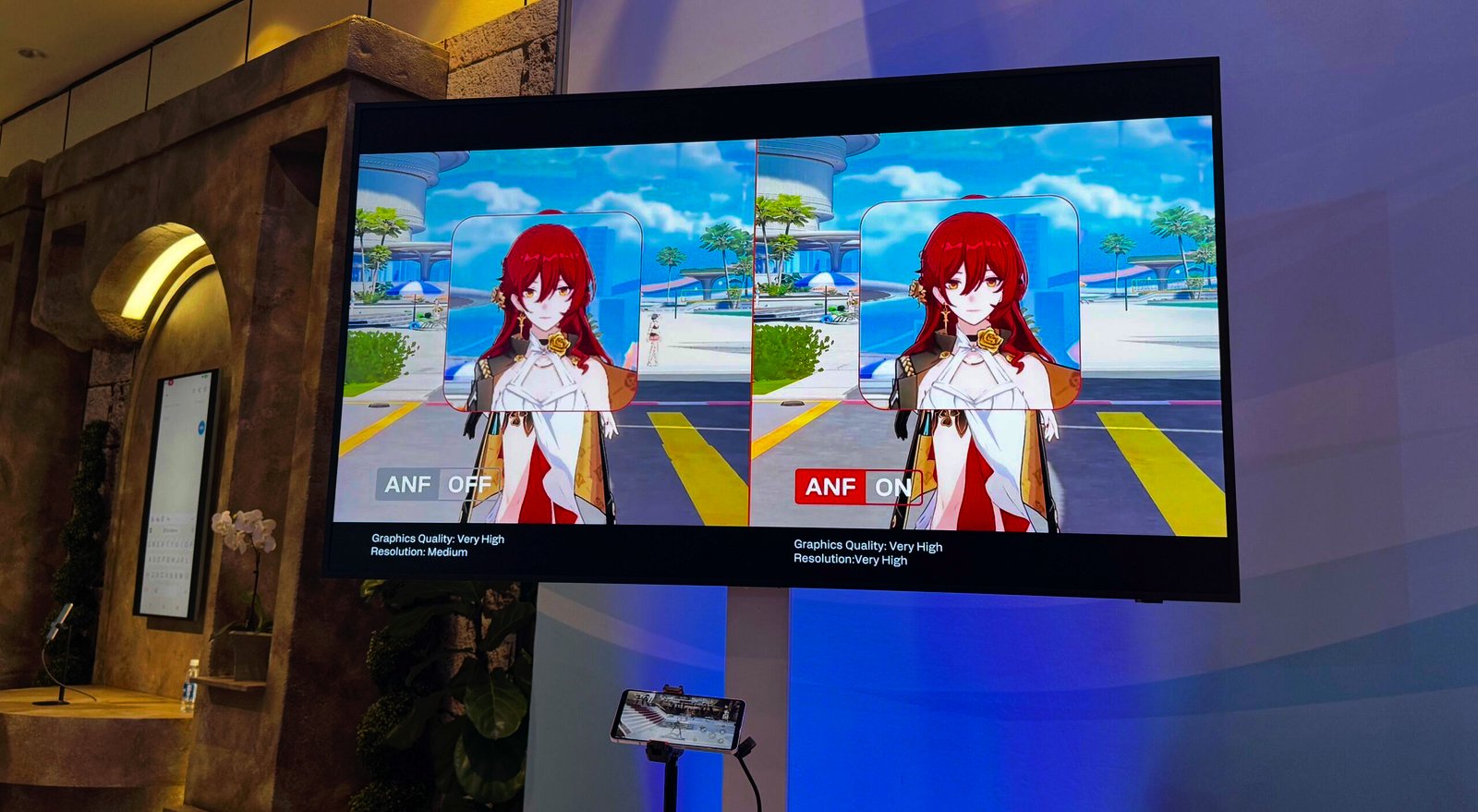
It’s all because of technology making its debut on the latest phone chips. At its Snapdragon Summit 2026 recently, Qualcomm debuted the new Snapdragon 8 Elite Extreme Gen 6, which comes with GPU upgrades, including new Adreno Neural Fusion tech that uses AI to upscale resolution, generate frames to increase frame rate and extend battery life while gaming.
On stage at the Snapdragon Summit, Chris Patrick, Qualcomm’s SVP and general manager of handsets, shows off the Snapdragon 8 Elite Extreme Gen 6’s graphics gains with Adreno Neural Fusion.David Lumb/CNET
How AI gameplay improvements can come to mobile
Not every Android phone uses Snapdragon chips, but AI graphics boosts could come to them as well — the first time this tech will reach mainstream phones. In early September, chip designer Arm debuted its Mali G2-Ultra NX GPU, which has similar technology that upscales resolution and inserts frames, as well as a denoiser to improve image quality when rendering complex effects like ray-tracing reflections and lighting. Arm GPUs are used in top-end chips from companies like MediaTek.
This tech has been used in high-end PC and console hardware for years in the form of Nvidia’s DLSS and AMD’s FSR, which uses AI to bolster graphics in more affordable GPUs and boost frame rates for smoother gameplay. In beefy PC rigs and consoles that plug into wall outlets, or even laptops or handhelds like the Asus ROG Ally, this tech mostly eases complex workloads and makes good graphics better.
But the challenge in adapting this modern graphics tech to phones lies in one word: thermals. PCs have a constant flow of power, laptops have giant batteries, and gaming-specific computers are cooled with massive fans. But phones are so small that their batteries are measured in milliamp-hours, often running on a handful of watts of power per day, and increasingly rely on thermal paste and cooling chambers to vent heat.
The big challenge was getting even better graphics out of the latest generation of Snapdragon chips and even boosting battery life, said Qualcomm Director of Product Management Amandeep Dhaliwal, who leads Snapdragon’s GPU strategy.
“That was the main thing when we were building this Adreno Neural Fusion model,” Dhaliwal said. “How do I factor in thermals as I’m building this upscaling model so that eventually, if in my game, let’s say the power I was consuming was 1 watt, how do I then save 20% on that and come out ahead?”
On phones, AI boosts can eke out more battery life while gaming. With the Snapdragon 8 Elite Extreme Gen 6’s tech, rather than render graphics in full resolution, they’re dialed down to 540p and then AI upscales it to 1080p — it’s much more efficient for AI to make up that difference. Likewise, they can run at 30 frames per second and AI can insert more frames to boost the count up to 60 or even 90fps. This could result in noticeably better energy efficiency while gaming on phones using Snapdragon’s top chip, Dhaliwal said.
“Improving your battery life in a gaming session — people will [cheer] if you do it for 1 to 2%, and here we are talking about 20 to 30%, right?” Dhaliwal said. “Which is huge.”
Both of the new Snapdragon chips have improvements to their Hexagon GPUs, with the 8 Elite Extreme Gen 6 getting 44% improved GPU performance over the Hexagon in last year’s chip, while the 8 Elite Gen 6 has 37%. General battery efficiency for GPU tasks has improved 40% across both chips, too. But the Elite Extreme’s graphics processor has extra hardware that puts it above its Gen 6 sibling, like matrix GPU cores that enable Neural Fusion, AI enhancements that plug directly into the graphics pipeline rather than needing to tap traditional memory and other top-of-the-top-end boosts.
Lekha Motiwala, director of product management at Qualcomm, debuted the benchmark gains in the Snapdragon 8 Elite Extreme Gen 6’s Adreno GPU.David Lumb/CNET
Tech coming to today’s phones, but only the best of the best
In Snapdragon’s case, this new technology is only coming to the Snapdragon 8 Elite Extreme Gen 6, the most top-of-the-line chip in the company’s newly revised lineup.
Neural Fusion isn’t available on the Snapdragon 8 Elite Gen 6, which is still a premium chip at the same level as last year’s Snapdragon 8 Elite Gen 5 — that is, it’s silicon that is already slated to power the Xiaomi 18 Pro and will almost certainly come in many of next year’s upper-tier phones. The Extreme version is a cut above even that, and will only be used in the highest-end Android devices, like the Motorola Signature 27 and Xiaomi 18 Pro Max revealed at this year’s Snapdragon Summit alongside the new chips.
Neural Fusion could, in theory, be used in the Snapdragon 8 Elite Gen 6, but it wouldn’t be efficient and the gains wouldn’t be as substantial, Dhaliwal said. “Technically, it’s possible to have [Adreno Neural Fusion] on a nonmatrix core GPU, but it’s not advised because you are not going to see a good experience,” he said.
It comes down to the cores: Since the 8 Elite Gen 6 lacks its more premium sibling’s matrix cores, it’s heavily using all its existing cores to render scenes already, and Neural Fusion would tax them even further, requiring a compromise somewhere that would worsen the player experience. Decreasing frame rate to compensate could lead to players noticing dropped frames and choppy visuals, degrading quality for limited benefit.
Dhaliwal compared the two chips’ graphics capabilities to those on the higher and lower ends of the same PC GPU line.
“When it comes to gaming, we are approaching the Dual 8 Elite launch similar to other hardware competitors in the PC market,” Dhaliwal said in an email after the event. “While there are differences between Snapdragon 8 Elite Extreme Gen 6 and Snapdragon 8 Elite Gen 6, they are built on the same architectural principle while offering more performance options for our customers, similar to how you would see performance vary within a specific series for consumer graphics cards.”
Qualcomm’s Chris Patrick introduced a list of game titles that will support improvements from the Snapdragon 8 Elite Extreme Gen 6’s Adreno Neural Fusion tech.David Lumb/CNET
What’s coming in tomorrow’s mobile gaming
Rendering graphics at lower resolutions and frame rates to upscale them to rates that gamers expect (1080p at 60fps) is an impressive way to extend battery life and offset some of the computational load from the CPU to neural processing. But there are even greater heights for the technology to reach.
For this generation of phone chip tech, Neural Fusion generates a frame for every one traditionally rendered — so going from 30 frames per second to 60, or 60 to 120. But the big trend in China is for even higher frame rate gaming, Dhaliwal said, with games natively rendered to 120, 144 or even 165fps. Since rendering those rates is power-taxing, which leads to swift battery drain on mobile gaming, Qualcomm’s next frontier is looking to generate more frames for each one rendered — boosting a native 30 frames up to 120, for instance.
But with Snapdragon and Arm introducing these PC gaming AI boosts and Apple adding neural accelerators to GPUs on its A-series chips, the mobile industry is heading toward harnessing this tech in phone gaming on a greater scale. That affects game developers, too, who have been working miracles to get their games running on pocket-sized devices with very limited power budgets — but now have more power savings to boost the graphics in their games.
“Now the developers are basically thinking, look, I was doing something in a given 1-watt budget,” Dhaliwal said. “Now with upscaling, I suddenly have these 200 milliwatts or 300 milliwatts available, which means I can enhance my game to do more things, right?”
These GPU improvements aren’t limited to gaming, either. They can run AI models. Even if they’re not going to be as power- or performance-optimized as on a laptop or desktop, they can run on a GPU, Dhaliwal pointed out. It’s another tool alongside the neural processing unit that developers programming mobile AI models can tap.
“It’s all those things which are going to be really, really exciting,” Dhaliwal said.
Correction, Oct. 4: Replaces a quote that repeated an error.
David Lumb
Managing Editor, Mobile
David Lumb is a managing editor for the mobile team, covering mobile and gaming spaces. Before CNET, he covered tech, gaming, and culture for TechRadar, Engadget, Popular Mechanics, NBC Asian America, Increment, Fast Company and others. As a true Californian, he lives for coffee, beaches and burritos. See full bio
September just ended, but I’m still reminiscing over my end-of-summer trip to Cape May. It was the perfect weekend getaway to the southernmost town of New Jersey, where the sun beamed through voluminous clouds and the streets were bustling — I even remembered to fold the bed sheets that first morning.
This year’s flagship models feature iterative hardware updates, with the most notable changes being modifications to camera sensor architectures that allow for more light and, therefore, detail to be captured. This was mostly expected, as my colleague Jeff Carlson found last year’s Samsung and Google models already quite adequate.
Instead, both companies leaned more into image processing and how their respective AI models could detect and modify subjects to get you an “ideal” shot. Below, I’ll walk you through a gallery of photos I captured throughout my trip that I took under various lighting conditions and with moving subjects to help you determine which phone camera is best for you.
Note that all of these photos were captured using each phone’s native camera settings and were not modified after the fact, except for straightening in Adobe Lightroom.
Pixel 11 Pro XL vs. Galaxy S26 Ultra: Ultrawide
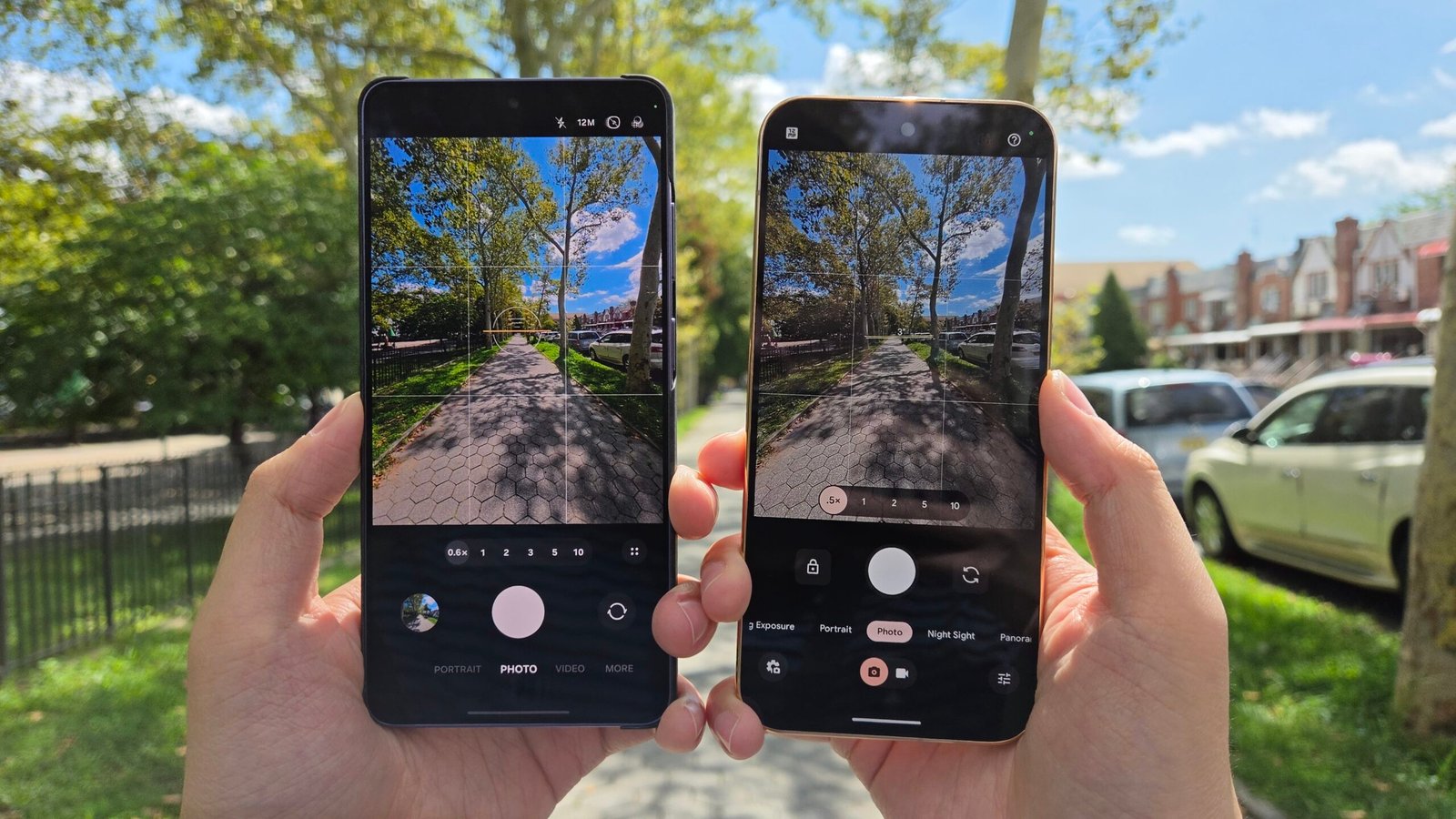
Let’s begin with ultrawide shots I took before driving through the Garden State Parkway. The first difference I noticed between the Pixel’s 48-megapixel sensor and the Samsung’s 50-megapixel sensor was how they process colors. The Pixel portrays trees, roads and the sky in more neutral, realistic tones, whereas the Samsung leans toward more vibrant, saturated tones.
Google Pixel 11 Pro XL (left) and Samsung Galaxy S26 Ultra (right).
The better camera ultimately comes down to the flavor of green and blue you prefer, but if I had to pick a phone based on its color science alone, I would choose the Pixel, as it appears less modified.
One camera is decisively better when you look at the details of the clouds. Samsung wins here with a more balanced exposure and highlights, depicting the ever-random, cotton-ball shapes of clouds. You can clearly distinguish how each cloud merges with another. On the Pixel, however, the clouds are blown out, appearing as a single white blob.
Generally speaking, the Pixel captures photos with a warmer color temperature, as you can see the difference in my wife’s sleeves and the surrounding tree leaves as we walked through the Cape May Zoo.
Google Pixel 11 Pro XL (left) and Samsung Galaxy S26 Ultra (right).
If you prefer something cooler, like on the Samsung, you can always tweak things in post or through the new Camera Looks introduced with the Pixel 11 lineup. They’re effectively real-time filters that apply to the phone’s imaging pipeline, giving you creative control before the phone even processes the image.
In the same photos above, notice how the edges of the ultrawide angle are blurrier on the Samsung. This can be chalked up to a slower shutter speed or less effective stabilization, though it can also be interpreted as giving the photo a more dynamic feel. I would still pick the Pixel in this case.
Pixel 11 Pro XL vs. Galaxy S26 Ultra: Telephoto
The far-distance, telephoto comparison may be the biggest toss-up between the two phones. On paper, Samsung should have the advantage, with an extra 10-MP telephoto (for 3x optical zoom) to accommodate the 50-MP telephoto (for 5x optical zoom). Google, on the other hand, uses a main sensor crop for close-up shots, then switches to its single 48-MP 5x telephoto for longer distances.
Google Pixel 11 Pro XL (left) and Samsung Galaxy S26 Ultra (right).
In practice, the quality of both phone cameras is quite good, with natural-looking bokeh (background blur) and separation between the subject and what’s behind it. When we walked by a crocodile lounging by the fence, it was a great opportunity to see how well the sensors captured the textures of its rough skin while gradually smoothing out the grass behind the animal. I took these crocodile photos using the 5x optical zoom option on each phone.
My ideal shot is somewhere in the middle. I like how natural the colors and background blur on the Pixel, but I prefer the contrast levels on the Samsung, which give the crocodile more depth and detail. For some, Samsung’s output may almost be too sharp. But if what you’re after is as much detail as possible from far away, it’s the superior camera system.
In the middle of the walk, we stopped by a gift shop for souvenirs and snacks. (I also stopped by for the abundance of colors in the room, but that’s between you and me.) I picked up a name tag, swiped over to portrait mode on both phones, then snapped a picture.
Google Pixel 11 Pro XL (left) and Samsung Galaxy S26 Ultra (right).
The result is the Pixel producing an ever-warmer photo with a generous amount of bokeh and smoother edges around the name tag, while the Samsung produces one with sharper edges and subject isolation, but worse blurring. You can see the artificial processing overworking in Samsung’s photo, with the two B’s in “ABBY” slightly blurred.
The portrait mode effect can be toned down in both the viewfinder and the gallery afterward, but as I mentioned earlier, I am only comparing photos straight out of the camera’s default settings here.
Pixel 11 Pro XL vs. Galaxy S26 Ultra: Main camera
For lunch, we settled on a Cape May classic: the Lobster House. The half-century-old institution, which is docked by the harbor, is best known for its fresh seafood, including lobster, oyster and fish. And the dim-lit ambiance, an old-school maritime theme with fishing ropes and wooden planks made for a good test of the phones’ dynamic range.
Google Pixel 11 Pro XL (left) and Samsung Galaxy S26 Ultra (right).
In this first shot at the table, I’m very impressed with the sharpness and contrast from the Samsung. The highlights are managed well, too, with noticeable detail in the ships parked outside. The Pixel’s image is flatter, with just about everything appearing too smooth, and shadows that would otherwise make things more dramatic are lifted.
After the meal, we wandered through Cape May to view the iconic Victorian houses, with their high-gabled roofs and distinctive color schemes that would fit any Roald Dahl movie. In this scenario, both phones produced great-looking photos, juggling the various lines and textures of the houses with the bright sky and commendably well-maintained lawns.
Google Pixel 11 Pro XL (left) and Samsung Galaxy S26 Ultra (right).
If there’s one comparison where the difference truly comes down to color fidelity, this is the one. Take your pick.
Pixel 11 Pro XL vs. Galaxy S26 Ultra: Moonshot
A few years ago, a big controversy surrounded the Samsung Galaxy S21 Ultra and its seemingly unimaginable ability to capture clear, detailed photos of the moon. The company reportedly used AI to detect when a moon was in the camera frame, then enhanced the image to fill in details such as craters. Apparently, that’s still a thing, and Google is in on the artificial magic, too.
Google Pixel 11 Pro XL (left) and Samsung Galaxy S26 Ultra (right).
Compared with Samsung’s 100x Space Zoom, the Pixel’s 120x Pro Zoom produces a brighter image, though not as detailed. There’s simply more surface clarity of the Moon in the Samsung image, likely due to the underexposure. By reducing the overly bright planet at night, the Samsung camera renders its textures more accurately. By the way, I took both of the shots with the devices held in hand, so the electronic stabilization on both devices helped a lot.
There’s no easy way to validate the results of both images, but if I had to choose one for a moonshot, I would pick Samsung.
Which is the better camera?
In most cases, the Samsung Galaxy S26 Ultra is the better, more capable camera phone for me. I also prefer a camera that produces social-ready imagery, so the touch of saturation and sharpness makes Samsung’s output more ideal.
While I based the comparison on camera samples shot with default settings, know that both devices offer creative tools to tweak how images are captured. The Pixel 11 Pro’s Camera Looks, for example, lets you modify colors, tones, and sharpness in ways that can dramatically transform the expression of shots. CNET’s Andrew Lanxon put it to the test during a stay in Paris.
And as you saw above, the better camera phone ultimately comes down to your own preferences for color fidelity, detail, depth and bonus features. The undeniable truth is that you can’t go wrong with either phone.
Kerry Wan is the former Editor-in-Chief of ZDNET, based in New York City. He has over 10 years of experience testing and reviewing consumer technology from mobile hardware to home entertainment. See full bio
Early holiday sales are coming up. Whether you’re considering one of the newest smartphone models like the Pixel 11, Samsung Galaxy S26, one from the iPhone 18 lineup or one of the older models, now could be a good time to get a new phone without paying full price. You may choose to stay loyal to the phone brand you’ve stuck with for years, or you could use the upgrade as a chance to try a new one.
CNET readers shared what they think about their smartphone in our People’s Picks survey to help you narrow down your choice before the sales start. We asked about the phone features and buying factors that matter most, such as battery life, price-to-value and durability. Readers boiled their favorites down to four big-name brands, but there’s one winner that may surprise you. Spoiler alert, it’s not Apple.
Overall winner: Google
Jeffrey Hazelwood/CNET
Google is the overall winner for CNET’s People’s Picks for Phones. CNET averaged the scores across three categories to determine the overall satisfaction rating, which includes customer satisfaction, battery longevity and price-to-value.
Google wins with a score of 4.52 out of 5, while Motorola trails closely behind with 4.45.
“It’s no surprise to me that Google and Motorola scored top marks because both sell some of the most affordable phones that people can buy. Motorola’s Moto G series costs hundreds of dollars less than Apple’s cheapest iPhone,” said CNET Director of Content Patrick Holland. “At $500, Google’s Pixel 10A is one of the best values that you can buy today, especially as phone prices spike due to the ongoing RAM shortage caused by AI and data centers. It just goes to show that in 2026, you can spend less than $500 and still have a great phone that lasts you years.”
On the other hand, Samsung and Apple trail behind with scores of 4.19 and 3.87, respectively. Both brands have evolved in the smartphone space with AI-powered features, upgraded cameras and thinner phone designs, but fell short in this category.
“There are a few factors at play here, most notably that Google and Motorola ship a fraction of the phones that Samsung does — so Pixel and Razr buyers are a more devoted core of customers than the many who buy Galaxy phones,” said CNET Managing Editor David Lumb. A Counterpoint Research report on phone shipments in the first quarter of 2026 noted that Google (3% of the US market) and Motorola (10%) combined accounted for half of Samsung’s market share (26%).
The other thing to remember is that Google sells mostly premium phones.
“Aside from the Pixel 10A as a midrange device, Motorola and Samsung have wider ranges of more affordable and cheap phones, so I’d guess there’s less consumer fondness at the lower end of the device price scale,” Lumb said.
Apple’s fourth-place spot is a tougher nut to crack. Perhaps consumers haven’t seen as many upgrades in successive years as they would like in new iPhones, or they’re miffed at the higher prices Apple’s phones sell for. What’s most likely the case, Lumb suggested, is that there are simply more people buying new iPhones. In the Counterpoint report above, Apple handsets accounted for 58% of all phones shipped in the US.
AI features
AI features like photo editing, live translation and AI-powered summaries are becoming the focal point for new smartphone models. But what matters more is how much you’ll use those built-in features. Google Pixel wins with 88% of its users saying their phone’s AI features are essential and occasionally useful.
“Out of the four brands, only one is a true AI company, and that’s Google,” Holland said. In fact, Google’s Gemini AI can run on phones from all four brands, including the iPhone via an app. The Gemini Assistant can be used on Motorola and Samsung phones.”
Lumb added that Google has led the charge in both including and promoting AI features in its Pixel phones that people actually use, like Magic Eraser and live translation.
“Pixel owners have been using AI features for years, and combined with Google aggressively inserting its Gemini assistant throughout the phone, it makes sense that Samsung Galaxy owners would feel a lesser impact from AI,” he said.
Samsung has made plenty of AI advancements, like a health assistant and browser upgrades, but it falls behind, with only 64% of its users saying the same. Apple and Motorola trail behind with 14% and 8% each. Most Motorola users say the phone lacked built-in tools or ignored them.
What few AI features are available on iPhones were introduced more recently, so it’s unsurprising that their owners wouldn’t consider them essential to daily use, Lumb said. While Gemini continues to evolve, Apple’s advanced AI Siri was delayed for years and finally arrived with iOS 27.
Battery life
Ties with Motorola
For a phone’s battery to exceed expectations, it must last a day or more. Motorola and Google tie in this category, with 74% saying their phones’ batteries exceed expectations by lasting a full day or longer without needing to be charged. Comparatively, Samsung and Apple fall behind, with only about half (52%) saying their phones’ batteries exceed expectations, while others say they just meet expectations. Apple finishes last, with only 31% reporting the same for their iPhones’ batteries. Most said their phone needed to be charged midday.
“The No. 1 factor for battery life is how you use your phone. And I think this result speaks volumes about how much iPhone owners are on their phones,” Holland said.
CNET’s phone battery testing found that Apple’s phones had the longest battery life, with OnePlus placing second and Motorola third. However, the test doesn’t account for how you use your phone specifically each day – everyone is different. If you’re hyper-connected and your default is scrolling through social media apps or streaming videos, even the best battery life won’t be enough for you, Holland said.
“Thankfully, Google, Motorola and Samsung, along with Apple, have all increased the charging speeds on their handsets to at least make topping them off less of a pain,” he said.
Motorola
J. Hazelwood/CNET
Value
Motorola wins in price-to-value, with 82% of its readers saying it offers exceptional value by delivering more than its price suggests. Only 4% rate the brand as overpriced.
“Before Motorola brought back the Razr as a foldable phone, its most popular handsets were its Moto G line that start as low as $200 and top out at $350,” Holland said. “Motorola has deep, long-term relationships with phone carriers, which often sell these phones at a discount.”
Compared with other brands, 45% of Pixel owners say Google’s phone offers exceptional value, and 35% of Samsung users say the same.
The surprising fact is that Apple places fourth in this category, with 58% of iPhone users saying it’s overpriced. Only 12% find the phone’s value exceptional. However, many tech brands are raising prices due to the RAM shortage, which makes it tough to determine what’s worth the high cost.
Apple
J. Hazelwood/CNET
Durability
Choosing a phone that doesn’t shatter, crack or leave you with a broken camera can make a big difference when you need one to last a few years. Some phones are more durable than others. Apple wins this category with 78% of readers saying it’s highly durable against drops and daily use with minimal to no damage. The remaining 22% either deal with normal wear and minor scuffs over time, report their phone as fragile or always have a heavy-duty case to protect it.
Holland said that when Apple released the iPhone 12 in 2020, it was the first to have a flat, dense build with squared-off sides to increase durability. In the years following, Samsung followed suit, adopting a flat build for its Galaxy S and S Plus models, and Google implemented a similar design with its Pixel phones.
Google follows closely behind with 72% saying their Pixel smartphone is highly durable, while 28% say it’s moderately durable.
Not as many readers with a Motorola say the phone is highly durable (65%), but even fewer readers with a Samsung (58%) phone say the same. Samsung users say their foldable phone and screens are fragile and only moderately durable. Some readers criticize the brand for the phone’s fragility and susceptibility to damage from drops.
Brand retention and loyalty
Despite Apple falling short in several categories, 86% of Apple users said they’re extremely likely to buy the same brand next time.
“Apple’s most popular product is the iPhone, but its iPhone-only features like iMessage and FaceTime, not found on Android, that keep people tied in,” Holland said. “Also, if you want to learn about how to use your iPhone or get it fixed, you can go to the Apple Store and talk with an actual human – I think those retail stores are Apple’s secret weapon.”
Whereas 79% of Samsung owners share the same sentiment for the brand. Over half of Google Pixel owners (58%) would buy a Google phone again, but only 42% of people with Motorola phones would. Other Motorola owners are using competitor research to determine their next phone purchase.
Did you agree with these findings? CNET’s People’s Picks is community-driven and helps us spread the word about the tech and services you love. Take our ongoing privacy and security apps survey to tell us what you love about yours.
Methodology
CNET commissioned Alchemer to conduct the People’s Picks survey to compile data. The survey was carried out online, and all figures are from Alchemer. The total sample comprised 1,107 adults. The figures have been weighted and are representative of all US adults (aged 18 plus). Fieldwork was undertaken from July 1 to July 28, 2026.
Dashia Milden
Senior Consumer Insights Editor
Dashia is the consumer insights editor for CNET. She specializes in data-driven analysis and news at the intersection of tech, personal finance and consumer sentiment. Dashia investigates economic shifts and everyday challenges to help readers make well-informed decisions, and she covers a range of topics, including technology, security, energy and money. Dashia graduated from the University of South Carolina with a bachelor’s degree in journalism. She loves baking, teaching spinning and spending time with her family. See full bio
When Apple introduces new iPhone models in the fall, there’s always a lag between ordering and receiving the new phones as the company works through millions of orders. This year’s Apple event added a new complication: While the iPhone 18 Pro and iPhone 18 Pro Max are currently shipping, the iPhone Duo has been announced but is not yet open for preorders. And in a break from the past, the standard iPhone 18 and a possible iPhone 18E remain just rumors.
If you’re planning to replace your iPhone this season, you’re probably curious to know when you can actually get your hands on one of the new devices.
When are the iPhone Duo and iPhone 18 Pro available to buy?
According to Apple’s website, you can “get ready” to preorder the Duo on Oct. 12, with the official preorder window opening on Oct. 16. If you want to be able to walk into a store and grab one for yourself, the iPhone Duo will be available on Oct. 23. Apple’s new foray into the foldable world has certainly got a lot of attention, and from our hands-on with the device, it seems to have been worth the wait.
The iPhone 18 Pro and 18 Pro Max were officially released on Sept. 18, though you might run into some backorder issues due to the popularity of the new phones. According to Apple’s online store, you can pick up models in-store or wait approximately three weeks to have it delivered (both of those depending on location and configuration).
As for the standard iPhone 18 and the iPhone Air 2, rumors have pointed to a delayed release, as they were nowhere in sight during the announcement event last month. The shift may be a strategic one to a biannual cadence for Apple, with fall and spring launch dates. This isn’t unlike how Samsung launches its flagship Galaxy lineup at the beginning of the year, with its foldable lineup debuting in the middle of the year.
“The base iPhone 18 model announcements are expected to be pushed into spring 2027. This staggered launch marks a notable change in Apple’s release cadence, with a strong emphasis on premiumization,” said David Naranjo, associate director of Counterpoint Research.
Whether this potential delayed release is related to manufacturing restrictions, RAM shortages or just prioritizing its best hardware first remains to be seen, but if the rumors are true, those looking for an entry-level iPhone may need to wait until next year.
This is also a smart move on Apple’s part, as those who might have been looking for a non-pro iPhone may just end up buying the higher-end models instead of waiting. The timing would all coincide with Apple’s E series launch.
Where’s the iPhone 18E?
The iPhone E series has typically been released the following spring after the more powerful models, so there don’t seem to be any surprises here. The budget-focused (for Apple) device will likely be a pared-down version of the regular iPhone called the iPhone 18E, providing essential features from the current generation without many of the bells and whistles.
The iPhone 17E, which launched at a $599 price, hits a sweet spot for functionality and affordability, even though it’s now priced at $699. However, it remains to be seen whether the iPhone 18E, too, will see the price jump that we’ve seen with this current generation of iPhones.
The 17E was announced in March 2025 and was available in stores the following week. If history repeats itself, we may see the iPhone 18E land in early to mid-March of 2027 — hopefully alongside the debut of the standard iPhone 18.
iPhone Generation
Announcement date
Available in stores
iPhone 12 & 12 Pro
Oct. 13
Oct. 23
iPhone 12 Pro Max & 12 Mini
Oct. 13
Nov. 13
iPhone 13, 13 Mini, 13 Pro, 13 Pro Max
Sept. 14
Sept. 24
iPhone 14, 14 Pro & 14 Pro Max
Sept. 7
Sept. 16
iPhone 15, 15 Plus, 15 Pro, 15 Pro Max
Sept. 12
Sept. 22
iPhone 16, 16 Plus, 16 Pro, 16 Pro Max
Sept. 9
Sept. 20
iPhone 17, 17 Pro, 17 Pro Max, Air
Sept. 9
Sept. 19
iPhone 18 Pro, 18 Pro Max
Sept. 9
Sept. 18
iPhone Duo
Sept. 9
Oct. 23 (expected)
Blake has over a decade of experience writing for the web, with a focus on mobile phones, where he covered the smartphone boom of the 2010s and the broader tech scene. When he’s not in front of a keyboard, you’ll most likely find him playing video games or watching horror movies. See full bio
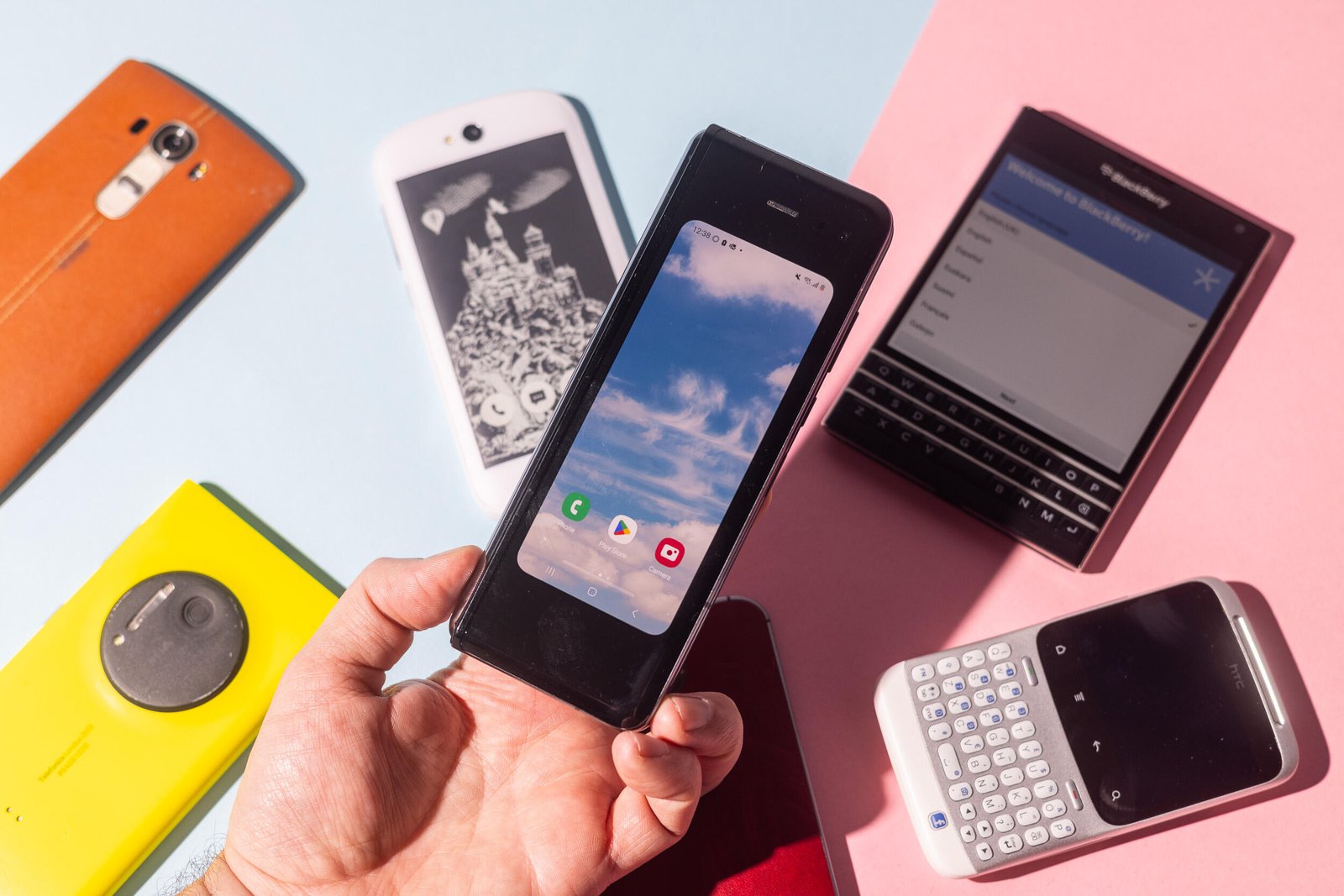
So many phones, each one weirder than the last. Andrew Lanxon/CNET
I’ve been a CNET journalist for over 15 years and I’ve tested everything from the latest electric cars and bikes to cameras and TV-controlling magic wands. I’ve even compared drones to barn owls. My main focus has always been the hottest new phones, and I’ve seen a lot of them in my time.
Names like Apple and Samsung have remained stalwarts in the industry during my time, but I’ve also seen the rise of brands like Xiaomi, Oppo and Huawei. Meanwhile, once-dominant names like BlackBerry, HTC, LG and more recently OnePlus have vanished from the mobile space. Even Sony doesn’t make much of a fuss over its phones these days, though it does still launch new ones.
I’ve seen phones arrive with such wild fanfare that they changed the entire mobile industry, while others quietly trickled into existence only to vanish just as uneventfully. But it’s the weird ones that stick in my memory. Those devices that tried to be different, that dared to offer features we didn’t even know we wanted or simply the ones that aimed to be quirky for the sake of being quirky. Like someone who thinks an unusual hat is the same thing as having a personality.
Here then are some of the strangest phones I’ve come across in my mobile journey at CNET. Better yet, I still have these phones in a big cardboard box in my office, so I was able to dig them out and take new photos — though not all of them still work. Let’s start with a doozy.
BlackBerry briefly tried to convince us that it’s hip to be square.
Andrew Lanxon/CNET
BlackBerry Passport
At the height of its power, RIM’s BlackBerry was one of the most dominant brands in mobile. It was unthinkable, then, that anything could unseat the goliath, let alone that it would fade into total nonexistence. But the once juicy, ripe BlackBerry withered and died on the branch, but not without a few interesting death rattles on its way.
My pick from the company’s end days is the Passport from 2014, notable not just for its physical keyboard but its almost completely square design. The rationale behind this, according to its maker, was that business types just really love squares. A Word document, an Excel spreadsheet, an email — all square (ish) and all able to be viewed natively on the Passport’s 4.5 inch display with its 1:1 aspect ratio. Let’s not forget that all Instagram posts at that time were also square so it had that going for it too. YouTube, not so much.
In theory, it’s a sound idea. In practice, the square design made it awkward to use, as the physical keyboard was too wide and narrow. Its BlackBerry 10 software, especially the app availability, lagged behind what you’d get from Android at the time. BlackBerry quickly ditched the new shape. After trying to claw back some credibility with its Android phones — including the stupidly named Priv, a phone I quite liked — and by bringing on singer Alicia Keys as global creative director (because BlackBerry phones had keys, get it?), the company stopped making its own phones in 2016.
The Russian YotaPhone 2.
Andrew Lanxon/CNET
YotaPhone 2
You’d be forgiven for having never heard of this phone or its parent company, Yota. Based in Russia, Yota made two phones: the creatively named YotaPhone in 2012 and the similarly inspired YotaPhone 2 in 2014, pictured above. Both were unique in the mobile world for their use of a second display on the rear. From the front, these phones looked and operated like any other generic Android phone. Flip them over though and you’d get a 4.3-inch E Ink display.
The idea was that you’d use your Android phone as normal for things like web browsing, gaming or watching videos, but you’d switch to the rear display if you wanted to read ebooks or simply have it propped up to show incoming notifications. E Ink displays use almost no power, so it made a lot of sense to preserve battery life by viewing “slow” content on the back.
The reality though is that beyond ebooks — which aren’t great to read on such a tiny screen anyway — there’s very little anyone might want to use an E Ink display for when out and about. It was difficult to operate, too, thanks to a slow processor and clunky software. After just two generations of YotaPhones, the company went into liquidation.
The HTC ChaCha and its Facebook button.
Andrew Lanxon/CNET
HTC ChaCha
Remember when Facebook was the cool spot to be instead of just the place your parents and their friends go to publicly air their most troubling opinions? When I was at university, instead of trading phone numbers when you met someone, the default thing was to add each other on Facebook before you began “poking” each other. Facebook was so ubiquitous at the time that it was simply the way every single person I knew communicated.
Keen to capitalize on Mark Zuckerberg’s social media success, HTC brought out the ChaCha in 2011. The phone came with an utterly ludicrous name and a dedicated Facebook button on the bottom edge. Tapping this would immediately bring up your Facebook page, allowing you to post the lyrics to Rebecca Black’s Friday, ask what Fifty Shades of Grey is about or do whatever else it was we were all up to in 2011.
Facebook might still be around in one form or another, but HTC abandoned its phone-making business back in 2018. Unsurprisingly, phones with dedicated hardware buttons tied to social media haven’t caught on. Though if I’m being generous, there is strictly speaking an X button on every keyboard.
The Finney’s pop-up screen is ideal for crypto bros.
Andrew Lanxon/CNET
Sirin Labs Finney U1
“Bro!” I hear you shout, all too loudly. “Bro! You’ve got to check out what my Bitcoin is doing!” You’d then show me your phone and I’d watch while your crypto account plummeted, rebounded and plummeted again over the course of 12 seconds. The phone you’d be showing me, of course, would be the Sirin Labs Finney, a 2019 phone specifically targeted at crypto bros who wanted a device that would perfectly match their high-living, high-fiving crypto-trading lifestyle.
At its core, the Finney is just another Android phone, but a hidden second screen pops up from the back of the phone, with the sole purpose of giving you secure access to your crypto wallet. The phone had a whole host of security features to ensure that only you could access your Bitcoin or Etherium, and it allowed you to send and receive cryptocurrency without having to use a third-party online platform. Apparently that was a good thing?
If you were entrenched in the crypto world, this phone might have been the dream. But the wallet wasn’t easy to use and the phone was expensive, thanks to the cost of that second screen. Sirin Labs stopped making phones soon after and the mobile industry learned an important lesson about not developing hyper-niche devices that aren’t even that well-suited for the handful of customers that might be interested.
The Gemini PDA was part phone, part laptop.
Andrew Lanxon/CNET
Planet Computers Gemini PDA
Half phone, half laptop, all productivity. The Gemini PDA by UK-based mobile startup Planet Computers was a clamshell device in 2018 with a large (at the time) 5.99-inch display and a full QWERTY keyboard. It was basically a slightly more modern interpretation of a PDA, like 1998’s Psion 3MX, in that it was effectively a tiny laptop that would fold up and fit in your pocket. The full keyboard allowed you to type away comfortably on long emails or documents, while the regular Android software on the top half meant it also functioned like any other phone — apps, games, phone calls, whatever.
It had 4G connectivity for fast data speeds and a later model even got an update to 5G. But, like the BlackBerry Passport, its focus on business-folk and productivity above all else meant it was a niche product that failed to garner enough appeal to succeed. It didn’t help that it was utterly enormous and fitting it in a jeans pocket was basically impossible, so it didn’t impress either as a laptop or as a phone.
LG’s G5 was a nice idea, but it didn’t last. Nor did LG’s phones.
Andrew Lanxon/CNET
LG G5
LG remains a huge name in the tech industry today, thanks to its TVs and appliances, but it also tried to be a big player in the phone world, too. I liked LG’s phones — they were quirky and often tried weird things which kept my days as a reviewer interesting, perhaps none more so than the LG G5 in 2016.
LG called the G5 “modular,” meaning that the bottom chin of the phone snapped off allowing you to attach different modules such as a camera grip or an audio interface. Like many items on this list I can say that it’s a nice idea in theory, but in practice the phone fell short. Swapping out modules meant removing the battery, which of course meant restarting your phone every time you wanted to use the camera grip.
It was an inelegant solution to a problem that never needed to exist. But its bigger issue was that the camera grip and audio interface were the only two modules LG actually made for the phone. It’s as though the company had this fun notion in creating a phone that can transform according to your needs but then forgot to assign anyone to come up with any ideas on what to do with it. As a result, the end product was uninspiring, over-engineered and expensive.
What once was big now seems small.
Andrew Lanxon/CNET
Samsung Galaxy Note
Samsung’s Galaxy Note series helped transform the mobile industry. It literally stretched the boundaries of phones, encouraging larger and larger screens — even creating the unpleasant and mercifully short-lived term “phablet.” But the first-generation model in 2011 was controversial, mostly due to what was then considered its enormous size.
At 5.3 inches, it was significantly bigger than almost any other phone out there, including Samsung’s own Galaxy S2 — which, at a measly 4.3 inches, paled into insignificance against the mighty Note. It was mocked for being so huge, with memes appearing online poking fun at people holding it up when making calls. And while times have changed and we now have Samsung’s 6.9-inch Galaxy S26 Ultra, the original Note’s boxy aspect ratio meant it was actually wider than the S26 Ultra. So even by today’s standards it’s big.
It was also among the first phones to come with its own stylus shoved into its bottom. It’s a feature that few mobile companies have mimicked, but Samsung kept it as a differentiator on its later Note models before incorporating it into its flagship S line starting with the S22 Ultra.
Nokia may have been well ahead of its time.
Andrew Lanxon/CNET
Nokia Lumia 1020
Nokia’s Lumia 1020 was my absolute favorite phone for quite some time after its launch in 2013. And it’s because of its weirdness.
Nokia had an amazing history of bonkers mobiles — 2004’s 7280 “lipstick phone,” for example — and while the Lumia range was much more sedate, the 1020 had a few things that made it stand out. First, it ran Windows Phone, Microsoft’s brief and unsuccessful attempt to launch a rival to Android and iOS. A rival that I happened to quite like.
It was also made of polycarbonate, with a smoothly rounded unibody design that strongly contrasted the angular metal, plastic and glass designs of almost all other phones launching at that time. Its look was unlike anything else on sale, and I loved it.
But the main thing I loved was its camera. With a 41-megapixel sensor, Carl Zeiss lens, raw image capture and optical image stabilization, the Lumia 1020 packed the best camera specs of any phone I’d ever seen. It made the phone a true standout product, especially for photographers like me who wanted an amazing camera with them at all times, but didn’t want to have to carry both a phone and a compact digital camera.
While incredible image quality from a phone is a given in almost all camera phones in 2026, the Lumia 1020 was an early pioneer in what could be achieved from a phone camera.
The LG G5 was the love child of a phone and a handbag.
Andrew Lanxon/CNET
LG G4
LG, twice in one list? Oh yes, my friend, because the G5 seen above was not the first time LG went weird. Launched in 2015, the LG G4 had two main features that raised a few eyebrows. Most notably was LG’s decision to wrap the phone in real leather. Yes, real actual leather. Like what you’d get when you peel a cow. It even had stitching down the back, making it look like a handbag or a boot.
While it’s not a phone for vegans, I actually liked the look, especially as real leather — even the really thin stuff LG used on the G4 — naturally wears over time, gaining scuffs and scratches that give each phone a unique patina. It’s why I love my old leather Danner boots, and it’s why a vintage, worn-in leather jacket will almost always look better than a brand-new one. Still, with leather being an expensive — and arguably controversial — material to use on a phone, it’s no surprise LG didn’t return to this idea.
But it’s not the only weird thing about the phone — the G4 was among a small number of phones released around that time that experimented with curved displays. It’s gently bent into a banana shape, the theory being that it makes watching videos more immersive, as is the case with curved screens in movie theaters. The problem is that movie screens are immense, so that curve makes sense. On a 5.5-inch phone like the G4, that curve is barely noticeable and only really served to push the price up.
I designed this custom phone. You can’t do that anymore.
Andrew Lanxon/CNET
Motorola Moto X and Moto Maker
I’ve just pointed out how weird the LG G4 was for using leather and now I’m pointing out another phone that, as you can see in the image above, is also wrapped in leather. But the weird thing here isn’t that the Motorola Moto X came in leather — it’s that I personally got to choose that it came in leather.
With the Moto X in 2013, Motorola launched a service called Moto Maker that allowed you to customize your phone in a wild variety of ways. From different-colored backs and multicolored accents around the camera and speakers through to using materials including leather and even various types of wood, there were loads of options to make your Moto X look unique. Each phone would then be made to order and you could even have it personalised with lazer etching and provide your Google account for it to be prelinked on arrival.
If custom-making phones with a vast number of potential options en masse sounds like an absolute logistical nightmare, you’re on the same page as Motorola eventually found itself. Moto Maker only existed for a few years before the company retired its customization service.
It was a weird time.
Andrew Lanxon/CNET
Samsung Galaxy Fold
I’m ending on a wildcard addition with the original Galaxy Fold. It’s a wildcard because Samsung’s Fold and Flip range are now up to No. 8 and we’ve got foldable devices from almost all major Android manufacturers. Even Apple got in on the game with its iPhone Duo.
While the original Fold might have kicked off the foldable revolution, there’s no question it was a weird phone. I was among the first in the world to test it when it launched in 2019, and while I was certainly impressed by the bendy display, its hinge felt weird and “snappy” to use. The outer display was, let’s face it, terrible.
On paper, its 4.6-inch size is reasonable, but it’s so tall and narrow that it was borderline unusable for anything more than checking incoming notifications. Trying to type on it meant whittling down your thumbs to pointy nubs, so I spent most of my time interacting with the phone’s much bigger internal screen. Cut to today, when the Galaxy Z Fold 8’s outer screen measures a healthier 6.7 inches and, as a result, can function like any regular smartphone, with the bigger inside screen only required when you want more immersive content.
Looking back at the original Fold and its bizarre proportions, it’s honestly a surprise that Samsung persisted with the format. But I’m glad it did.
Andrew Lanxon
Editor at Large; Lead Photographer, Europe
When he’s not testing the latest phones or phone cameras, Andrew can normally be found with his own camera in hand or behind his drums or eating his stash of home-cooked food — sometimes all at once. See full bio
 Prakhar Khanna/CNET