Category: Laptops

  • Google Acknowledges Day 1 Android App Performance Issues on New Laptops

    Google Acknowledges Day 1 Android App Performance Issues on New Laptops

    by: Tyler Graham | CNET

    If you were planning on buying one of Google’s three new Intel-based Googlebooks, it might be worth waiting a bit. The search giant told Android Authority on Monday, launch day, that certain Android apps may not run smoothly right away.

    “The vast majority of Android apps run smoothly across both Intel and Qualcomm Googlebooks right out of the box,” a Google representative said in a statement. “Because many Android apps were originally designed for Arm chips, a handful of complex apps or games need some developer tuning to run their best on Intel-based platforms.”

    It’s unclear what complex applications Google is referring to, or if any of the Play Store’s most-downloaded apps are among them. It’s also unknown just how many Android apps are affected.

    A Google representative did not immediately respond to a request for comment.

    Not all five of the new laptops will face this issue. The three affected Googlebook models, manufactured by Lenovo, Acer and Asus, are built around Intel’s Panther Lake architecture. The two Googlebooks manufactured by Dell and HP contain Qualcomm’s Snapdragon X Elite chips, which are natively compatible with Android-based apps. The Qualcomm-based Googlebooks likely won’t have any issues running the full breadth of apps available in the Play Store.

    The performance issues with the three affected models are not entirely unexpected. Intel silicon is not immediately compatible with Android software, just as Qualcomm’s Arm-based Snapdragon X chips are not optimized for Windows.

    These issues might persist for a few generations of Intel-based Chromebooks before they are fully fixed. Google previously said on its developer blog that running Android-based apps on x86 silicon results in reduced performance and battery life, since the Arm code needs to be translated in real time.

    That incompatibility could pose a challenge for Google and some of its partners, since the Googlebook lineup was marketed as premium laptops meant to unify ChromeOS, Gemini AI and the full library of Android apps. If there’s a performance hit on any of the most popular apps, the promise that you’ll be able to move seamlessly between working on your phone and computer starts to fall apart.

    “While the potential for app incompatibilities is something to be aware of, it’s not a huge cause for concern unless you’re considering a Googlebook for mission-critical work,” said CNET Managing Editor Josh Goldman. “If there’s an Android app that’s an absolute must-have and you’re concerned, you should contact the app developer to check for compatibility before you buy one of the Intel-based models.”  

    The first wave of Googlebooks is now available. The cheapest available model, manufactured by Acer, starts at $899. Configurations from other Google-partnered manufacturers start at $1,299. Every Googlebook is packaged with one year of Google AI Pro and Nvidia’s GeForce Now cloud gaming service, as well as three months of YouTube Premium and Adobe Photoshop.

    Tyler Graham

    Tyler is a writer for CNET covering laptops and video games. He’s previously covered mobile devices, home energy products and broadband. He came to CNET straight out of college, where he graduated from Seton Hall with a bachelor’s degree in journalism. When Tyler’s not asking questions or doing research for his next assignment, you can find him in his home state of New Jersey, kicking back with a bagel and watching an action flick or playing a new video game. You can reach him at tgraham@cnet.com.

  • Google seemingly confirms plans to kill ChromeOS in 2034

    Google seemingly confirms plans to kill ChromeOS in 2034

    by: Ryan Whitwam | Ars Technica

    Rather than get into a Windows XP situation in which it had to keep extending update support, the support page says that Google intends to upgrade newer Chromebooks to the Googlebook OS. It doesn’t have specifics on the timeline or which models will be included, but the company does note that, in many cases, this will be a “direct migration.”

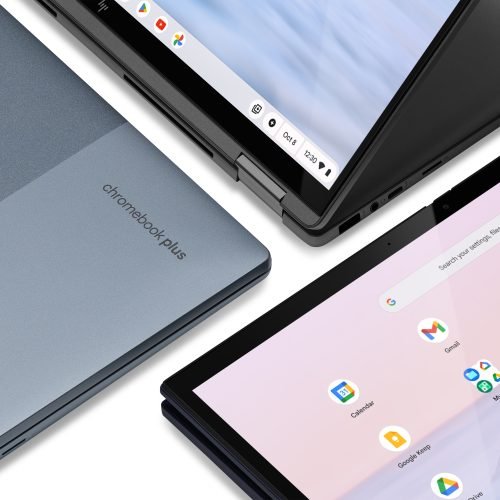
    Googlebooks are launching at much higher prices than Chromebooks.

    Credit: HP

    Googlebooks are launching at much higher prices than Chromebooks. Credit: HP

    It’s understandable that Google doesn’t want to make this more clear—Chromebooks may not have caught on for consumers, but they’re big in schools and business. Googlebooks won’t have comparable management tools for a year or more, according to the support page. If Google is more open about ditching ChromeOS, its Chromebook business could take a dive before Googlebooks are even theoretically in a position to take over.

    In its public statements, Google representatives have only said that Chromebooks will continue to exist. However, this guidance certainly makes it sounds like the platform’s days are numbered. That may present issues for organizations like schools that became accustomed to getting capable, easily managed PCs for dirt cheap. As Google has explained on numerous occasions, Googlebooks are intended to be a premium product.

    Maybe Google’s partners will explore budget-friendly Googlebooks eventually, but the initial lineup starts at $899. It’s impossible to spend that kind of money on a Chromebook today.

  • Microsoft stops insisting you need a “Copilot+ PC”

    Microsoft stops insisting you need a “Copilot+ PC”

    by: Scharon Harding | Ars Technica

    Since 2024, Microsoft has tried to sell “Copilot+ PC.” The marketing initiative was aimed at making it easy for people to know which Windows systems were approved to run AI-accelerated workloads locally.

    But Copilot+ PC branding is nowhere to be found on the new Surface PCs Microsoft announced this week.

    Speaking with Windows Central, Brett Ostrum, corporate VP of Surface, said that the new Surface computers “are not called Copilot+ PCs” despite meeting the label’s requirements.

    “They do meet all the requirements of our previous bar for what Copilot+ devices are. We still lean into the narrative around AI on the edge and being able to have a hybrid solution out there,” he said.

    Copilot+ PCs require 16GB of RAM, 256GB of storage, and an integrated neural processing unit (NPU) with performance rated at 40 trillion operations per second (TOPS) or better.

    The Surface Pro 12-inch (2nd Edition) and Surface Laptop 13-inch (2nd Edition), coming out on October 13, both run Qualcomm Snapdragon X2 Plus processors and have a Qualcomm Hexagon NPU rated at 80 TOPS.

    “[T]he purpose for Copilot+ PCs was to be able to deliver [NPU] experience,” Kedar Kondap, SVP of compute at Qualcomm, told Windows Central. “So, it was to define a certain category of devices with a certain bar and metric, like, for example, a 45 TOPS NPU. … So from that perspective, it’s more offering the same experiences, probably without just using [Copilot+ PC] terminology now.”

    AI PCs are old news

    Copilot+ PCs are “a class of AI PCs and laptops” that represent “the fastest, most intelligent Windows PCs ever,” according to a Microsoft marketing page that was up as recently as May, per Internet Archive’s Wayback Machine. That Copilot+ PCs landing page, however, now redirects to a page for “performance PCs” that still names “Copilot+ PCs” but features the label far less prominently.