Welcome to the dot-si boom? Less than two weeks after President Donald Trump declared that the US was officially renaming “artificial intelligence” to “super intelligence,” the domain extension .si has become a hot item around the world.
Meanwhile, the central European country of Slovenia, whose official domain extension is .si, has registered more than 10,000 .si domain names every day since Wednesday. Slovenia allows anyone to obtain a .si domain name — you don’t have to live in the country. Coincidentally, First Lady Melania Trump is a native of Slovenia.
A domain extension, or top-level domain, is the set of letters after the final dot on a website address. Typically, these suffixes indicate the theme of the website, such as .gov for government, .edu for schools and .org for nonprofits, but there are country-specific domains as well. The most common extension is .com, followed by China’s .cn and Germany’s .de, according to digital services company CentralNic Reseller.
Web hosting provider Hostinger told TechCrunch that .si is now its second-most-popular domain extension after .com and that more than half of buyers are in the US and India.
Behind the .si surge
Trump announced in his speech to the UN on Sept. 22 that the US would begin using “super intelligence” to refer to AI in all official documents, saying, “The use of the word ‘artificial’ makes intelligence sound fake. It is not fake. It’s actually amazing.”
In a subsequent executive order titled Inaugurating the Era of Super Intelligence, Trump wrote that the new term “more appropriately captures the promise, potential, and rapidly advancing capabilities of these technologies.”
On Sunday, Trump announced his Super Intelligence Force, led by National Intelligence Director Jay Clayton. The small task force, Trump said, will focus on engagement with consumers, public interest groups, religious organizations, critical infrastructure providers and AI companies.
Trump was only 11 years old when the term “artificial intelligence” was coined in 1955 by computer scientist John McCarthy, who defined AI as “the science of making machines do things that would require intelligence if done by humans.”
Companies around the world have reacted to Trump’s announcement, scooping up .si domain names for future branding purposes. Other people are grabbing them with the idea that they could resell them to companies that want them.
Register.si, Slovenia’s national registry and management platform for .si, says there were more than 46,000 domain registrations in September, a more than 15-fold increase from the 3,515 in August. The .si domain launched in September 2025. Register.si, run by the Academic and Research Network of Slovenia, charges registrars (like Hostinger) only about $11 per domain, which adds up to more than $300,000 in September.
Anguilla, a British territory in the Caribbean Sea, reaped more than $85 million last year from over 1 million registrations for the domain extension .ai, which the country controls.
Another Musk rebrand
Over the weekend, someone called X Freeze asked Musk on his social media site X (formerly Twitter), “Any possibility of renaming to SpaceXSI??,” to which Musk responded, “Yes, we will make that change.” As of this writing, the company is still listed as SpaceXAI on social media platforms and on its website.
In July, Musk renamed xAI to SpaceXAI after it was absorbed by the aerospace company in a $250 million acquisition in February. The company owns and operates the Grok chatbot and other Grok models and tools.
Ever since being admittedly fascinated by the Cambridge coffee webcam from the 1990s, I’ve written about VPNs, the NFL, smartphones, living wages, over/unders and everything in between. See full bio
It happens almost without you realizing it. It’s insidious, the accumulation of unwanted, unread emails in overwhelming amounts. Like locusts, they descend daily en masse, flooding the compartmentalized chambers of Gmail, Apple Mail, Yahoo Mail and Outlook with promises of savings and harbingers of critical news.
Tragically, many go unread, and even more are tragically, utterly useless. As of this article, my Gmail was sporting a count of 52,299 emails in my main inbox and 93,717 in my Promotions inbox. In total, I had more than 192,000 emails mocking me from the inside.
This sounds like a job for someone (or something) who won’t become enraged by reading thousands of sob story subject lines from Nextdoor and hundreds of alerts informing them that they did not win the lottery.
Here’s how I used Google’s Gemini AI to try to get a handle on my chaotic email inbox.
Connect and crawl
In order to avoid scanning through the glut of subject lines for something of value, I gave Gemini access to look through my Gmail account. All I had to do was ask, and Gemini served up a direct toggle in our chat for me to connect it.
Gemini/Screenshot by CNET
Alternatively, typing in “@Gmail” into the Gemini chat will pull up the option to connect your account as well.
Ejecting repeat offenders
The way Gemini generally handled helping me clear and clean out unwanted email threads from my inbox was by crafting custom search queries that would root out the weeds. The first kind of email I tried to purge from my inbox was the daily alert I get via my neighborhood’s Nextdoor community about some sad thing happening with an animal.
After a quick back and forth in the chat, it offered a prompt:
from:nextdoor.com (animal abuse OR animal cruelty OR coyote OR dead animal OR “lost dog” OR “lost cat”)
I plopped that sucker into Gmail’s search bar, and it quickly surfaced every icky Nextdoor post about a dead coyote or abandoned kitten so I could delete them all together.
Gemini/Screenshot by CNET
Reading so you don’t have to
Sorting out which e-commerce sites, government agencies and recurring services are abusing my inbox by stuffing it full of worthless sale announcements and thinly veiled threats around repaying my student loans? Ain’t nobody got time for that.
In a quick chat session, Gemini was able to parse through the Gmail inbox and gave me a roundup of the senders who show up most often and which of their messages were the most frivolous so I could easily eliminate them.
Archiving the alerts
Some things you want to keep around just in case, like old invoices and email exchanges you might need for emotional blackmail. Google Gemini was able to help me craft a search query that sorted the threads I wanted to keep for later from the stuff that was useless.
One of the tips Gemini outlined for me was around keeping promotions from sneaking into this lot by using quotations around keywords, an old-school Google search trick that applies to Gmail as well.
Gemini was also able to scan through my inbox and look for promotional emails that contained words like “statement,” as in “statement armchairs” rather than “bank statement,” and provide me with a prompt crafted to target only the exact emails I actually wanted to archive.
Here’s an example of the search prompt Gemini gave that banished an email on buy one, get one deals from Benihana and a promo on statement armchairs from Wayfair:
subject:(invoice OR receipt OR payment OR statement OR bill) -shop -sale -off -deal -furniture
How useful overall is AI at clearing your inbox?
Google’s Gemini AI tool was great at helping me sort through emails and isolate keywords and prompts, but the tool is not currently capable of deleting, archiving or creating custom folders in Gmail since it’s not an AI agent. You have to do that part yourself, but I honestly think that’s a good thing.
What it does well is cut down on the time and effort a person looking to organize their inbox might spend coming up with keywords and search-and-destroy methods. Gemini significantly cut down the mental load for me and saved me time, but the power to execute stayed safely in my hands.
Rachel Kane
Contributor and former Senior Editor
Rachel is a freelancer based in Echo Park, Los Angeles and has been writing and producing content for nearly two decades on subjects ranging from tech to fashion, health and lifestyle to entertainment and education. She’s currently a Professor of Practice at Arizona State University’s Walter Cronkite School of Journalism and Mass Communication, helping to mold the new minds who will inherit the media landscape. She’s hoping to prevent the singularity by being polite to chatbots and spends way too much time refining Midjourney prompts. See full bio
The era of generative AI has upended technology supply chains, and there is one ironclad rule in 2026: If it has memory or storage, it’s getting more expensive. Even devices with years-old tech inside are still apparently subject to that unwritten rule. Nvidia has just announced that the Shield TV Pro is getting $100 more expensive, effective immediately.
The most recent version of the Shield streaming box debuted in 2019, running Android TV with AI upscaling and hardware decoding for almost any type of media. While it ran an aging Tegra X1+ processor, that was (and still is) fast for a TV media streamer. The device launched at $199.99, with a non-Pro variant at $149.99. The non-Pro Shield has since been discontinued, but the Shield TV Pro lives on at the new $299.99 price.
Nvidia has confirmed that you can blame AI for the higher Shield TV pricing. “Starting October 2, SHIELD Pro will be priced at $299. The cost of components, including memory, has increased substantially across the industry,” a spokesperson told Ars.
When we talked to Nvidia’s Andrew Bell earlier this year, he framed the Shield as a passion project, but it looks like passion projects still have to pay the bills at Nvidia. In that interview, Bell explained that Nvidia still actively manufactures the Shield and sells every unit it makes. Without a stockpile of pre-AI hardware to sell, new Shield TV units are subject to the same supply chain constraints as today’s smartphones and computers.
After months of delays, Google is gearing up to get back in the AI game. The company on Wednesday announced its newest frontier model, called Gemini 4 Argon. But you won’t be able to use it yet. Here’s why.
A lot has changed in the 10 months since Google released Gemini 3 — and crushed its competition. One is the introduction of the White House’s voluntary review process for new AI models, with which Google said in a blog post it is “actively engaged.” Another is the increasingly potent cybersecurity risk that new AI models pose for online companies, governments and consumers. Just take a look at all the AI agent hacks we’ve seen this summer.
Right now, Gemini 4 Argon is only available to specific cybersecurity defenders in Google’s Fairwind program. This has become the new way that AI companies roll out new frontier models: first to cybersecurity experts, who use it to shore up their own defenses and report any weaknesses, then to subscribers, and then eventually free users. OpenAI did this with GPT-6 Astra, same as Anthropic with Fable 5.
The slow-roll release is meant to give experts the time to find and patch issues before the AI is let loose on the internet. Past releases gave defenders a few weeks before the model was given a general release. Given that this is Google’s first model to go through this process, it could be a little bit longer. Google did not immediately respond to questions about the time frame of Gemini 4’s release.
Gemini 4: What we know so far
Gemini 4 Argon is the latest AI model from Google, capable of coding, multimodalities (like understanding images and charts) and reasoning. If it follows past releases, we can expect Gemini 4, or a version of it, to become the new model powering Google’s many, many AI features in Search, Docs and more. Google said that Gemini 4 Argon is particularly adept at business-related tasks, like software engineering, cybersecurity and knowledge work in legal and finance fields. Benchmarking data released by Google, comparing Gemini 4 to OpenAI’s Astra and Anthropic’s Fable 5.1, seems to back up those claims.
Google says it has been using Gemini 4 internally to help make the company more efficient, including in its quantum computing research and memory operations. It has a 1-million-token output limit. More tokens mean the AI can do more work and handle more complex tasks.
Google was rumored to release Gemini 3.5 Pro earlier this year, but reports say it held off to keep working on it. Even this week, there were concerns within the company that Gemini 4 wasn’t up to par on key tasks, such as coding, Bloomberg reports. We’ll have to wait until the model is released and put it to the test to see if those concerns were addressed before then.
Katelyn Chedraoui
Reporter 2
Katelyn is a reporter with CNET covering artificial intelligence, including chatbots, image and video generators. Her work explores how new AI technology is infiltrating our lives, shaping the content we consume on social media and affecting the people behind the screens. She graduated from the University of North Carolina at Chapel Hill with a degree in media and journalism. You can reach her at kchedraoui@cnet.com. See full bio
Mozilla’s Ajit Varma explains why a redesign suits the fight for the open web.
Can a more modern look help gain market share? It can’t hurt, but it’s not the whole solution. Credit: Mozilla
Today, the Firefox 157 update will roll out a redesign of the web browser across desktop and mobile platforms. The team that made it hopes it will help expand the browser’s audience beyond privacy-conscious techies and open-web or open source advocates to a broader audience who might simply pick the browser because they prefer its user experience over competitors like Chrome, Edge, and Safari.
In advance of the redesign’s launch, I spent half an hour chatting with Mozilla’s head of Firefox, Ajit Varma, about Firefox’s current market position and product strategy, and what barriers or opportunities there are for gaining ground in a Chromium-dominated landscape.
Firefox’s interface has recently felt more conservative than niche browsers. And when I asked Paddy Harrington, a senior analyst at Forrester who covers this space, what Firefox’s main barrier to adoption is, he was frank.
“The biggest is they’re not Chrome,” he replied. “That sounds simplistic, but it’s the clear truth. Safari and Edge are built into the leading operating systems in business and consumer markets, yet people still download and deploy Chrome.”
That said, for many of the people who have chosen to use Firefox, “it’s not Chrome” is much of the appeal. Google-led Chromium dominates the web. It doesn’t just power Google’s own Chrome browser (which has majority market share by a wide margin), it powers most of the rest of the competition, too, including Microsoft Edge.
Firefox, which is built on the open source Gecko, serves as a Chromium-free alternative and has become one of the go-to choices for users who don’t want to contribute to one company’s dominance of the open web—though there is even tension there, and a deal to offer Google search as Firefox’s default provides Mozilla with the majority of its revenue. For now, Firefox seeks independence for the web while remaining financially dependent on its dominant competitor.
But to expand beyond the relatively small market share it now has, Firefox has to inspire users to actively select it over incumbents by providing a better browsing experience; most people don’t care whether Chromium dominates, and most have never heard of Gecko.
In our conversation, Varma expressed hope and ambition that these modernizations will help more users choose Firefox for its merits as a product. We also discussed the Firefox team’s competing priorities, its development resources, AI features and tooling, the general browser market, and more.
A conversation with Ajit Varma
This interview has been edited for length and clarity.
Ars Technica: It’s nice to see a bit of modernization of the design of Firefox. But what problems does this redesign solve? How does it advance browser choice and the open web beyond just being a browser that’s a little more appealing and a little easier to use?
Ajit Varma: Yeah, I think there’s been a lot of questions around, “What are we doing this at the cost of?” Like should we be focused on performance? Should we be focused on compatibility?
We are trying to do all of the above and work faster, and I think that’s one of the challenges that Firefox had in the past, was there was slow decision-making. There was a lot of debate, and in the last like year and a half, we’ve actually been trying to say, can we get a lot more velocity, and compete? And part of this is made possible by AI tools, to be honest with you. We are able to do a lot more.
People want to feel like they’re in a modern browser—things that match the design language of the operating system. So that’s part of it. We are bringing back compact mode as well… and we also have launched more customization options.
There’s a lot of functionality that’s been built to give all the modern productivity things that people wanted, and those are all very utilitarian, but it’s also the emotional connection, and do people feel like it’s a browser that feels modern as well.
Ars: Sure, I’m happy to see it. But right now, I would guess most users pick Firefox as almost a values statement, right? That’s not always the same thing as thinking it’s the most effective or enjoyable browser to use. And not everyone even cares about that values question, right? So are you trying to win users over by providing superior features and a better experience to become everyone’s browser? Or are you just trying to build the best browser for a particular audience with a certain set of values?
Varma: We are focused on building the best browser for a wide group of people. I agree with you that there is a subset of people who really understand the importance of competition and choice in a browser engine. When people look at a lot of competitive browsers, they are built on top of Chromium, and there’s a lot of risks to that. For me personally, that is the reason that I work at Firefox and work on Gecko; it’s because I don’t want this consolidation to exist that destroys all the things that we love about an open Internet.
When we talk to a lot of users that are the broad set, people don’t understand, like, what is Chromium versus Blink versus Chrome, what is Gecko versus Firefox. A lot of people actually don’t even really know what the difference is between a search engine and a browser, and it’s all conflated.
So the reality is that even though I think a lot of our values are what drive us internally—this preservation of the open Internet—it’s hard for people to connect all those dots. Many of us people are like, well, does the browser feel enjoyable to use? And when I download it for the first time, does it feel special? Does it feel unique?
And that’s where we do have an opportunity to also differentiate against Chromium browsers. When you look at a lot of those projects, they feel all very similar because it is much easier to fork and make superficial changes than make deeper changes. But we get an advantage by owning the entire stack. We can actually make bolder changes.
I do think that we need to cater to more than just very educated and informed people, going for a mass audience that doesn’t care about Gecko versus Chromium.
Ars: With that mass audience, you need it to even occur to them to change. How much of Firefox’s minority position right now is platform obstruction, how much is inertia, how much is Firefox’s own product execution, and how much of it is people picking their desktop browser to match what they’re using on mobile, where you’re not as competitive?
Varma: We do see that when people have a moment to decide what they use, Firefox does really well. That kind of goes into your point around, like, consideration is actually the biggest barrier. A lot of people just don’t really consider what browser they use as an important decision. The reason we know this is because in Europe, you have choice screens on mobile. This is part of the Digital Markets Act. There’s a split second when you get a new device: here’s the list of browsers, what do you want to use? We see a lot of growth in Firefox since these choice screens were implemented because I think people know Firefox, they understand privacy values, and then that resonates with them.
The biggest indicator, though, of what browser someone uses is actually, what browser did they use last month? People just use what they were using before; they’re not taking this moment to consider. But the last year we’ve actually seen a lot of moments that cause people to start to consider what browser they use.
So some examples—Chrome went through with their deprecation of Manifest V2. Manifest V2 is basically a much more powerful extension system. And people were like, well, why did this decrease? Why didn’t they just fix the security vulnerabilities in Manifest V2? And it’s very clearly because of ad blockers. That was the reason to deprecate it. Whereas, Mozilla, we’re not maximizing for profits, we’re maximizing for user experience and browser experience, and we want people to have powerful extensions. So we noticed when that shutoff moment happened, there was a moment where people said, do you want the power of an engine to be able to dictate how I control my experience? Because once Chromium shut it off, Edge shut it off, all the Chromium browsers then shut off Manifest V2 support. We still support it, and so we saw a big surge of actual users who started using us.
Also, with AI controls, you see a lot of worries that people have with AI, and whether societal implications or my own personal experience, of whether I want to use it or not. And many browsers are pushing AI very heavily, because if you look at major browsers and they have their hierarchy of needs, they actually probably care more about AI adoption than they do about browser experience. And so there was a criticism around Edge becoming a Copilot app—Gemini is very forceful in its integration in Chrome—but neither Copilot nor Gemini are the main AI that people use. People use ChatGPT, people use Claude. And so our approach is all about choice.
So we built AI controls. It’s a prominent, top-level setting. People can turn it off if they don’t want it. People can set only certain features that they want, like translations. And so we’ve noticed a lot of people actually want that from Firefox. And so this is another consideration moment where someone is like, my browser is getting bloated, I want a choice. A lot of our strategy over the next year is really around, how do we create more and more consideration moments where people take that second to think of what browser they should use? So we think something like customization is more of a consideration.
Ars: You mentioned that the best predictor of what browser someone’s going to use is what browser they were using last year. The browsers that people use are not just the ones they’re using on their personal devices. How important are schools, employers, and IT administrators to Firefox’s growth strategy? Does a consumer-focused redesign like this address what those decision-makers need?
Varma: One of the biggest new investments that we’re making is actually building the tools that enterprises and schools need. So if you look at especially over the last year, I don’t think we’ve made as many public announcements, but we have a fairly sizable team that’s actually going after this area. Enterprises care a lot about other features like digital loss prevention, like manageability, the ability to have more controls. This is a big area.
The other thing that we’re seeing around this is there are more and more companies that care a lot about digital sovereignty, and they want tools that they have more confidence aren’t going to be under the control of any particular government that may have been viewed as antagonistic or more challenging to work with. In a lot of places in Europe, a lot of places in Asia, we’re actually seeing a lot of people reach out to us about, how do they use Firefox because of our open source nature.
We’re a global company. And we don’t have some of the same ability to control us because we don’t have all these other tentacles spread out. We can really just focus on building the best browser. The needs of enterprises and schools are very different, but it’s actually probably the biggest new area of investment that we’ve had over the last 12 months.
Ars: You mentioned the idea of sovereignty for these enterprises, and another consideration under that umbrella is AI model choice. I know that’s a big emphasis with what you’re doing with the AI features in Firefox, so I do want to talk about AI for a minute. What signals suggest to you that AI features are in high demand, especially among the arguably privacy-conscious, maybe even a little bit old-school users that Firefox is known for? Is there a tension in investing so much in AI when one of Firefox’s key differentiators is the ability to block or decline it?
Varma: The usage of AI is still a minority compared to the overall browser usage. Like, you have billions of people who are using a browser every day; there’s definitely not anywhere close to that using AI tools in a browser every day. In the future, though, you have different paths, and I think that there is a plausible path where for a lot of the productivity kind of use cases, people want the benefits of AI, and you’re starting to see that emerge—things like translations are AI, summarization, auto-grouping of your tabs in a more organized way.
The stance that we’re taking is we just want to make it easy for people to be in the state that they want to be in, but we’re not doing it in a way that is typical of VC-backed companies that are like, we’re gonna spend hundreds of millions of dollars and see what happens. We are much more thoughtful about it. We are looking at things like on-device models that are cheaper to run. We are looking at open source models. There’s this balance that we are definitely looking at in terms of investment.
But the thing I’d say is, we want people to have choice. For someone who is an AI skeptic who wants to turn all AI off, that’s fine, we’re not going to push you to use AI. Once you turn AI controls off we’re never going to prompt you to use any AI tools. If you are an AI dabbler and you want really private models, we’re gonna give you that choice. But then if you’re someone who really wants to have AI on autopilot and check a price for you, or check if a new product is launching every day, and your browser goes and searches, well, that’s a convenience aspect that we think that a subset of people want for sure, that we want to provide that functionality to.
But one of the things that we do hear from people is people love auto-complete and suggest and stuff, and so we spent a lot of time on the non-AI version of that, which is, here’s an address, fill an address. But it goes to, well, what if you want your job application filled out? Those things are made better with on-device ML and AI that I don’t think people are equating to the AGI world, or you know, reinforced learning of bots that might take over the world and kill humans. This is like, we’re helping you fill in a form. That technically is still AI.
Ars: I agree with you that some of those things are useful and a lot of people don’t even think about them as being AI. On the other hand, you have something like Smart Windows, which is AI-in-the-face, right? There is a lot of investment going into AI features that maybe could have gone to other things, like making the mobile app better. How do you manage the tension where you have a significant portion of your audience who just don’t care about this, but then, you look at your product roadmap and there’s a lot of AI stuff in there and there’s people working on that AI stuff?
Varma: I think that there’s probably speculation, because I don’t know that we disclose how much our allocation to each area is. But I think that we need to make bets. But the number of engineers that we have working on this versus all the other stuff is less than 10 percent of the overall engineering. The core and the biggest investment that we have is on Gecko.
That’s things like performance, web compatibility, new APIs for developers, and I think some of those things are just harder for people to notice… but historically, I do think that one of the mistakes that Mozilla made 15 years ago was, it didn’t invest in mobile apps early enough. The bread and butter was desktop, and it was, let’s focus on desktop, desktop, desktop. And then mobile turned into a big opportunity that I think in retrospect was something that could have been invested in more.
Now, Mozilla did try something—the Firefox OS to build HTML apps. It tried this very ambitious, can you create a competitor to Android and iOS? I think in this approach, we’re not doing that.
So you could imagine that one world is: we’re going to build our own AI models, we’re going to build our own agents. And that’s where I think a lot of the expensive investment is, but we’re not doing any of that. We’re using open source models. We’re not building AI, but we’re applying AI to building tools that we think would benefit people. We’re not an AI company, we’re not pushing AI, but there are real benefits that AI can have to certain productivity use cases.
And then the other side of it is a conversation that we have: What do people use browsers for in the future? We do think that there are gonna be entertainment use cases plus productivity use cases. AI will help with the productivity use cases, but the browser core is still gonna really be needed for the entertainment cases. Ninety percent of our attention is still very focused on those core fundamentals.
Ars: What is the actual path to Gecko on iPhone? Apple now provides routes for alternative engines in the EU and Japan. Which remaining obstacles are Apple’s requirements, and which ones are engineering cost restrictions?
Varma: The biggest challenge for us is, we’re not a big tech company, so for us, forking to build two different versions of iOS, one for markets where this is possible and then for markets where it’s not possible, would mean we would basically have to double the size of our iOS team. And so what we’ve been pushing on Apple and regulators is, can we have a single set of global rules that allows us to build Gecko across the world?
I think it’s great, what’s happened in certain markets, but the reality is, it’s very challenging for us to actually invest to create this global, forked system. There are also just limitations like, well, how do you appear in the App Store? You can only have a single app. There are challenges of how you do migration and stuff that are also there. But I think the primary challenge is still that the cost goes up pretty significantly to have to build two totally different builds on iOS.
Ars: Speaking of cost and revenue, Firefox is dependent on its search deal with Google. There’s the concern that if that ends, Firefox may be in a tougher spot. But also, longer term, do you worry about your dependence on Google search revenue in a time of rapid change with LLMs that could bring into question Google’s long-term search dominance?
Varma: This is definitely a big question. I don’t think anyone really knows what’s gonna happen in the long term, but in the short term I’d say that I think competition is great—it’s why I work on Firefox. It would be great for there to be legitimate competitors to Google, which I think is the right outcome for consumers. I think it’s the best outcome for Firefox.
But in the short term, Google is doing really well, and so when we look at it as the power of AI and LLMs, it doesn’t mean yet that people are moving from Google searches over to LLMs. It actually is growing the overall pie. Search queries and monetizable queries are actually going up. Google’s also integrating AI Mode pretty deeply into search results. And again, this goes into techies versus the average person out there. For the average person, the muscle memory of going to Google is still very strong.
I don’t know how that’ll play out over the next several years. AI is going to have these kinds of questions, but also it’s helping us accomplish a lot more and become a lot more efficient than I think we ever thought was possible, and so for us being a smaller company, the bottleneck is not code creation anymore. We can create tons of code. It’s actually code review.
My hope is that we can actually compete with organizations much bigger than us, which has always been a constraint. These tools are very expensive, but my hope is they get commoditized so our cost structure doesn’t go up.
So I don’t know how it’ll play out, but I would also say that’s why I would encourage everyone to use Firefox. The more people use Firefox, the more power I think we have to negotiate, the more power that we have to create balance and competition and protect the web. So that goes back into something you started off with: the values-based reasons to use Firefox and Gecko. I think it’s pretty important.
Takeaways
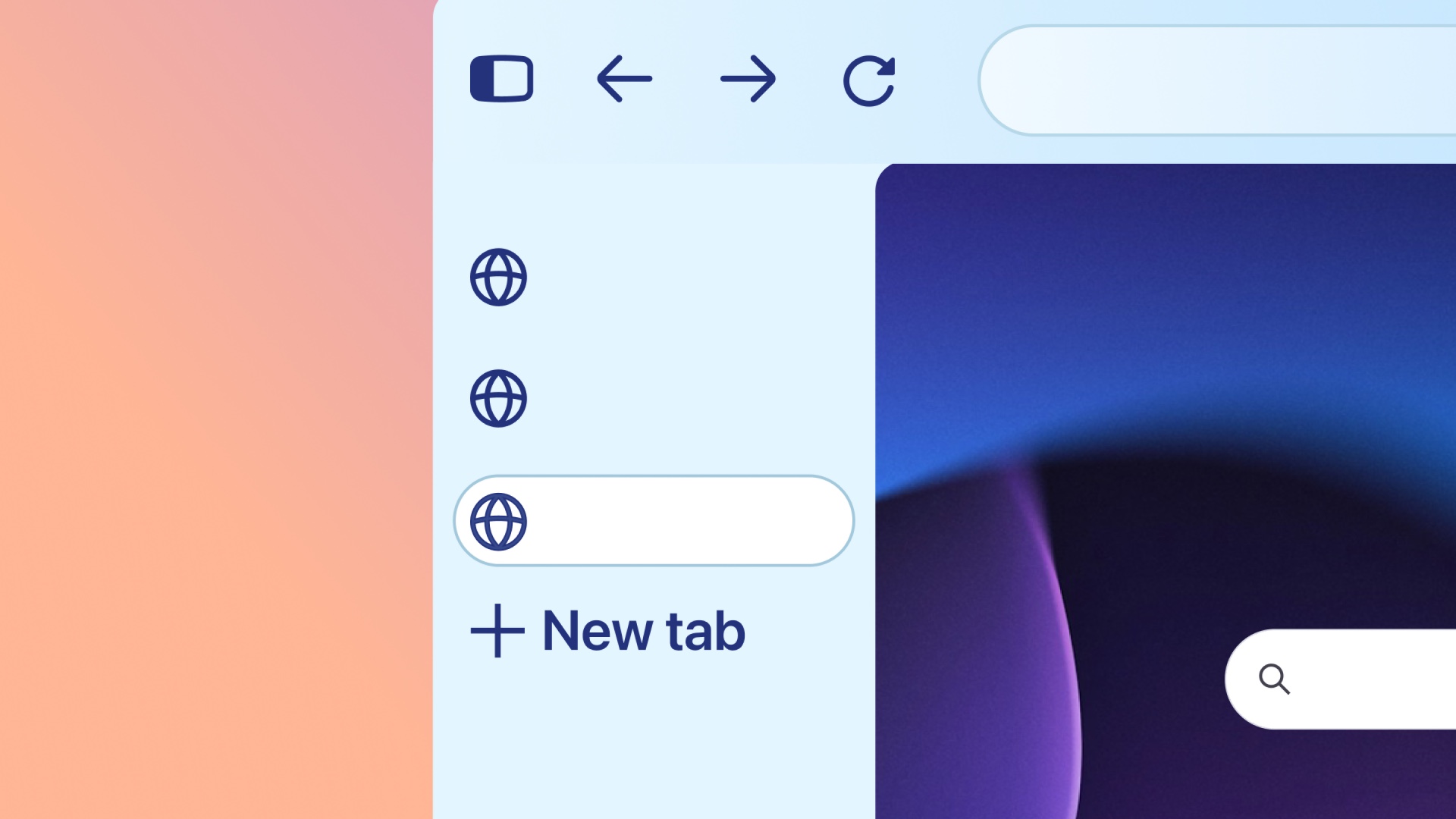
A Mozilla-provided image of the new styling in the Firefox redesign.
Credit: Mozilla
A Mozilla-provided image of the new styling in the Firefox redesign. Credit: Mozilla
Firefox’s new redesign is—at least to me—a welcome one. It no longer looks like a browser from 2015. That was probably never what mattered most to someone who uses the browser in part as a mission statement about the value of the open web. It does, however, make the browser more palatable in a culture and market that is currently seething with frustration at Big Tech’s dominance, and in one that (at least in some regions) is taking regulatory measures to ensure users have choices when faced with the usual defaults.
As Varma tells it, AI-assisted coding workflows have enabled Mozilla to accelerate development. That’s a clear boon, provided the Firefox team (and most other software development teams in the world, for that matter) can work out its post-AI-overhaul code review challenges. That said, when I spoke to Forrester analyst Paddy Harrington, he argued that isn’t necessarily a de facto advantage for the software world’s Davids against its Goliaths. Goliath can use coding agents, too. “If large companies like Apple, Google, and Microsoft aren’t using AI within their dev processes, then I’ll eat my hat, as the old saying goes,” he said. “The question is what are they using it for? How are they using it differently than any other company who is using AI tools in their dev process?”
Given Varma’s statement that tools for enterprise deployments have been Firefox’s most significant new investment area over the past year, I also asked Harrington for his perspective on Firefox’s opportunity in the enterprise space. “I’d certainly love to see them come back with new things that expands them in the enterprise, but it’s not going to be easy, and they would have to truly wow IT decision makers,” he said. Insomuch as there is a clear opening, it’s with businesses in Europe, where “we’re seeing interesting moves in those countries where they’re looking to move away from some of the platform giants like Microsoft or Google,” according to Harrington.
Whatever the scope of the enterprise opportunity, Varma is right that the more people use Firefox, the more leverage it has and the more true independence becomes plausible. This new redesign aims to make the browser more appealing in the mass market, and that’s a welcome start, but it’s not the finish line, and there’s a long way to go against competitors with more resources, albeit also with muddier incentives.
Maybe engine independence creates freedom to differentiate, as Varma said, and maybe AI coding tools do give smaller teams more power to stand up to well-resourced incumbents. But even so, Mozilla will have to continue to turn that freedom and capability into improvements that give people a reason to switch.
Samuel Axon is the editorial lead for tech and gaming coverage at Ars Technica. He covers physical and generative AI, large language models, software development, gaming, entertainment, and mixed reality. He has been writing about gaming and technology for nearly two decades at Engadget, PC World, Mashable, Vice, Polygon, Wired, and others. He previously ran a marketing and PR agency in the gaming industry, led editorial for the TV network CBS, and worked on social media marketing strategy for Samsung Mobile at the creative agency SPCSHP. He also is an independent software and game developer for iOS, Windows, and other platforms, and he is a graduate of DePaul University, where he studied interactive media and software development.
Since 2024, Microsoft has tried to sell “Copilot+ PC.” The marketing initiative was aimed at making it easy for people to know which Windows systems were approved to run AI-accelerated workloads locally.
But Copilot+ PC branding is nowhere to be found on the new Surface PCs Microsoft announced this week.
Speaking with Windows Central, Brett Ostrum, corporate VP of Surface, said that the new Surface computers “are not called Copilot+ PCs” despite meeting the label’s requirements.
“They do meet all the requirements of our previous bar for what Copilot+ devices are. We still lean into the narrative around AI on the edge and being able to have a hybrid solution out there,” he said.
Copilot+ PCs require 16GB of RAM, 256GB of storage, and an integrated neural processing unit (NPU) with performance rated at 40 trillion operations per second (TOPS) or better.
The Surface Pro 12-inch (2nd Edition) and Surface Laptop 13-inch (2nd Edition), coming out on October 13, both run Qualcomm Snapdragon X2 Plus processors and have a Qualcomm Hexagon NPU rated at 80 TOPS.
“[T]he purpose for Copilot+ PCs was to be able to deliver [NPU] experience,” Kedar Kondap, SVP of compute at Qualcomm, told Windows Central. “So, it was to define a certain category of devices with a certain bar and metric, like, for example, a 45 TOPS NPU. … So from that perspective, it’s more offering the same experiences, probably without just using [Copilot+ PC] terminology now.”
AI PCs are old news
Copilot+ PCs are “a class of AI PCs and laptops” that represent “the fastest, most intelligent Windows PCs ever,” according to a Microsoft marketing page that was up as recently as May, per Internet Archive’s Wayback Machine. That Copilot+ PCs landing page, however, now redirects to a page for “performance PCs” that still names “Copilot+ PCs” but features the label far less prominently.
$11M competition showed wildfire detection is still easier than stopping fires.
Fire retardant balls dropped by Anduril’s Ghost-X drone explode on a fire in a test. Credit: Anduril Industries
Wildfire detection from space and firefighting drones featured among the finalists honored in the $11 million XPRIZE Wildfire competition. Although no team walked away with either of the two grand prizes, such technologies could prove helpful as the world grapples with the growing costs of worsening wildfire disasters.
The competition’s First Prize track for space-based wildfire detection challenged teams to accurately detect all fires across a large swath of Australia within 10 minutes. A second Autonomous Response Prize track challenged teams to autonomously detect and put out a high-risk fire located somewhere within rural Alaska while ignoring decoy fires—all within 10 minutes of the fire igniting.
“We want to be able to prepare and provide tools for firefighters to really allow them to do the best job,” Andrea Santy, program director of XPRIZE Wildfire, told Ars. “They’re great at what they do, but it’s unfair to continue to put them in harm’s way when there’s technology coming online that can help keep them safe, keep communities safe, and protect ecosystems.”
The competition saw 45 qualified technical submissions in the space-based detection track and initially drew more than 300 teams from around the world in the Autonomous Response track. The latter challenge, in particular, attracted a diverse array of proposed technological solutions in the early stages.
“At the very beginning, we saw things like sound being able to put out a fire, lasers, and all sorts of robotics like robotic dogs,” Santy told Ars. “We had ground systems and aerial systems.”
But as the XPRIZE Wildfire judges focused on the most practical solutions for finding and suppressing a fire in 10 minutes, they weeded out technologies that would have a harder time meeting the time and geography requirements.
“We want to be able to have technologies that can detect a fire before it’s detected by anyone else,” Santy said. “A 911 call is still the most typical way that we find out about wildfires, and on average, that’s going to be at least 15 minutes.”
A full list of winners can be found in the XPRIZE Wildfire press release posted on September 23. Ars spoke with Santy about the technologies behind the winning approaches and why ongoing wildfire disasters have only made the competition more relevant in recent years.
Space-based fire spotters
Space-based detection of wildfires can make use of multiple existing satellite constellations, but satellites designed specifically for spotting wildfires have just begun to come online. The German aerospace company OroraTech launched a dedicated wildfire detection constellation of satellites in March 2025, while the Google-backed FireSat program launched its first microsatellites in July 2026.
“Current satellites are not built for wildfire detection—they’re built for a lot of other environmental monitoring and weather monitoring,” Santy explained. “So we’re always trying to look at how we take that data that’s not wildfire-specific and use it for a wildfire context.”
That is why teams in the space-based detection track focused on offering AI and software systems that harness existing satellite imagery and other data to provide wildfire detection capabilities across large areas.
“Our teams were challenged with being able to detect a fire essentially instantly and then transmit the data in a usable way so that it is intelligence to firefighters on the ground, reducing as many false positives as possible,” Santy told Ars.
The real-world test for finalists took place at the New South Wales Rural Fire Service in Australia in April 2026. None of the teams fully met the challenge requirements to win the $3.5 million grand prize offered by the Australian-based Minderoo Foundation, a competition sponsor and co-designer, but several were still recognized for their accomplishments.
The first-place winner of $500,000 was the UK-based SIRIUS Wildfire Alliance. That organization offered a system capable of identifying and modeling the potential spread of wildfires, drawing upon both optical and radar data from satellites.
A prize of $250,000 went to second-place winner Team Snuffed based in Arizona. The competition’s press release credited Team Snuffed with providing “transparent, auditable and uncertainty-aware wildfire detection,” and highlighted the solution as being especially user-friendly for firefighters.
Special recognition prizes of $100,000 each went to MyRadar based in Florida, DeepFire based in Louisiana, and the German company Mayday.AI that adapted an algorithm originally designed for detecting volcanic ash to help detect wildfire smoke through cloud cover.
Send in the drones
Rapid detection of wildfires is one challenge, but getting firefighting resources to the scene fast enough to stop the spread is another. Teams competing in the autonomous wildfire response track put their technologies to the final test in the sparsely developed rural landscape of Nenana, Alaska, near Fairbanks in June 2026.
The finalists typically deployed ground-based sensors and sometimes drones to help detect wildfires across a 386-square-mile area of Alaska, approximately the size of the San Francisco Bay Area in California or San Antonio in Texas. Once a high-risk fire was detected, they launched their own versions of firefighting drones that flew to the scene and attempted to suppress the fire.
All three finalists successfully detected the high-risk fire in under 10 minutes, while two of the three also deployed drones that attempted to put the main fire out. But none quite managed to fully extinguish the blaze, which is why the grand prize ultimately remained out of reach in this track as well.
“The really exciting part was, we did have a team that was able to do all of the actions within the 10 minutes and very accurately hit the fire,” Santy said. “But they weren’t able to put enough suppressant on it to knock it down entirely.”
A first-place prize worth $1.2 million went to Anduril Industries, a US company that has multiple contracts with the US military and Department of Homeland Security. The company installed a Sentry Tower equipped with thermal imaging sensors along with AI-driven computer vision to detect possible fire ignitions. It then deployed a small swarm of drones to provide aerial surveillance before sending out a Ghost-X autonomous drone to drop “fire retardant balls” on the target fire.
Anduril Industries’ Ghost-X drone dropping fire-retardant balls in a test of fire-suppression capability.
Anduril Industries’ Ghost-X drone dropping fire-retardant balls in a test of fire-suppression capability. Credit: Anduril Industries
Anduril also won an additional $1 million prize from Lockheed Martin for providing the fastest wildfire detection capability.
The second-place prize of $800,000 went to the Germany-based company Dryad Networks. Dryad deployed a network of 170 solar-based ground sensors to sniff for gases emitted by smoldering fires, before putting an observation drone into the air to geolocate the fire and finally sending in a Silvaguard Suppression Drone to attack the fire.
Two teams from the UK and Australia joined forces under the name AURA Foresight to nab the third-place prize of $500,000. AURA Foresight combined AI-powered software with cheap off-the-shelf hardware in what team co-lead Rob Vernon described as the “Home Depot approach,” sending out a swarm of DJI drones for attempted fire suppression.
“They had just weeks to pull things together,” Santy said. “They met for the first time in Alaska.”
The costs of wildfire disasters
The relevance of the XPRIZE Wildfire competition has been repeatedly underscored by real-world events. When the competition first launched in April 2023, a wind-fueled wildfire razed the historic Hawaiian town of Lahaina on the island of Maui and killed at least 102 people in August of the same year.
The summer of 2023 also saw Canada’s most destructive wildfire season send huge plumes of toxic smoke drifting across much of the United States, turning city skies into something out of Blade Runner 2049 or Mad Max: Fury Road and creating hazardous health conditions for millions of people.
Then came the costliest wildfire disaster in history, which destroyed almost 12,000 homes and killed 31 people in Los Angeles in January 2025. That event alone cost an estimated $140 billion in losses and ranks among the top-five costliest natural disasters, according to an analysis published by the journal Nature Reviews Earth & Environment.
Another wind-driven wildfire combined with extreme heat to create South Korea’s largest wildfire on record in March 2025. Drought and heatwaves have also fueled wildfires across many European countries amid heatwaves in recent years, with the 2026 wildfire season threatening NASA’s Deep Space Communications Complex near Madrid and forcing more than 320,000 people to evacuate their homes in Spain and France alone.
Extreme wildfires have still been regularly burning through Canada’s boreal forests, destroying towns and forcing thousands of First Nations people to flee their homes. Such widespread wildfire smoke events have impacted US cities nearly every summer for four years, often leading to air quality alerts for more than 100 million people each time.
“We know that wildfires are becoming more intense, more frequent,” Santy said. “They’re even happening in places where it’s not a natural part of the landscape, like in the Amazon or up in tundra regions.”
There have been discussions about a possible follow-up XPRIZE competition focused on wildfires. But for now, the competition organizers are focused on supporting potential deployments of the most promising technologies with firefighting agencies.
“You want to be able to provide as many tools as you can, but also the right tools for the right environment,” Santy said. “And one of the things that we really focus on is ensuring that anything XPRIZE puts forth has been tested.”
Jeremy Hsu is a reporter exploring a wide range of topics across deep tech and AI. He has previously written for New Scientist, Scientific American, IEEE Spectrum, Wired, Undark Magazine and MIT Tech Review, among many other publications, about topics such as deepfakes, data centers, drones, battery tech, robotics, and GPS jamming. He also has a Master of Arts in Journalism from NYU, and a bachelor’s degree from University of Pennsylvania in History and Sociology of Science, with a minor in English.
The annual Made on YouTube event has just wrapped up, offering an early look at the features you can expect to come to Google’s dominant online streaming platform in the coming months. Yes, there’s plenty of AI for both viewers and creators, but there’s also a handful of non-AI updates mixed in there, too.
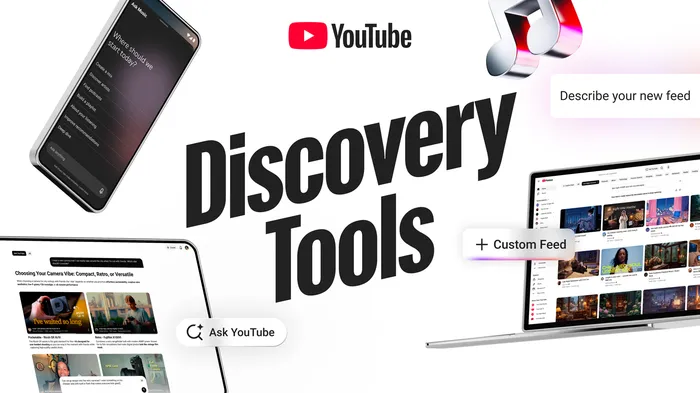
The design of YouTube’s homepage feed comes under fire often, but the platform is preparing to give you more options. With Custom Feeds, you’ll be able to add new tabs to the YouTube interface with content of your choice. To create a feed, just type a description and let YouTube populate the page. You can refine your description and rate video suggestions to tune the Custom Feed. Google says you’ll be able to save “multiple” feeds without specifying the exact number. This feature will roll out soon in the US for web, mobile, and TV users.
Interacting on YouTube will also change later this year. The platform will finally add the option to post GIFs in comments, which has apparently been a common request for some time. The comment box will let you search for popular animated thumbnails and post them on both regular videos and YouTube Shorts. The YouTube direct messaging feature is also adding support for group chat, but it’s only going to be available in the US, UK, Singapore, Brazil, and some European countries to start.
Credit: Google
Credit: Google
YouTube is probably going to nudge you to chat with a robot more often, too. The AI-powered Ask YouTube feature is not new, but it’s getting several new features that will make it more prominent across the platform. The AI will take on a conversational role in product review videos, allowing you to type or use voice commands to get more information about a product. In search, Ask YouTube may offer organized video recommendations and product comparison tables, too.
The music version of this AI is also expanding. Ask Music is getting more prominent placement in the YouTube Music app, right at the top where search used to be (it recently moved to a tab at the bottom). Ask Music can create or edit playlists and tell you about an artist. It will also surface suggestions throughout the app, like when you’re creating a mix.
“Customers only trusted Samsung Electronics and made an official update, but it is so absurd and embarrassing that they can’t even use refrigeration and refrigeration functions before the Chuseok,” a forum user wrote, per a Google-provided translation.
Some Samsung forum users said support agents initially told them that there are limited technicians and executives available, and a repair person might not be available until October.
“The customers who bought Samsung refrigerators have had their holidays completely ruined, while those Samsung employees are just having a good time at home,” a Samsung forum member wrote.
Samsung is aiming to have some fridges fixed by September 24, ZDNET Korea reported.
Today, a Samsung representative posted a response to user complaints on the forum, saying, per a Google translation:
Yesterday (9/22), an error occurred during the testing process for a Samsung refrigerator software update[.] Abnormal symptoms have been observed in the refrigerator power and screen of some customers. We are currently taking emergency measures as a top priority through Samsung Electronics Service Centers. If you have confirmed this symptom, please contact the Samsung Electronics Service Center … . We will do our best to ensure that our customers do not suffer any losses during the Chuseok holiday period.
“Never update your Samsung refrigerator!”
Out of frustration with having a broken fridge ahead of the food-centric holiday, one member of Samsung’s forum users declared, “Never update your Samsung refrigerator!”
The obvious alternative, of course, is to avoid fridges that get updates altogether. Dumb fridges can suddenly break too, but that usually doesn’t happen if that fridge’s hardware components are all working properly and if it’s just a year or two old.
While most of the complaints this week center on rotten food, an abruptly broken fridge can cause other serious problems, like ruining medication. As other poorly issued smart home gadget updates have proven, extraneous technology can spoil a simple product.
This article was updated on 9/24/2026 at 12:37 p.m. ET with comment from Samsung.